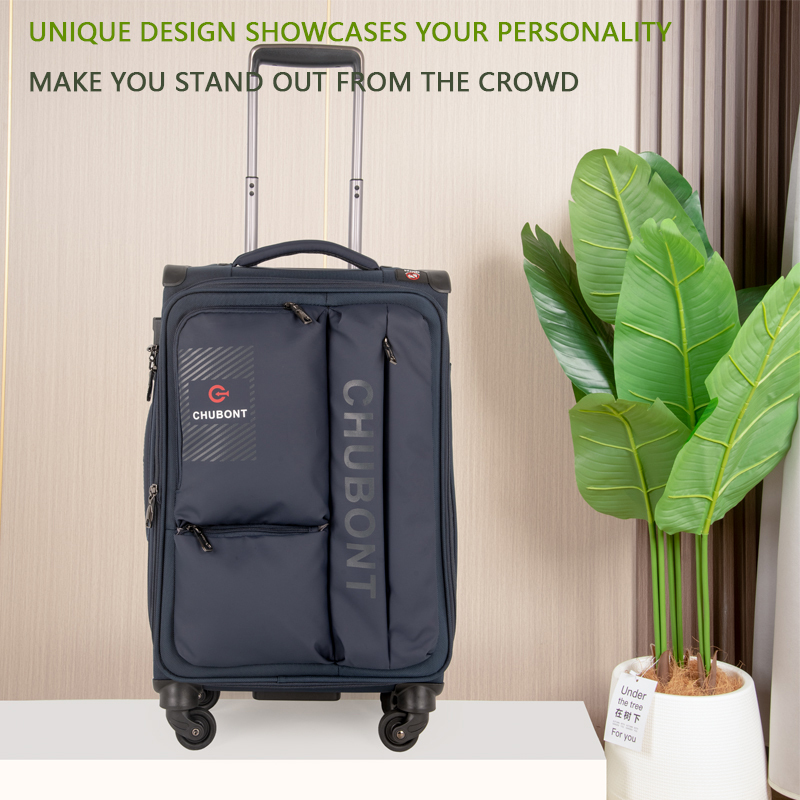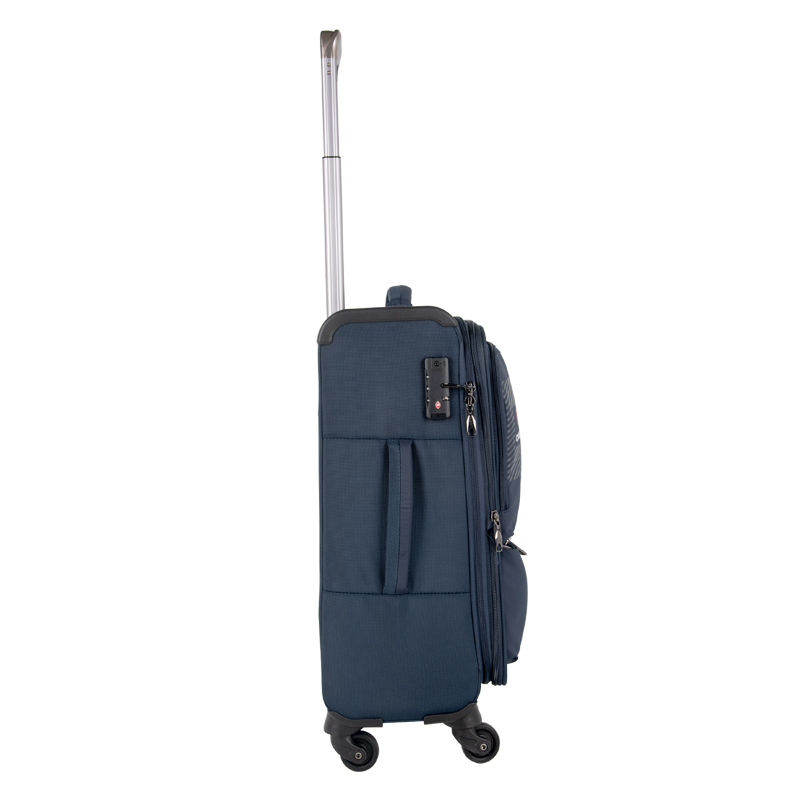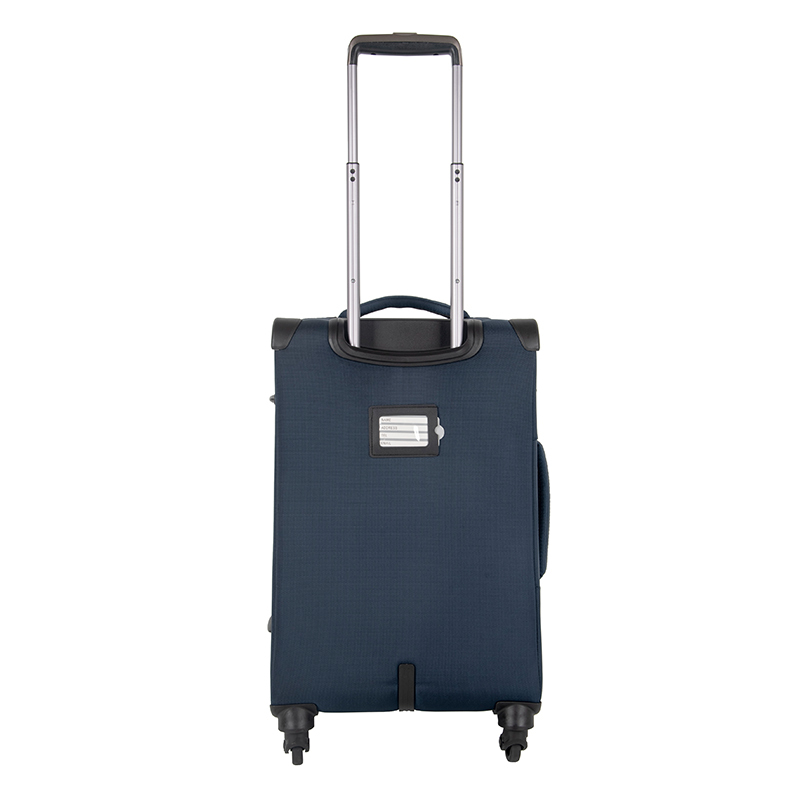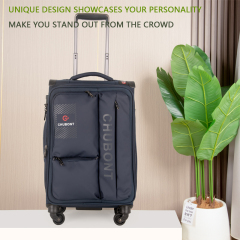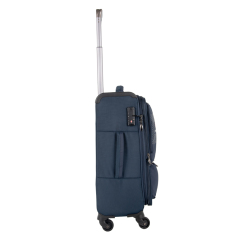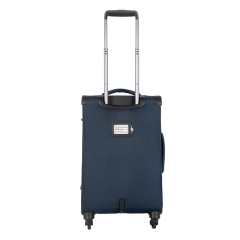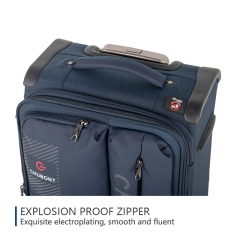
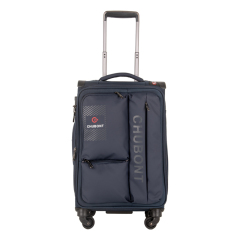
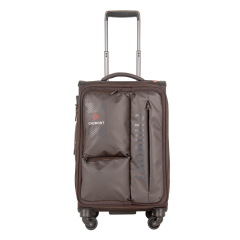
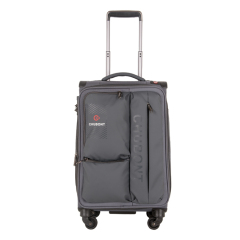
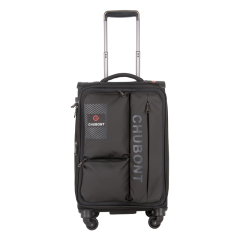
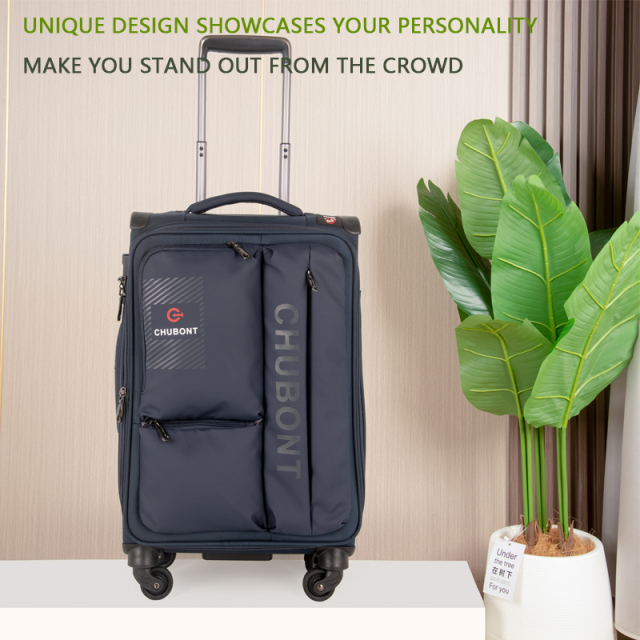
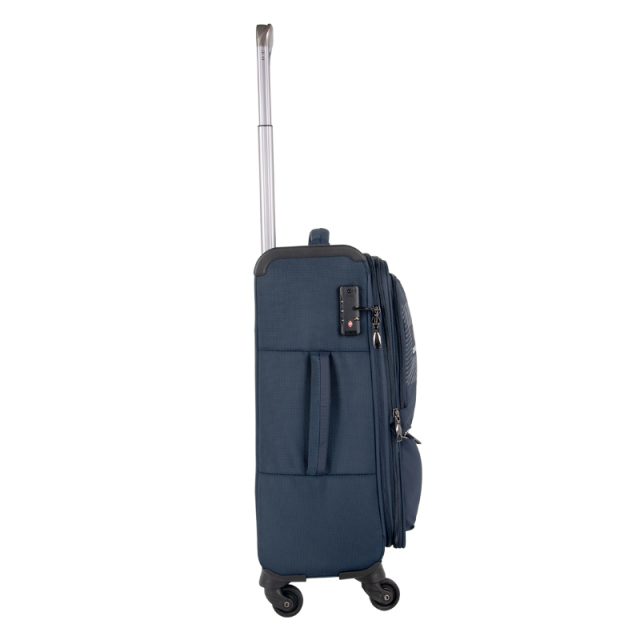
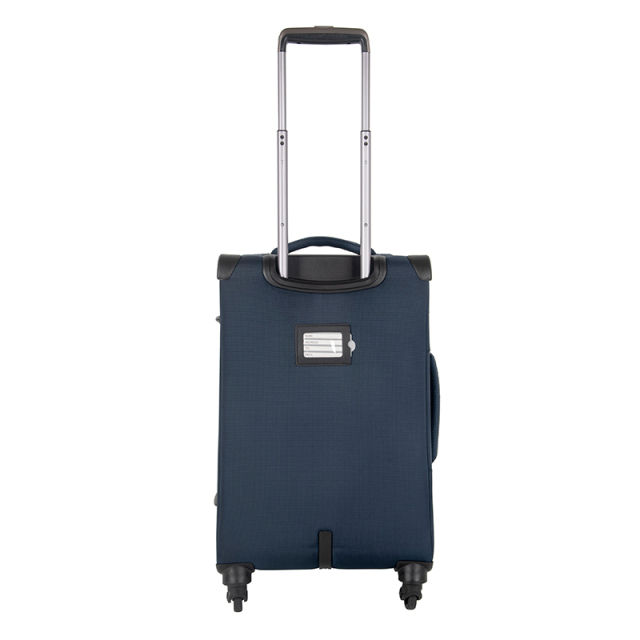
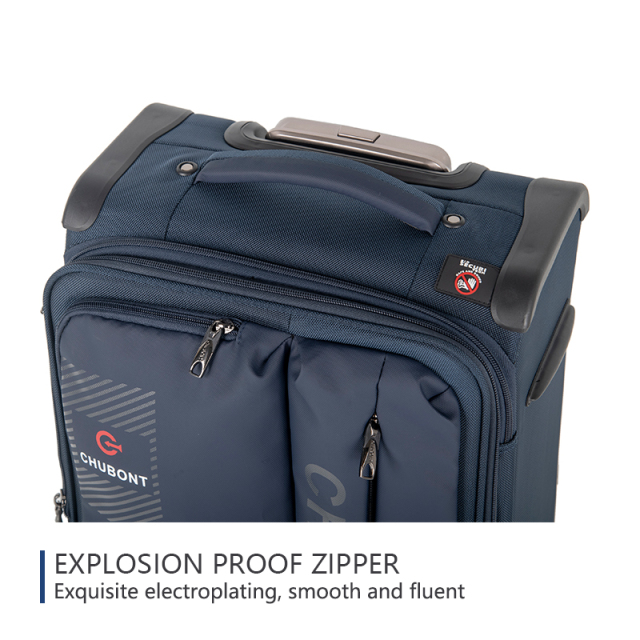
The CHUBONT LB-101171 set pairs two cases that are meant to travel together: a 20-inch cabin case for the trips where hand luggage is enough, and a 24-inch checked case for the journeys that need more. Same fabric, same trim, same hardware — a traveller who buys the pair gets one look and one set of expectations about how the bags behave, instead of two unrelated cases that happen to share a shelf. We build this pair in our own plants in Guangdong, which is why the 20-inch and the 24-inch match on colour, zipper line and trim. Chubont has been a luggage manufacturer since 1998, and making both sizes in the same workshop is what keeps them consistent on the details a buyer checks first: even colour across the pair, straight seams, the same hardware on both cases. Day to day, the set splits by trip length. The 20-inch covers one to three nights — laptop, a change of clothes, the small items — and stays with you in the cabin. The 24-inch is the volume piece: a week of clothing, shoes and the extras that never fit in a cabin bag. Both are softside, so they compress into a car boot or a hotel wardrobe instead of standing there like a hard box. This is a set for buyers building a two-size story — a chain of stores that wants a cabin and a checked case from one supplier, a brand launching its first pair, or a travel office issuing both sizes to the same person. If you already run a full size ladder, the pair works as the entry step; if you are starting out, it is the smallest range that still lets a customer buy for two different trips. - One 20-inch cabin case. Most airlines accept a 20-inch case as carry on luggage, so this is the piece that goes into the overhead bin while you walk straight out of arrivals. Limits vary by carrier, route and aircraft, so check the ones your customers fly most before you write the copy. - One 24-inch checked case. The volume half of the set: around a week of clothing for one traveller, or a long weekend for two. It is a checked bag, so plan for the counter rather than the cabin. - One fabric and colour run. Both cases are cut from the same waterproof suitcase fabric and trim selection, so the set reads as a family on a shelf rather than two models that happen to sit next to each other. - A pair, not a ladder. This two-piece luggage set stops at 24 inches. If your shelf also needs a large checked size, the 20/24/28 three-piece set covers it; if you sell mainly short-haul business travel, the 20-inch on its own may be the better stock line. - A short route to a first order. Two sizes and one fabric decision, which is the quickest way from a first wholesale spinner luggage order to something you can photograph and list.
The case rolls on four 360° spinner wheels rather than two fixed wheels and a tilt. Each wheel turns independently, so it moves sideways down a crowded aisle, pivots on the spot at a check-in queue and tracks straight behind you when you walk. On a two-wheel spinner suitcase you lean the bag and drag it; here it stays upright and steers from the handle.
That matters most when the case is heavy. A fully packed 24-inch puts its weight down through the wheel housings, and four contact points spread that load instead of concentrating it on two. The result is less wrist strain over a long terminal walk and a case that stays where you park it.
Wheel housings are the first thing to look at in any spinner wheels luggage, because they take the abuse — kerbs, taxi boots, the lip of a moving walkway. Ours sit inside reinforced corner panels rather than being stitched onto a flat side, which keeps the mounting points away from the parts of the shell that flex most under load.
In practice this two-piece luggage set handles the surfaces a trip actually throws at it: polished terminal floor, the rubber of a travelator, a carpeted hotel corridor, wet pavement outside arrivals and the short gravel stretch to a car park. Deep snow, sand and cobbles are where any spinner luggage struggles — carry the 20-inch by its handle there and let the wheels ride.
A softside case absorbs impact differently from a hard shell. A polycarbonate shell spreads a knock across its whole surface; a fabric case gives at the point of contact and returns, while the frame carries the load. That is why this set is built around a structured softside body rather than a rigid one — the panels flex under a throw and take their shape back.
Reinforced corners do the local work. Corners are where a case lands when it is dropped, and where fabric would otherwise wear through first. On this pair the corner panels are built up rather than left as a single layer, and the wheel housings sit inside that reinforcement instead of hanging off the outside.
The frame holds the shape. A softside case without one sags when it is full and folds in on itself when it is empty; with one, the 24-inch spinner suitcase stands square on its wheels while you pack it and still compresses when it has to go into a car boot.
Pack to the frame, not past it. A case zipped shut under visible strain puts the load on the zip and the stitching rather than the frame — leave a little slack at the top of the zip run and let the fabric work.
Shock resistance is a design property, not a rating. No supplier can promise a case will survive every throw. What we can tell you is which parts are reinforced, how the load path runs and what to inspect on arrival — and for custom spinner luggage programmes we will walk your QA team through the construction on a sample.
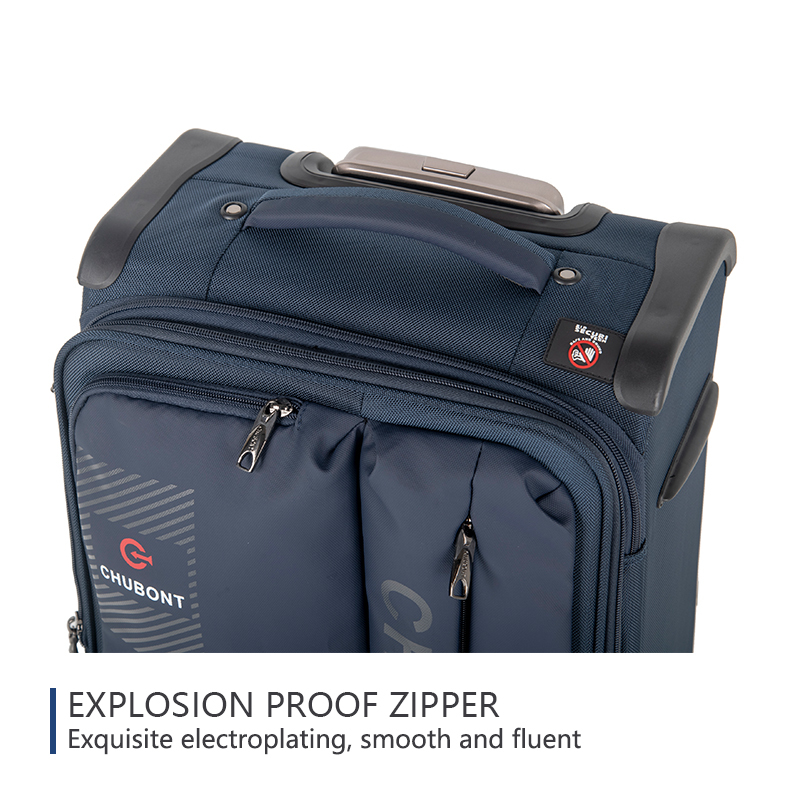
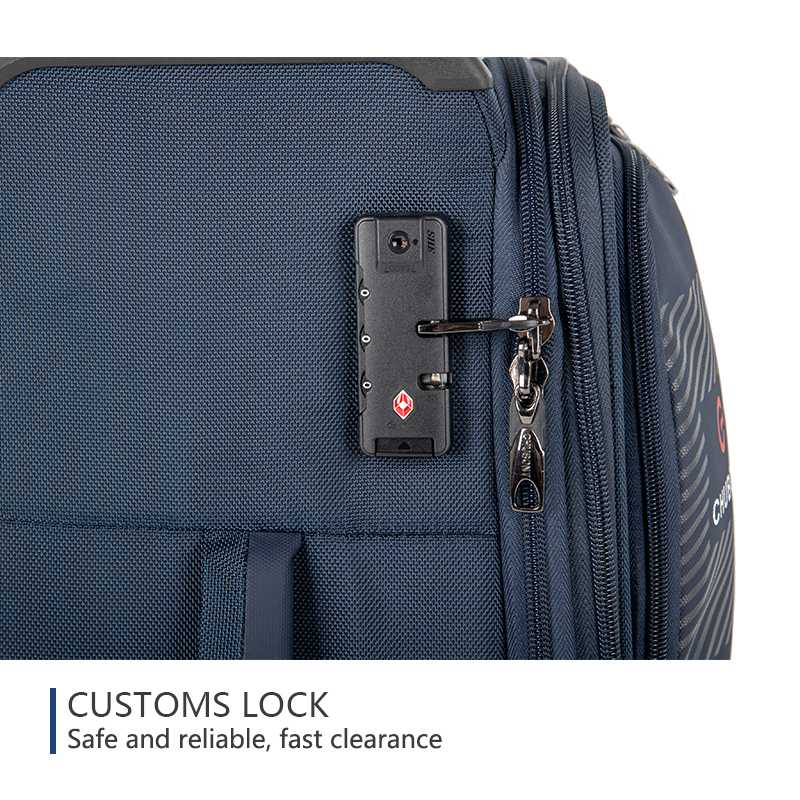
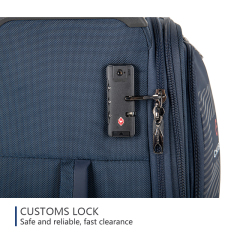
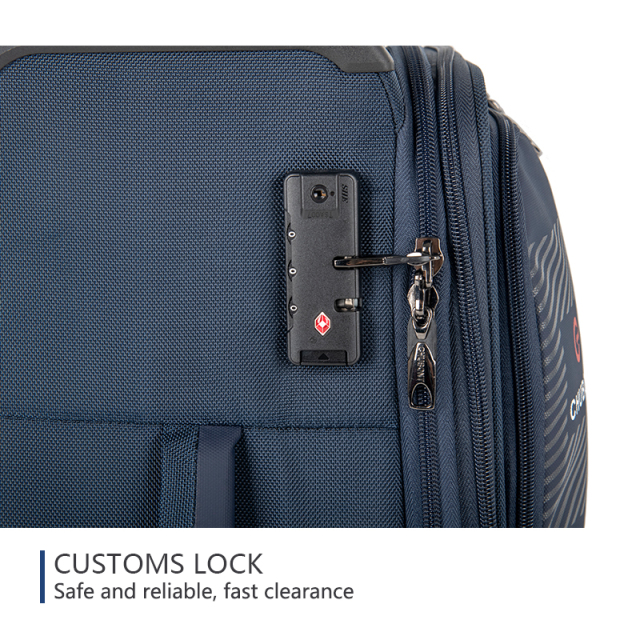
- A TSA-accepted combination lock on both cases. Security officers hold a master key for this lock type, so a case pulled for inspection is opened and relocked rather than forced. The lock comes from a Travel Sentry licensed lock manufacturer and is fitted as specified equipment. - Three dials, your own code. Set the combination before the first trip and record it somewhere other than the case — a forgotten code is the most common reason a good combination lock ends up cut off. - The lock closes the zip itself. The two sliders meet at the lock housing, so the secured point is the closure rather than an outside strap or a padlock hasp that can be worked loose in handling. - A zip line that carries the strain. On a softside case the zipper takes the load whenever the bag is packed full, so the run is stitched into a reinforced tape along the opening instead of being set into a single layer of fabric. - Hardware you can specify. On custom luggage programmes the lock finish, puller style, logo placement and lining print can all be discussed; on private label luggage runs, confirm your specification against a physical sample before production starts.
The shell is a waterproof suitcase fabric, which is the right level of protection for travel: rain on the apron, a spilled drink in the lounge, wet pavement outside arrivals. Water beads and runs off rather than soaking in, so what is inside stays dry through a normal trip. Seams and zips are the honest caveat. No softside case with a zip opening is a sealed box — a zip is a line of small gaps by design. In sustained heavy rain, put documents and electronics in a dry bag inside the case rather than relying on the shell alone. Cleaning is a cloth and a little patience. Wipe the fabric with a damp cloth and a mild soap solution, work along the weave rather than scrubbing across it, then wipe again with clean water. Do not machine wash, do not bleach and do not put the case in a tumble dryer; heat is what damages a coated fabric. Dry it open. After a wet trip, empty the case, open the zip fully and let it air-dry in the shade. Hours of direct sun will fade the colour and stiffen the coating, and a radiator does the same damage faster. Store it empty and dry. Wheels take a set if a loaded case sits on them for months, so keep the pair upright on their wheels or lying flat, not leaning on one corner against a wall. A dry cupboard is better than a damp store room. Two habits that shorten a case's life: forcing a zip shut on an overfull bag, and dragging it by the trolley handle up a kerb.
| Property | Detail |
|---|---|
| Set type | Two-piece softside spinner luggage set |
| Set contents | 20-inch cabin case and 24-inch checked case |
| Shell | Softside waterproof suitcase fabric |
| Construction | Framed softside body with reinforced corners |
| Wheel system | Four 360° spinner wheels |
| Trolley | Telescopic handle |
| Lock | TSA-accepted combination lock |
| Closure | Lockable zip |
| Colourways | Multiple colour options |
| Branding | Logo, lining and packing customisation for private label luggage |
| Minimum order | Confirmed per model and colourway at quotation |
| Production timing | Quoted against your confirmed order |
| Quality documentation | Independent test reports and inspection arranged to your QA team's requirements |

Every CHUBONT order passes five checkpoints inside our own workshops: incoming materials, pre-production samples, in-production patrols, finished-goods review, and a final pre-shipment check against the order. Batch records are kept, so buyers can see what was checked and when. You are welcome to send your own QC team, or appoint an independent inspector such as SGS or BV, to verify goods before they leave, and we support factory audits and on-site monitoring while production runs. Shipping marks, packing lists and carton labelling are confirmed against your instructions before loading.