Product Overview
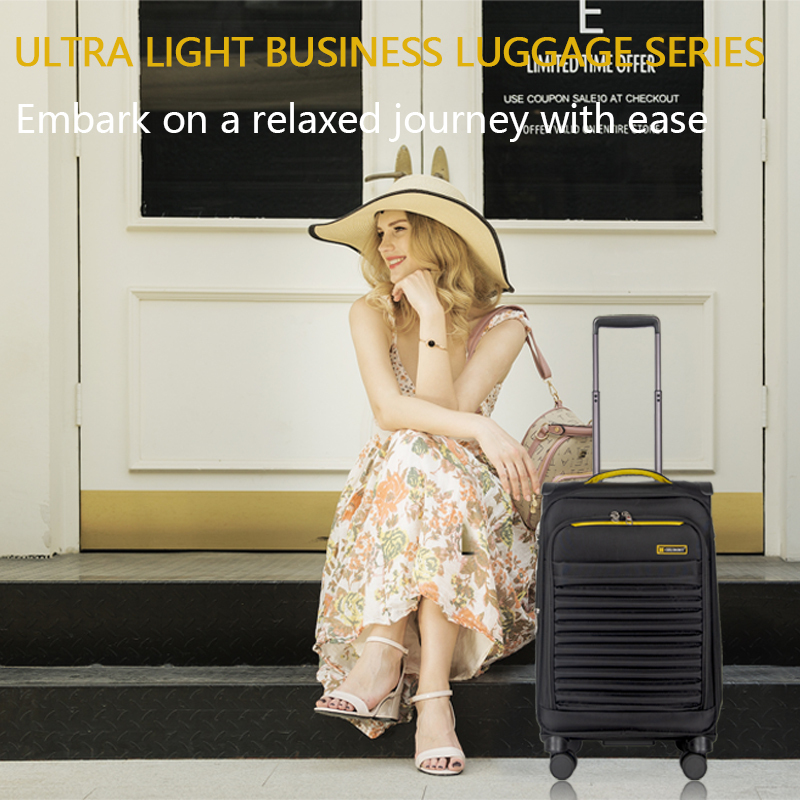
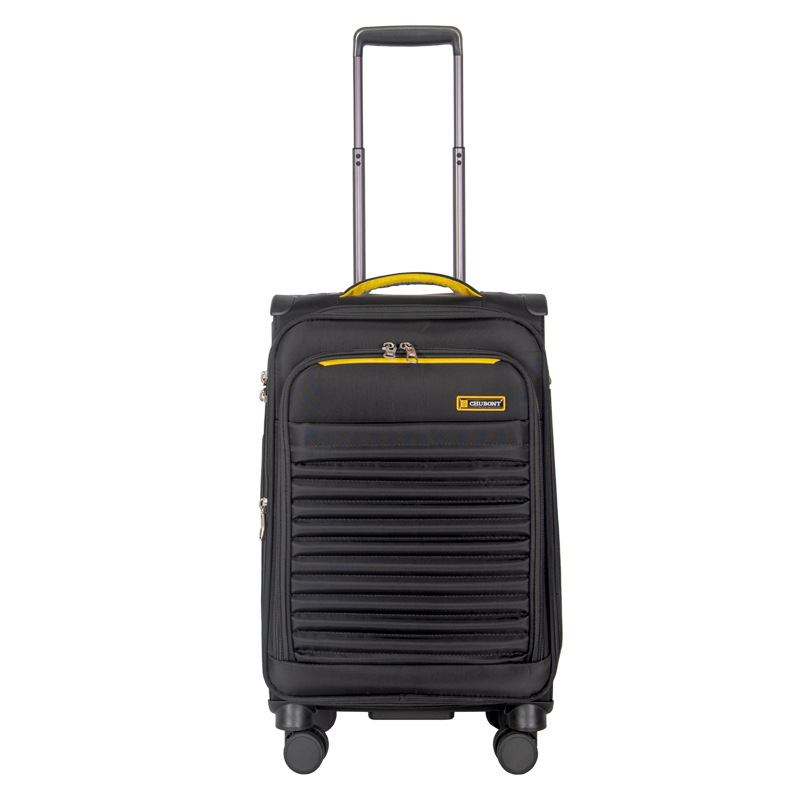
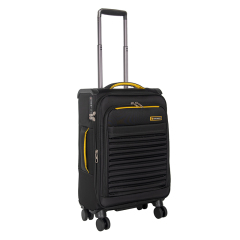
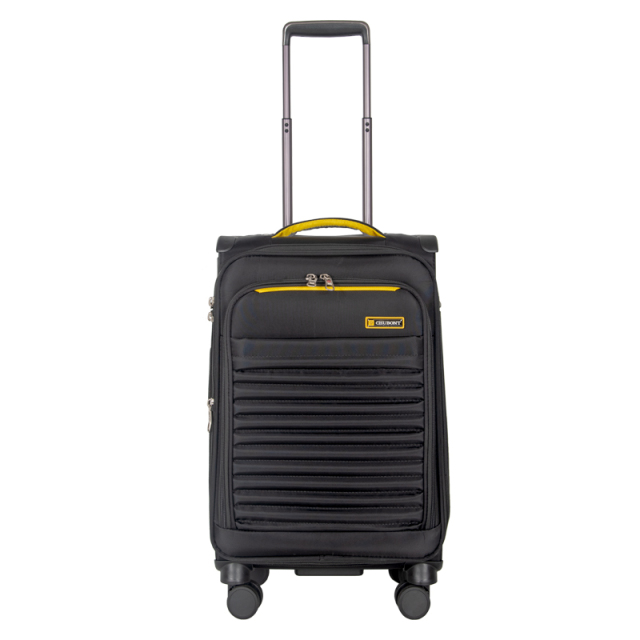
The LB-101168 range lets one company standardize on a single business travel luggage design across three sizes: a 20 inch cabin case, a 24 inch checked case, and a 28 inch case large enough for two people traveling together. The soft-shell choice is deliberate. Nylon gives where a rigid shell will not, so a case that leaves the office packed to the top still closes, and the same case still works when a traveler comes back with samples, catalogs or gifts. The flexible body also carries roughly 15%-20% more volume than a hard case of the same nominal size, which is often the difference between one checked bag and two on a longer assignment. This is a range written for issue rather than for one-off purchasing. Sales staff and executives flying short domestic hops, consultants and technical staff posted to a client site for a week, and overseas teams covering exhibitions or long postings all draw from the same three sizes, so departments can be equipped from one order and one specification. Sizes can be mixed in any combination — 20 inch plus 24 inch is the usual pairing for a traveler who needs both cabin and checked capacity on the same trip. Because the same materials run across the range, a 20 inch travel carry on luggage order and a 28 inch checked luggage order read as one family when they arrive together. The value of a single-specification range shows up after the first order, not at the quotation stage. One specification across three sizes. A traveler issued a 20 inch today and a 28 inch next year is working with the same case design, so nothing needs to be relearned and nothing looks mismatched inside a batch. A consistent front for client-facing staff. Banking, audit and consultancy teams arrive with the same case profile, which reads as deliberate in a way a mixed assortment does not. Written for wholesale luggage programs rather than one-off individual orders. The size mix can follow a department structure instead of a store shelf plan, and a reorder can repeat the same size split and color split without renegotiating the specification. A format that stays useful as the trip changes. Because the three sizes differ mainly in volume, the buyer's decision stays about trip length and headcount rather than about which features come with which size.
Waterproof Nylon Construction
The outer shell is waterproof nylon, reinforced at the panels that take the load and stitched with reinforced seams at the handle mounts, wheel housings and zip ends. Those are the three points where soft luggage usually gives first, and they are the three points a luggage manufacturer controls most directly at the sewing stage.
Inside sits a lining of 100% polyester waterproof fabric rather than an uncoated textile. That second layer matters more than it sounds: water that beads off the nylon in a shower can still creep through a zip line or a stitch hole, and the coated lining stops it before it reaches clothing or paperwork.
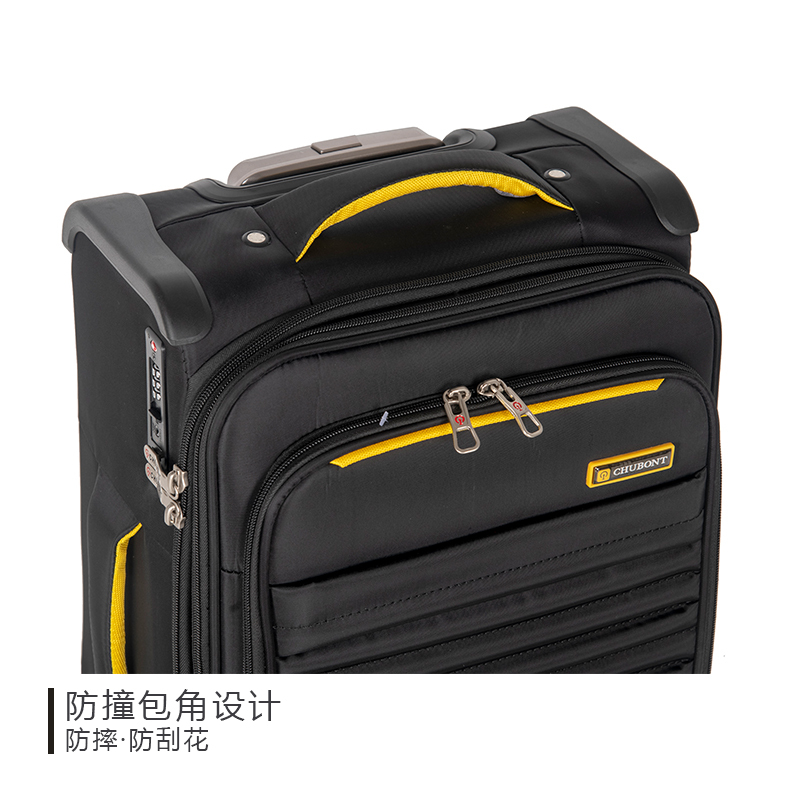
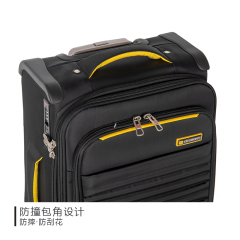
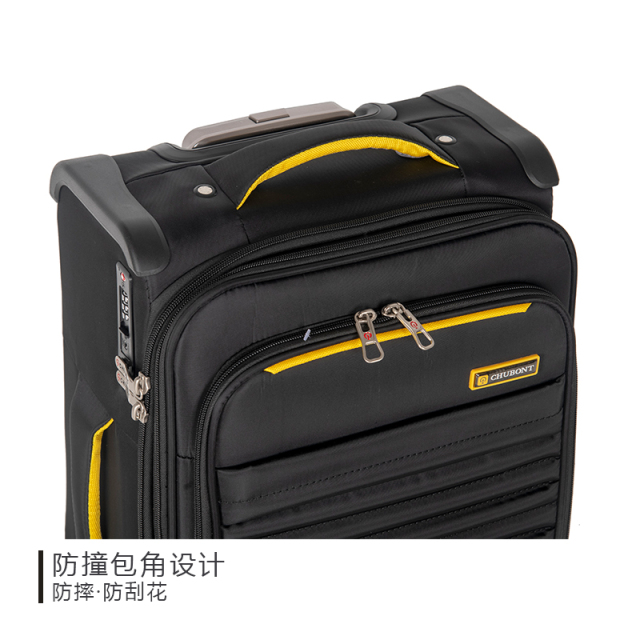
Zips run on the main compartment, the front business compartment and the side pockets, with pulls sized to be grabbed at a baggage carousel. Corner guard caps at the base take the scrape when a case is set down hard or dragged over a curb, which is where a soft shell otherwise wears through first.
Hardware is corrosion-resistant, the practical answer to a case that moves between humid ports, wet pavements and air-conditioned terminals in the same week.
Nylon also flexes, which is why the 24 inch luggage with spinner wheels can be pressed under a strap or into a packed car boot and come back into shape. That is not the same as being over-packable: leave a little space free rather than closing the zip under tension, and the seams, the lining and the zip tape all last longer.
360° Spinner Wheel System
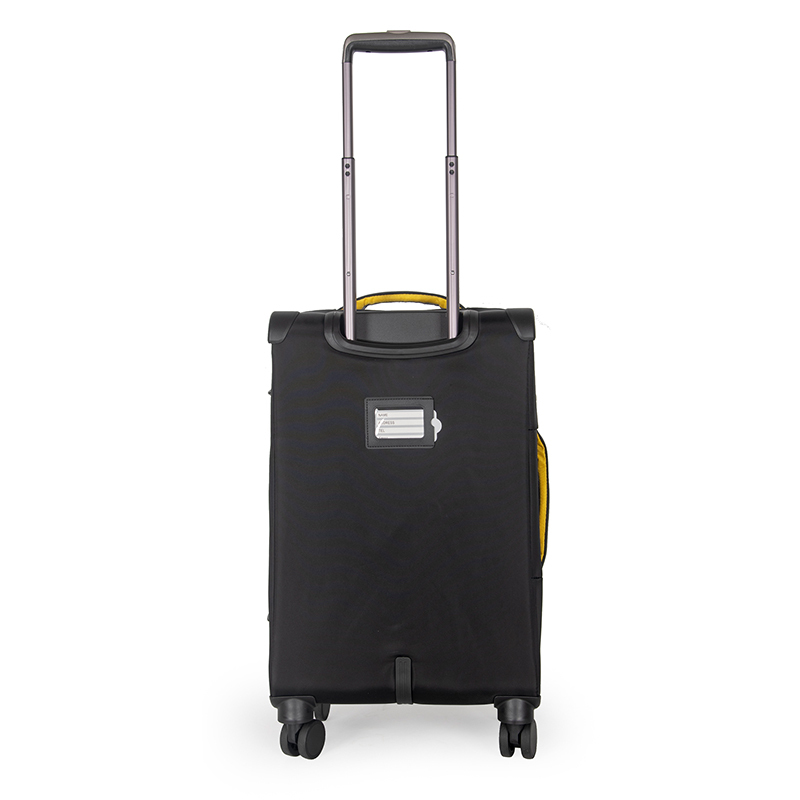
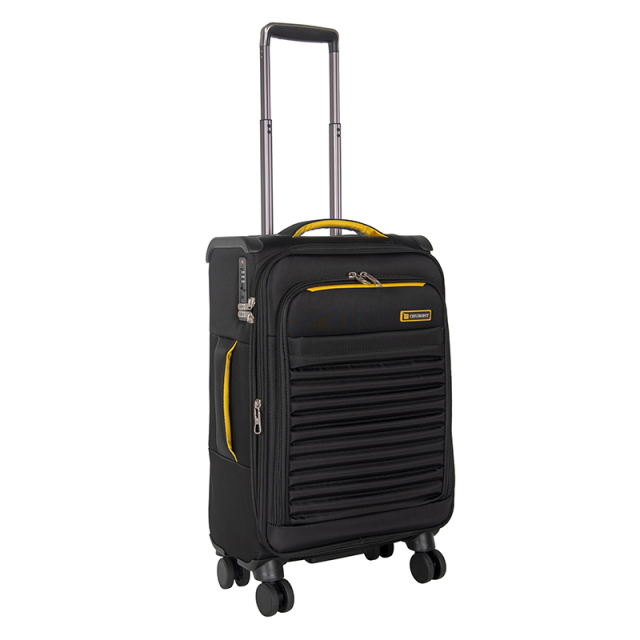
Four independent casters rotate a full 360°, each built on a wear-resistant double ball bearing with a wheel body in impact-resistant hard PA. The case moves in whatever direction it is pushed rather than being steered like a trolley.
This is where most of the effort disappears on a long transit day. Glossy airport tile, cement station floors, hotel carpet and outdoor stone paving all give the same low rolling resistance, and a fully loaded case can still be moved one-handed. For anyone covering several hundred meters between a gate and a taxi rank, that is the difference between arriving composed and arriving with a sore wrist, and it is the main reason carry on luggage with spinner wheels has replaced the two-wheel trolley in most corporate travel policies.
Silence is part of the specification rather than a bonus. A quiet case matters in a hotel corridor late at night, in an open-plan office, and in a bank or audit client's reception area, where a rattling trolley is the thing everyone turns to look at.
The casters sit at the four corners, so the case stands on its own when it is upright — usable at a check-in counter or a taxi rank where there is nowhere to lay it down. The 24 inch luggage with spinner wheels carries the same caster set as the smaller and larger sizes, so handling does not change when a traveler is issued a different size for a longer trip.
One handling note belongs with the wheels rather than the shell: lift the case over curbs and steps instead of dragging it, and keep the heaviest items low in the packing. Both protect the bearings, which are the part hardest to replace in the field.
Wheel Handling Procedures
- On flat ground, extend the telescopic handle fully, stand the case upright with all four casters on the floor, and push at a steady walking pace. All four wheels should touch at once; if the case rocks, stop and check that nothing is caught under a caster.
- Through a narrow corridor, a lift or a crowded jet bridge, tilt the case back onto two wheels and pull it behind you. This is the mode for airport escalators, hotel hallways and office lobbies.
- On steps, curbs and short ramps, use the reinforced top handle and lift the case clear rather than dragging it. Dragging is what bends a wheel axle.
- When you stop for the night, stand the case upright so all four casters carry it and it cannot roll away or tip over.
- At the start of every trip, spin each wheel by hand and listen. A wheel that grinds or catches before departure is a wheel that will seize in a terminal.
- When loading, put the heaviest items in the compartment closest to the wheel side, so the case tracks straight instead of pulling toward one corner.
Size & Boarding Comparison
| Size | Carry on board? | Itinerary fit | Typical issue |
| 20 inch | Yes | 1-3 day itinerary for 1 person, short-term business trips or travel | Sales staff, executives and field technical staff on frequent short hops |
| 24 inch | No | 1-6 day itinerary for 1 person, short-term business trips or travel | Project consultants, overseas procurement staff, medium- to long-term field staff |
| 28 inch | No | 7-10 day itinerary for 2 people, short-term overseas travel or long-term business trip | Overseas offices, exhibition teams and expatriate teams |
| 20 inch cabin check | Three sides within IATA carry-on limits | Overhead bin or under the seat | Staff who never check a bag |
| 24 inch and 28 inch | Checked baggage only | Counter check-in on every flight; fits the luggage area on high-speed rail | Teams carrying equipment, samples or clothing for two |
| Shell | Waterproof nylon with reinforced panels and a 100% polyester waterproof lining | All three sizes | Rain, slush and humid port transfers |
| Wheels | Four independent 360° silent spinner casters, double ball bearing, hard PA wheel body | All three sizes | Airport tile, station cement, hotel carpet, stone paving |
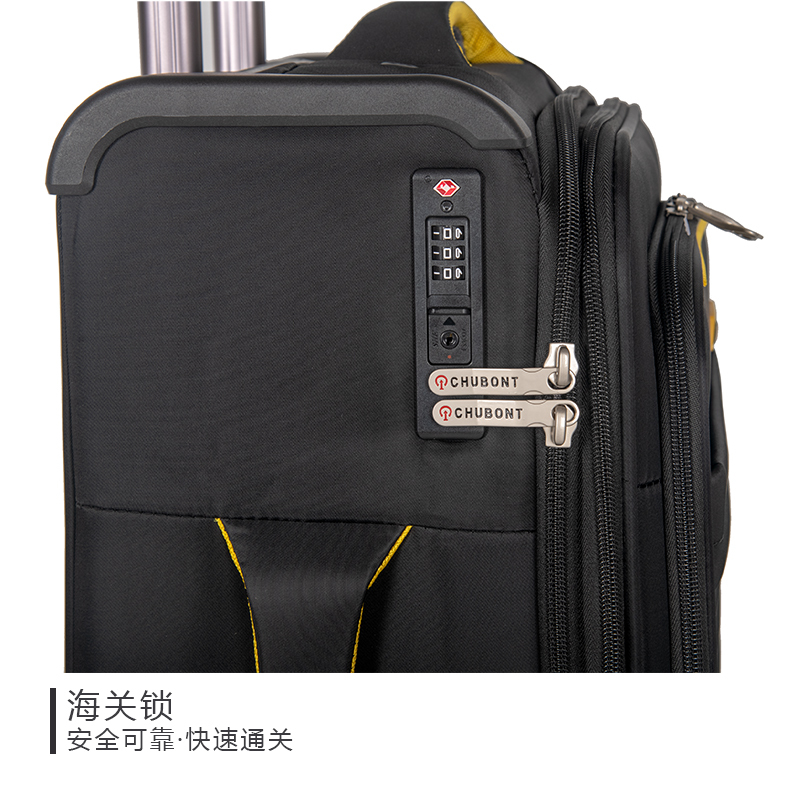
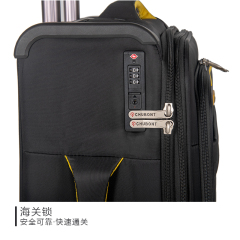
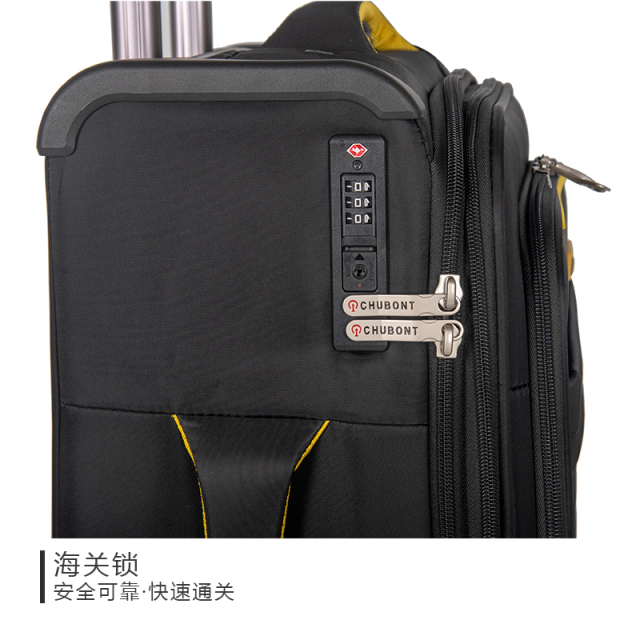
| Lock | Side combination lock | All three sizes | Keeping the main compartments closed in transit |
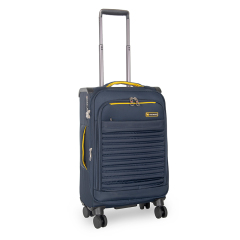
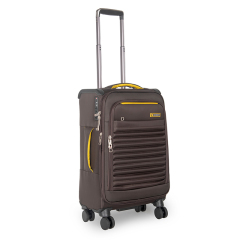
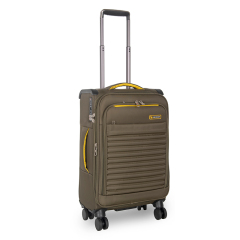
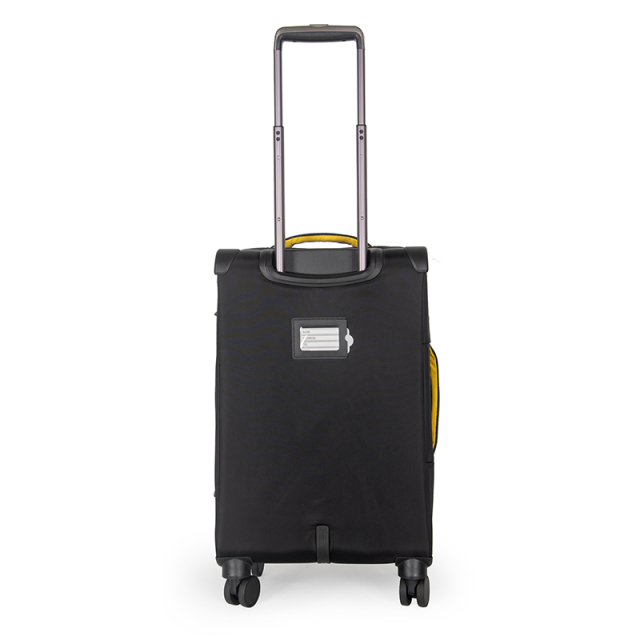
| Colors | Black, blue, brown, green | All three sizes | Department or team identification |
Business Compartment Layout
- Front quick-access compartment — a separate zipped divider takes a 15.6 inch laptop, an A4 contract folder, a passport, a card holder, a power bank, pens and a work tablet, and opens without disturbing the main packing.
- Main compartment — room for 3-8 sets of business formal wear, shoe bags, a folding umbrella and small samples, held flat by two adjustable securing straps so suits and shirts do not shift in transit.
- Wet and dry separation — a mesh wet-item bag takes damp towels, toiletries and rain gear and keeps them away from paper documents packed in the same case.
- Concealed document pockets — flat pockets for tickets, invoices, staff ID cards and bank cards, positioned so they can be found without unpacking everything.
- Independent side pockets — for chargers, cables, USB drives and stamps, the small items that otherwise end up loose at the bottom; on this travel carry on luggage each one has a place.
- External hanging point — reinforced side straps let a traveler hang a laptop bag, a commuter tote or a customer gift on the outside and keep both hands free at an airport transfer.
Business Travel Scenarios
- Fly out in the morning, land, take a taxi straight to the client, and reach the laptop and contracts from the front compartment without unpacking. It goes in the back of a high-speed rail carriage or is checked in ahead of the flight, and it unpacks into sections at the hotel without extra storage bags. - Overseas exhibitions and long assignments for two — the 28 inch takes exhibition samples, printed material, several days of clothing for two people, plug adapters and business gifts. - Standardized issue across a field operation — a single business travel luggage specification issued in three sizes: 20 inch for office and sales staff who travel short and often, 24 and 28 inch for project and dispatch teams, all in the same case profile so staff look consistent in front of clients. - Finance and audit professionals — the independent document compartment and the waterproof shell protect confidential reports and audit working papers, and the quiet casters keep movement through hotel and office-building corridors discreet. - 20 inch for the short-hop week — sales staff, executives and field technicians who fly out and back inside one to three days. It boards as carry on luggage with spinner wheels, so there is no counter queue and no wait at the belt on arrival. - 24 inch for the site posting — consultants, auditors and technical staff stationed at a client location for up to six days. The extra depth takes several changes of work clothes, test equipment and project drawings, and it travels as checked baggage. - 28 inch for two people or a long posting — 7 to 10 day overseas trips, exhibitions and expatriate assignments. This 28 inch checked luggage holds clothing for two, samples and printed material in one case instead of two. - Mix the sizes by department — a common pattern is 20 inch for office and sales staff and 24 or 28 inch for project and dispatch teams, ordered together so one batch covers every role and every case shares the same profile. - Plan by clothing, not by days alone — thick winter clothing and bulky samples cut usable days considerably. Treat the itinerary figures as a planning guide and leave room for what travels back. - Confirm the airline before you commit — the 20 inch is the only size in the range that boards; the 24 and 28 inch must be checked on every flight, and cabin and weight allowances differ between carriers.
Fleet Care & Maintenance
- Clean the axles after every trip — use tweezers to pull hair, thread and carpet fiber out of the wheel axle, then wipe the wheel body with a damp cloth. Trapped fiber is the most common cause of a wheel that squeaks or jams. - Lubricate with silicone, never oil — when a caster turns stiffly, apply a small amount of silicone-based lubricant to the axle. Oil-based lubricants attract dust and grit and make the problem worse. - Store cases empty, dry and upright — a damp case left closed between trips is where linings and zip tape degrade fastest. - Inspect a batch on arrival — spin every wheel by hand, run every zip and check the handle lock before cases are issued. Catching a fault at goods-in is far cheaper than catching it at an airport. - Plan the replacement cycle — before a multi-year issue program starts, ask your sales contact what wheel and handle spares are available for the 28 inch checked luggage and for the smaller sizes.
Customization & Branding
Logo printing is available for company issue, applied to the front panel or the side of the case depending on the artwork and the finish you want. Color runs from the four standard options — black, blue, brown and green — and other colors can be discussed against your reference sample.
Beyond color and logo, a custom luggage program can usually extend to the lining, the zip pulls and the packing, and for selected projects new mold development is possible. Interior lining changes are ideally raised early, because they affect the cutting and sewing sequence rather than the final packing step.
What we ask for at the start: the model and size mix, the quantity for each size, the color direction, the logo artwork with placement and decoration method, and whether you want individual packing or carton packing. A physical or digital proof is the point at which logo position and color are settled.
Two practical notes. Branding is applied to the case as specified and does not change the shell, wheel or handle specification unless you ask for a change. And if your market needs a particular marking or document supplied with the case, raise it before production rather than after, because adding it later means a new run.
Ordering & Delivery
- Packing — choose basic packing, custom packing, or packing that includes the supporting materials your warehouse needs. Tell us which one applies and we will confirm it on the order. - Quantity — MOQ depends on the model, size, color, logo method and packing, so it is quoted per project rather than published as a fixed number. Share the size mix and target quantity and we will confirm what applies. - Trade terms — FOB, CIF and DDP are the terms most often discussed. Tell us the destination country and the port of discharge and the terms follow from there. - Lead time — production time depends on the size mix, the logo work and the season. Confirm the current schedule before you commit to a launch date. - Samples — ask your sales contact about sample availability and what a sample round would cover before a first production run. - Export documentation — tell us at the quotation stage which documents your customs broker needs for the destination, and they are prepared alongside the shipping papers. - For wholesale luggage programs — tell us the departments and headcount you are equipping and we will help map the size split across 20, 24 and 28 inch. - For a custom luggage run — a private-label order follows the same path, with a proofing step on logo and color before production starts. - What to send with an enquiry — model, size mix, quantity per size, color plan, logo artwork and placement, packing preference, destination country and document requirements.
Quality Control & Inspection
As a luggage manufacturer, we run every CHUBONT order through five checkpoints inside our own workshops: incoming materials, pre-production samples, in-production patrols, finished-goods review, and a final pre-shipment check against the order. Batch records are kept, so buyers can see what was checked and when. You are welcome to send your own QC team, or appoint an independent inspector such as SGS or BV, to verify goods before they leave, and we support factory audits and on-site monitoring while production runs. Shipping marks, packing lists and carton labelling are confirmed against your instructions before loading.
FAQ
Will the 20 inch case fit in an overhead bin?
Yes. The 20 inch is the cabin size in this range: its three sides stay within IATA carry-on limits, so it boards with you and goes into the overhead bin or under the seat on most major airlines. It is the size issued most often to staff who fly short and often, and as carry on luggage with spinner wheels it crosses a terminal on four casters instead of being carried. Check the specific carrier's cabin limit for your route before you travel, since smaller regional aircraft can be tighter than the international standard.
Do all three sizes use the same shell and fittings?
They do. The 20, 24 and 28 inch cases share the waterproof nylon shell, the reinforced panel construction, the 100% polyester waterproof lining and the four-caster wheel base, with the side combination lock on each. That is deliberate: a company issuing more than one size wants the same behavior from every case in the batch, and it keeps briefing and spares simple. Ordering all three sizes from one luggage manufacturer also keeps the fabric and hardware in the same family instead of matching them across suppliers. Confirm the exact lock and fitting specification on your order, since small component changes can occur between production runs.
How much will the 20 inch hold for a three-day trip?
Comfortably: 3-8 sets of business formal wear in the main compartment, secured by the two adjustable straps, plus a 15.6 inch laptop, an A4 contract folder, a tablet, chargers and a toiletry kit split between the front compartment and the mesh wet bag. That covers a two- to three-day trip with a spare change. For a three-day trip in winter clothing, or if you are carrying samples, drop to fewer clothing sets — a soft shell has some give, but it should not be closed under tension. The 20 inch is the travel carry on luggage size most buyers start with for exactly this trip length.
Is the case suitable for high-speed rail as well as flights?
Yes. All three sizes work on high-speed rail and intercity trains, and the 24 inch luggage with spinner wheels fits the large luggage area at the end of a carriage. For rail there is no check-in at all, which is part of why this business travel luggage suits staff who mix rail and air in the same week: the 20 inch covers the flight leg and the 24 or 28 inch covers the rail leg, both without special handling. The casters roll over station cement floors and platform paving without the jolt that smaller wheels give.
Can we change the color and add our logo?
Yes. Black, blue, brown and green are the standard colors, and logo printing is available for company issue, with placement and decoration method agreed at proof stage. Other colors can be discussed against your reference sample. Lining, zip pull and packing changes are also possible, and for selected projects new mold development can be explored. On a custom luggage order the shell, wheel and handle specification stays as listed unless you ask for a change, so branding does not quietly alter what you are buying.
Which size suits two people on a week abroad?
The 28 inch. It is the case in this range built for a 7-10 day itinerary for two people, taking clothing for both, samples or printed material and a full set of office supplies in one checked case instead of two. It has to be checked in on every flight — as does the 24 inch — so plan the arrival around baggage reclaim. If the second traveler is only away a few days, the 24 inch covers that shorter trip on its own.