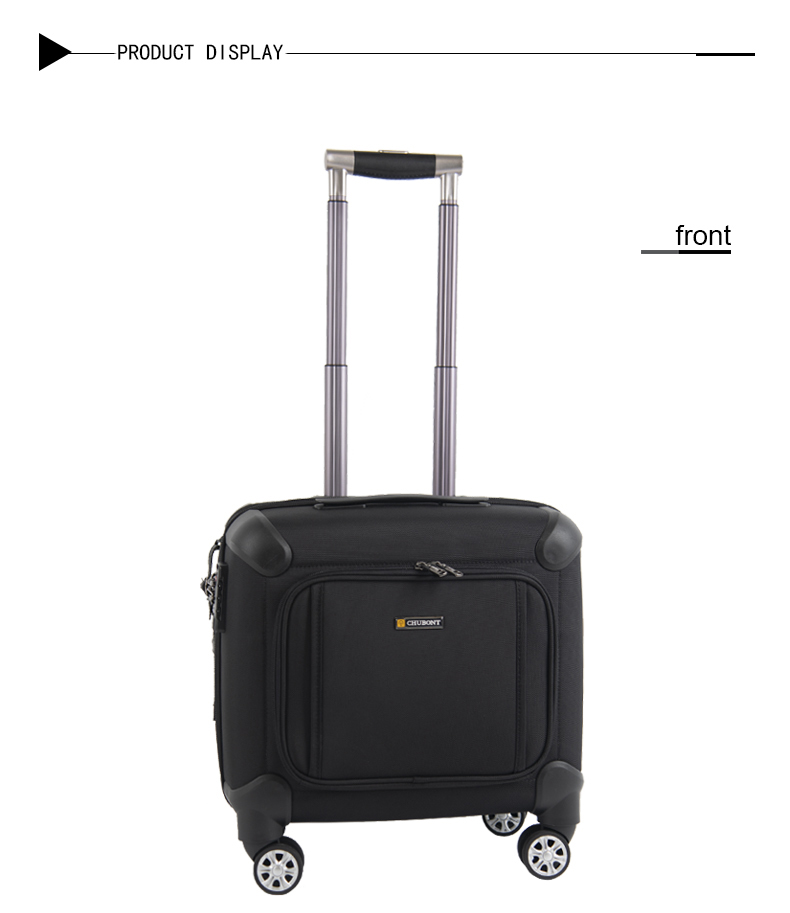
Product Overview
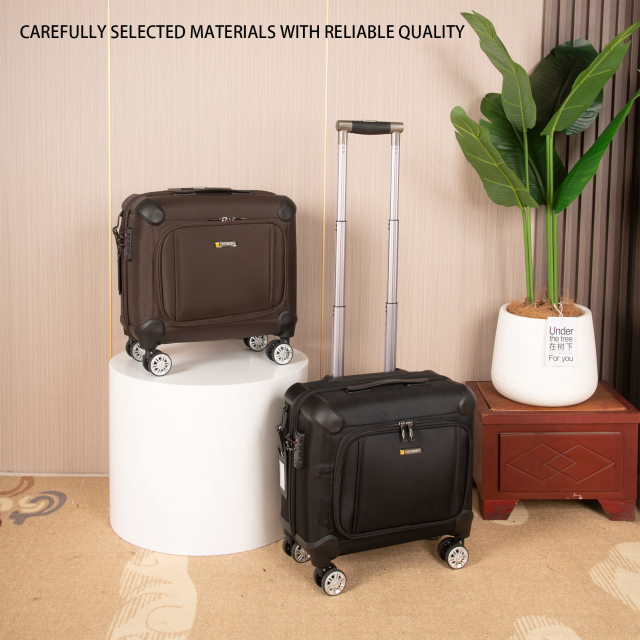
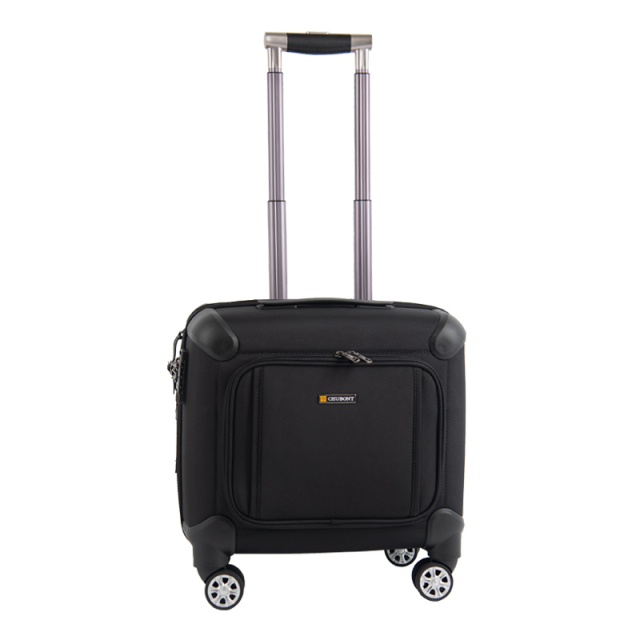
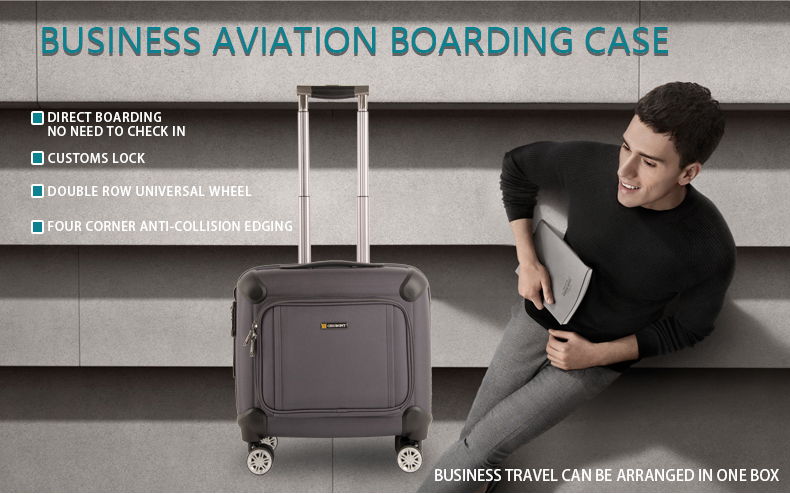
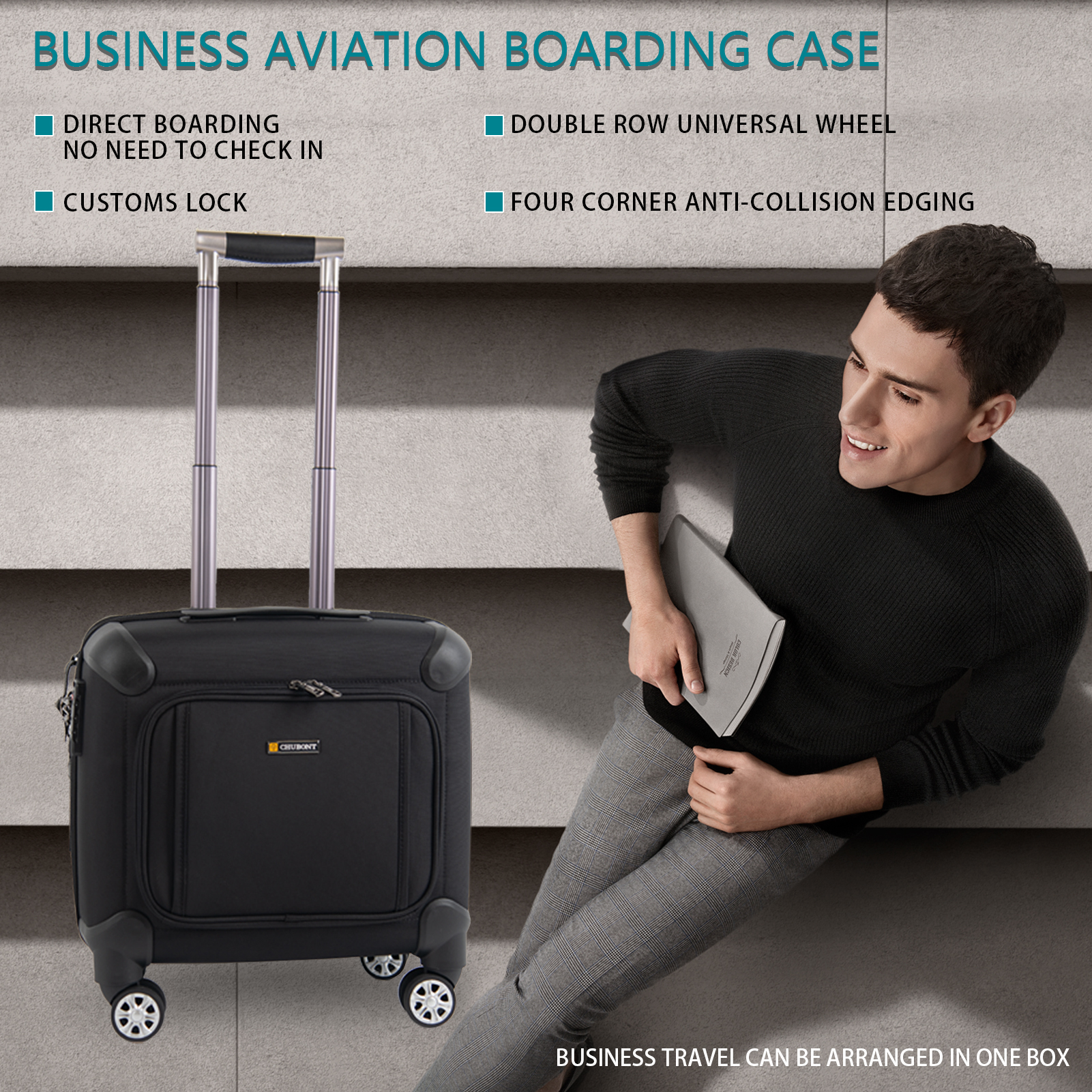
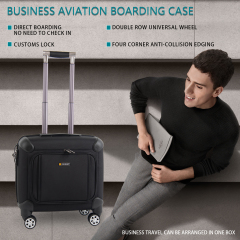
A 16-inch cabin case built around the short trip. As a luggage manufacturer, we build this case for travellers who fly often and stay briefly: one overnight, two nights at a client site, three days at a conference with a laptop, a change of clothes and a folder of documents. It is sized against a 1-3 day itinerary for one person, so it boards with you instead of disappearing onto a baggage belt. Distributors and own-brand programmes order the same case as a custom luggage line: a standard black, grey or brown finish, a logo applied to the front panel, and packing arranged around the way the goods will be sold. The build does not change between the two — same frame, same wheel assembly, same corner protection. Where a 20-inch case still leaves room for a week's margin, this carry on luggage with spinner wheels assumes you will travel light and move fast. The point of the smaller footprint is a shorter queue, an easier lift into the overhead bin and no wait at the carousel at the other end.
Scratch-Resistant Nylon Shell
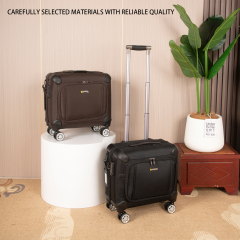
A fabric surface over a rigid body. The body of this spinner carry on luggage is a high-density nylon composite with a tightly woven structure and an outer face that stands up to abrasion. It is not a plain moulded shell that scuffs pale at the first contact with a trolley frame, and it is not the thin cloth used on entry-level soft cases that catches on every edge. The surface resists the friction of real handling: stacking, squeezing into a full overhead bin, brushing past seat frames, keys and metal clips.
Underneath, a lightweight rigid support frame holds the shape. That combination — a firm body with a scratch-resistant face — is what keeps the case looking presentable after a season of weekly flights, and what stops a laptop or a document folder from being squeezed when another bag is stacked on top.
The outer layer is slightly water-repellent. It gives paperwork and electronics a window of protection when you cross a wet apron, step out of a taxi in the rain or set the case down on damp ground. It is not a dry bag, and it will not keep contents dry in sustained rain or after immersion.
Weight matters as much as toughness on a cabin bag. Because the composite is light for its size, the case does not use up the airline's cabin allowance before your laptop, charger bag and samples are in it, which leaves the allowance for the things the trip is actually about.
Reinforced Corner Structure
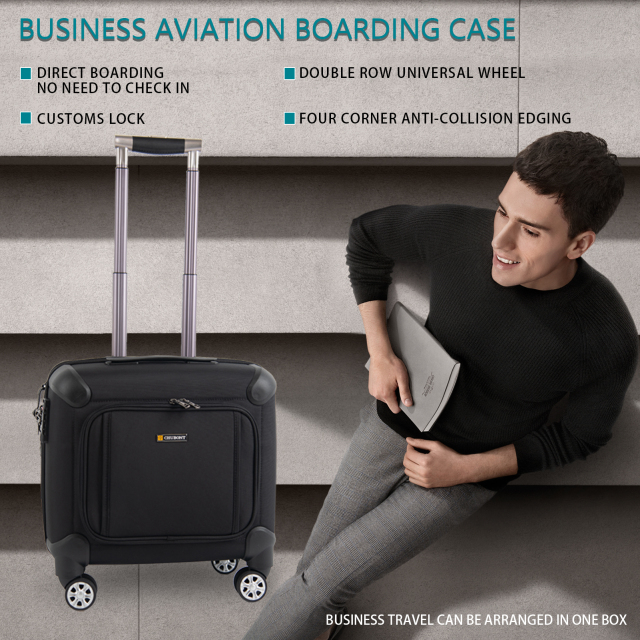
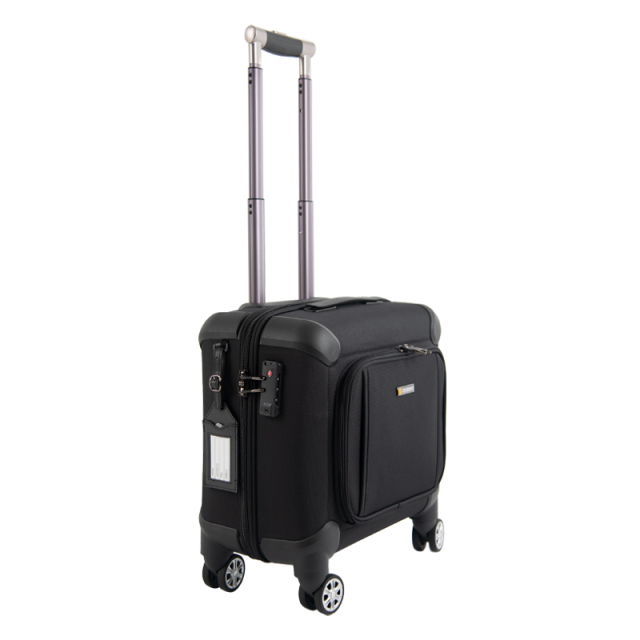
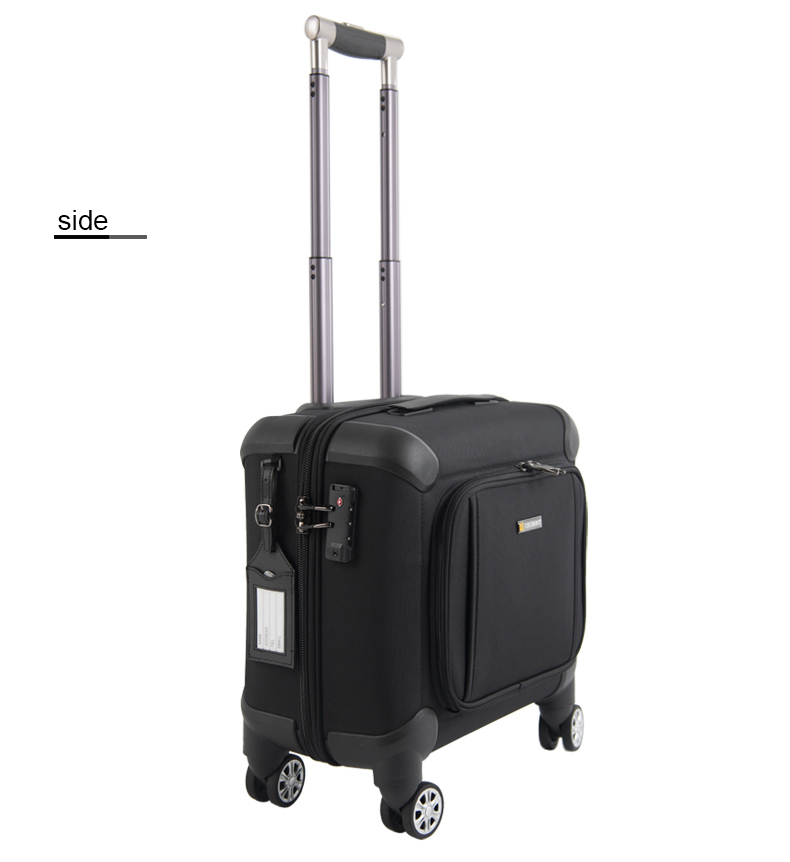
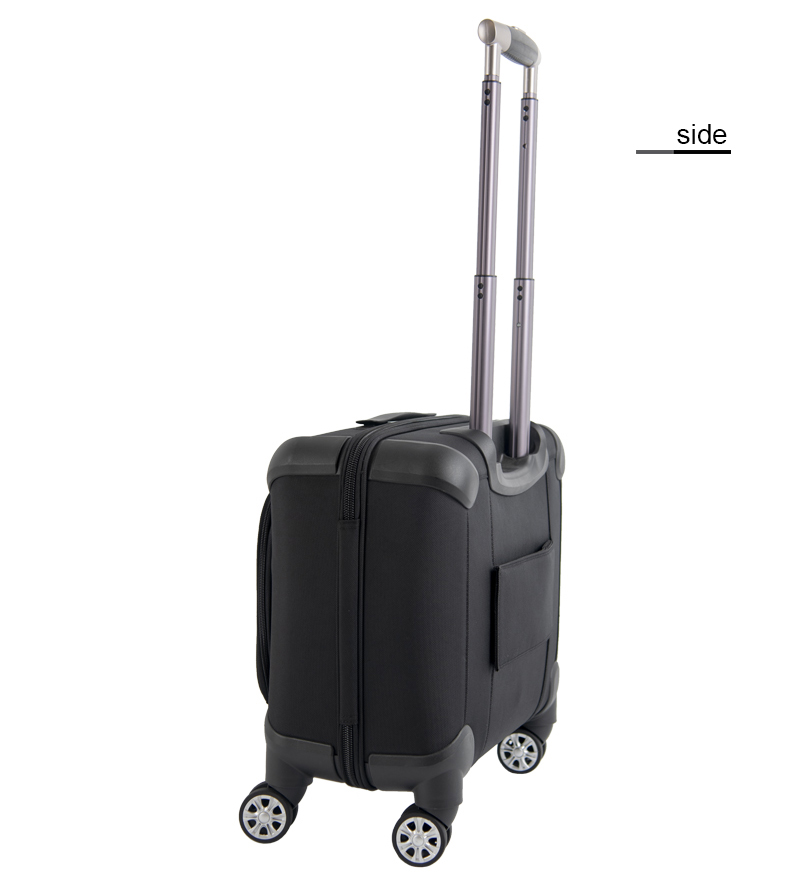
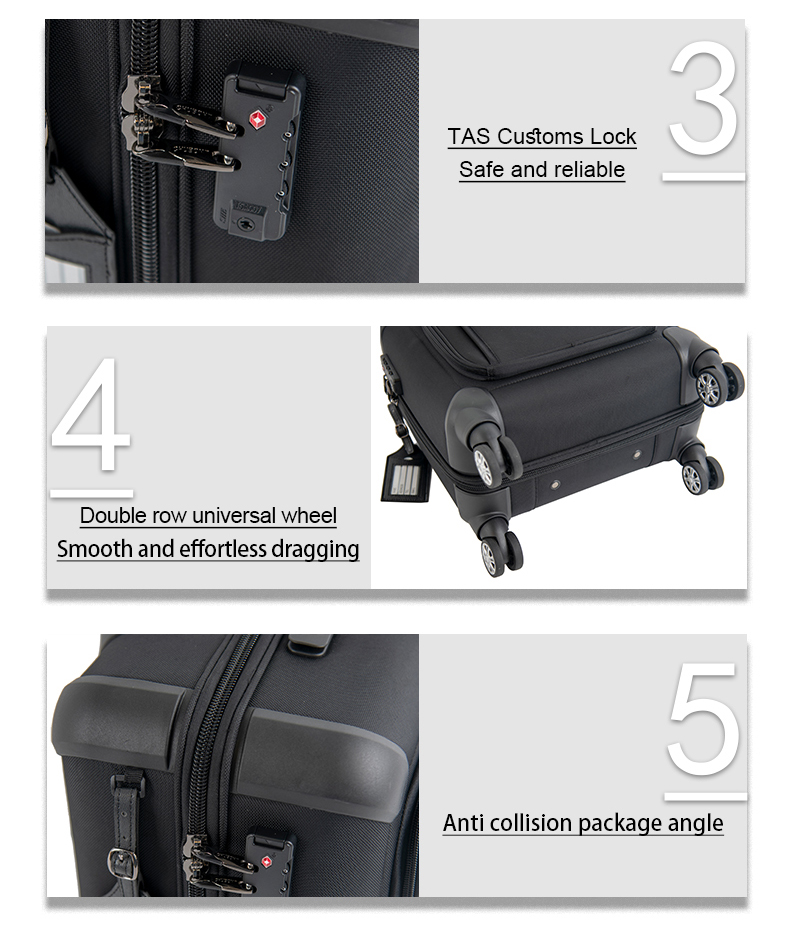
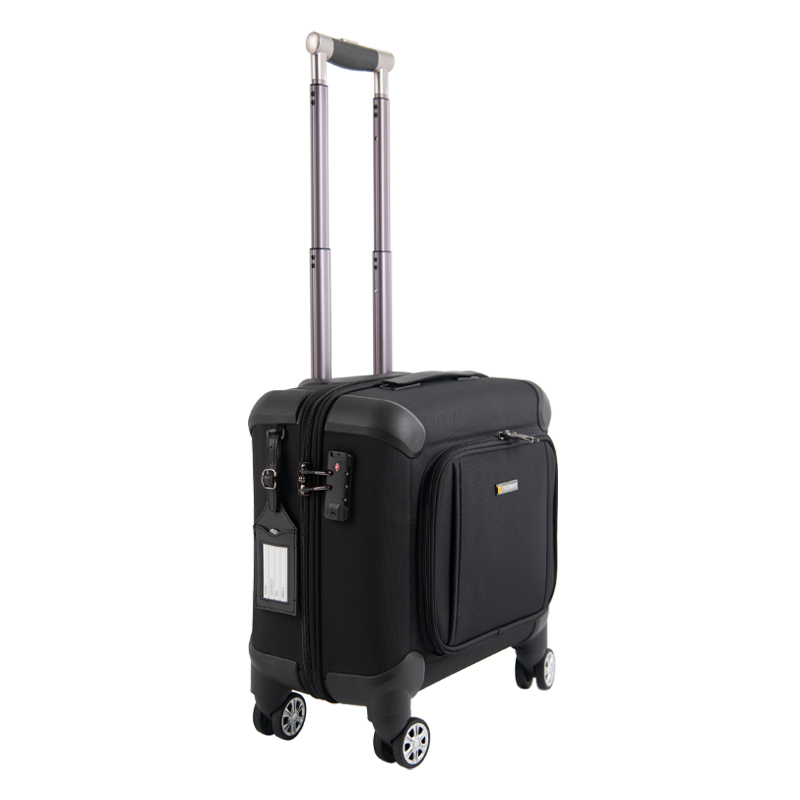
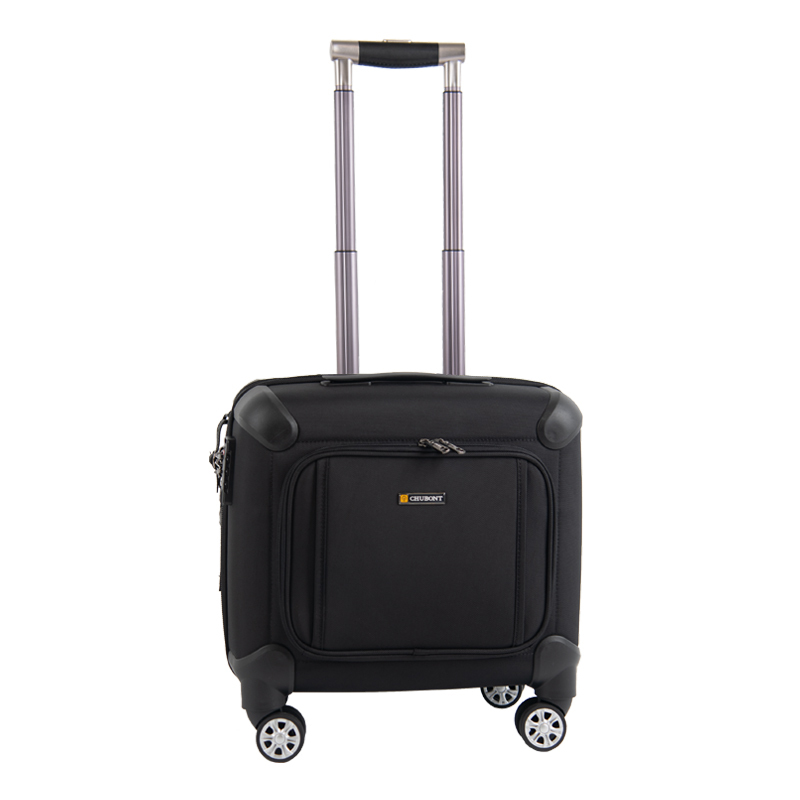
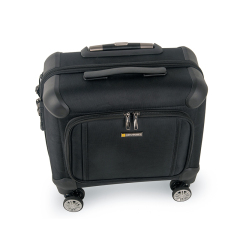
- Four thickened corner protectors. Each corner carries its own composite protector, pressed onto the chassis frame in one integrated process rather than glued on afterwards as a trim strip.
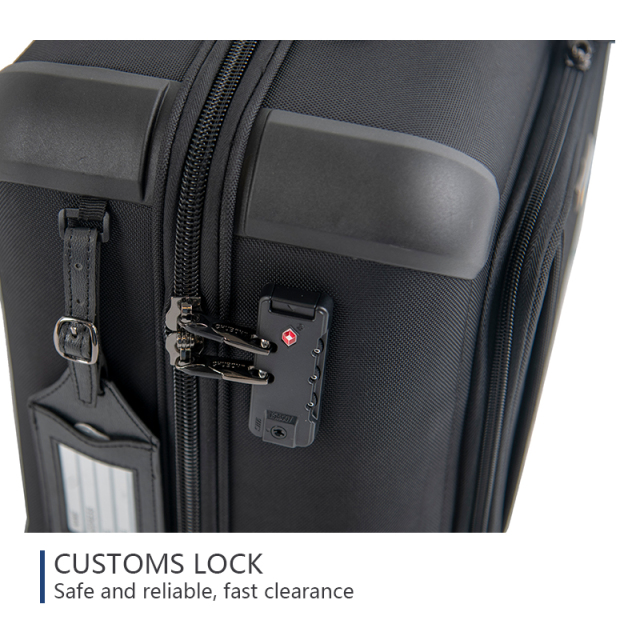
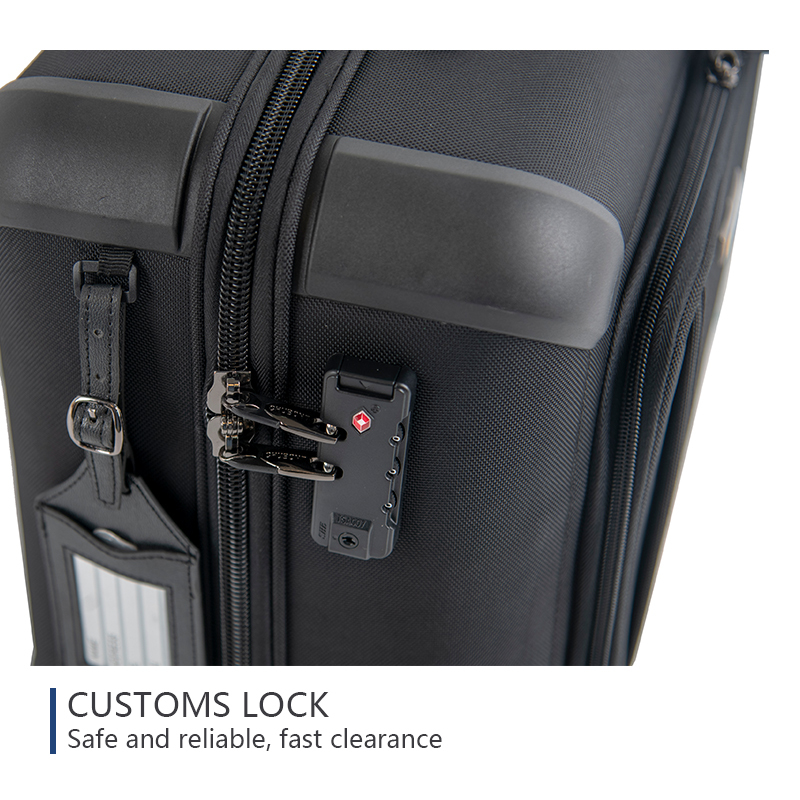
- A three-dimensional buffer. Because the protector wraps the corner in three planes, an impact is spread across the frame instead of landing on a single edge, so the corner absorbs it rather than passing it into the body.
- The part of a case that gets hit first. Corners meet carousels, van floors, kerbs, stair nosings and the frames of overhead bins. Thickening them is the most direct way to stop a case cracking, denting or deforming at the point where it is weakest.
- Dual protection for what you carry. Outside, the reinforced corners take the blow; inside, the rigid support frame keeps the enclosure square, so a laptop, a projector, a sheaf of paper contracts or a precision sample is not compressed when the case is loaded under other bags.
- Why it matters in a business travel luggage programme. On cases in daily use the corners are usually the first thing to fail, and a failed corner is what ends a case's working life. The reinforced design lowers the damage rate against cases built without corner protection, which is the difference between replacing a fleet every couple of years and topping it up.
- The carry-on is constructed with scratch-resistant nylon for structural integrity. Its 360° spinner wheels are designed for smooth mobility across varying airport surfaces, and the lightweight framework supports portability without compromising protection.
360° Spinner Wheel System
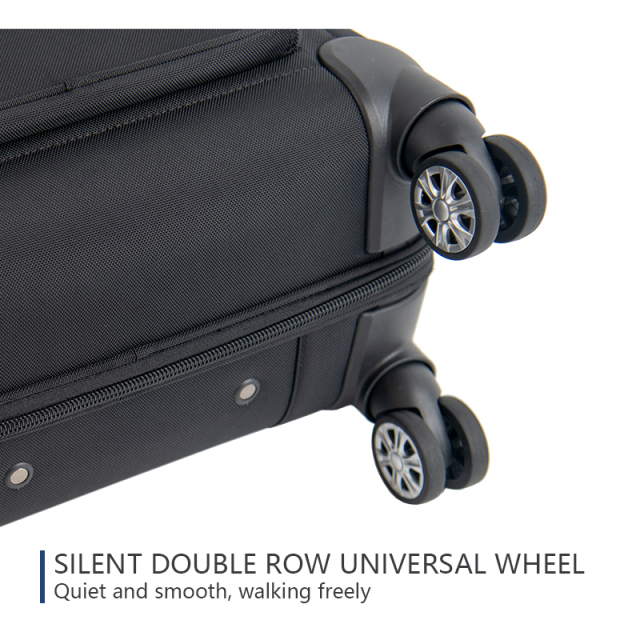
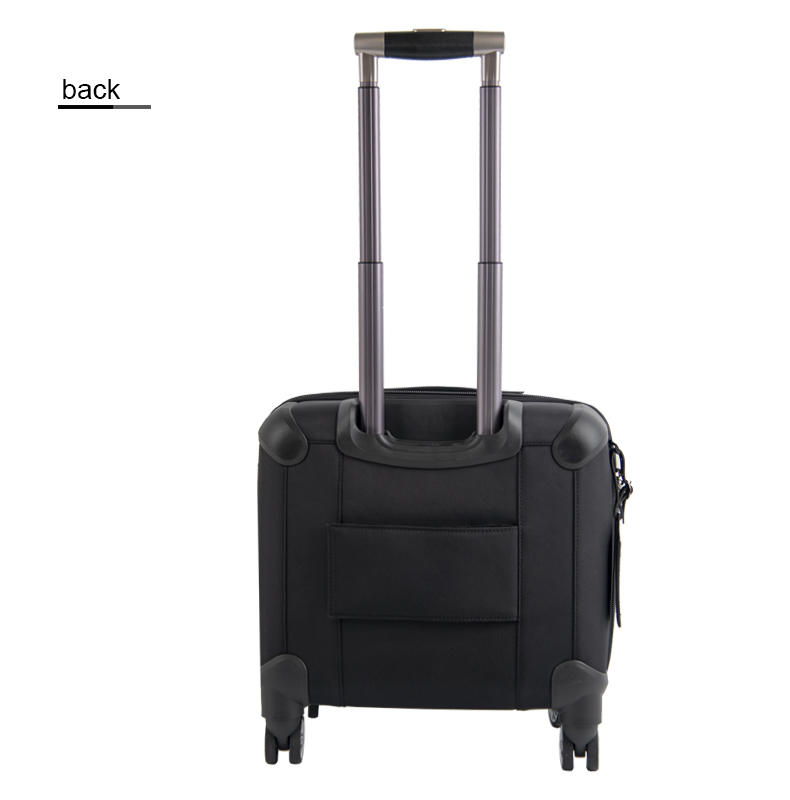
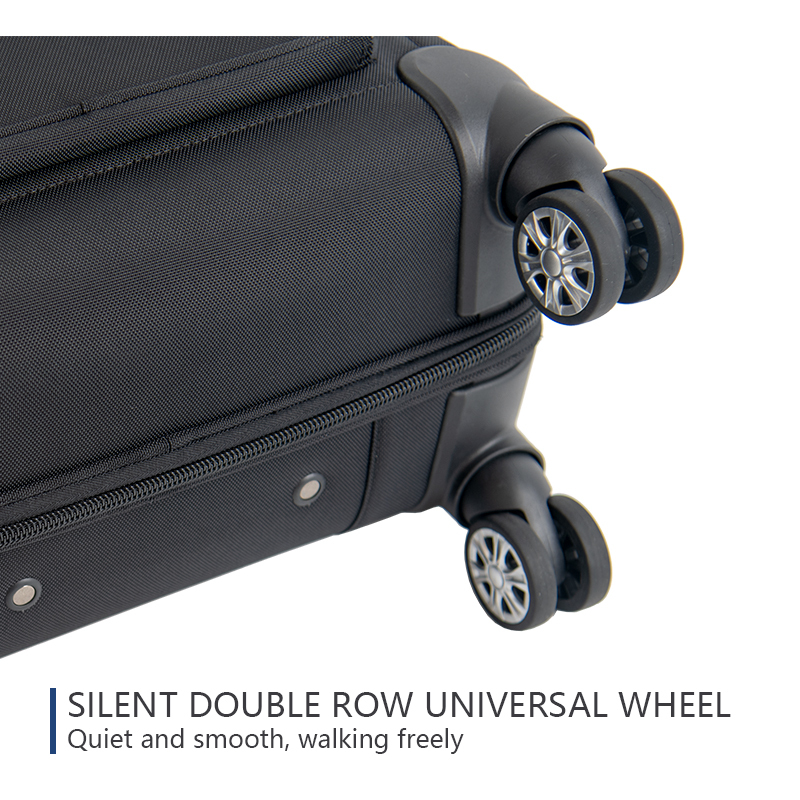
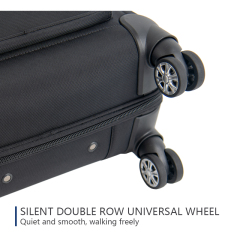
Four wheels, any direction. The base carries a full set of four 360° spinner wheels. Push the case ahead of you through a gate area, pull it behind you along a platform, or send it sideways down the aisle between seats — the wheels swivel to follow the handle, so the case moves without being lifted or tipped onto two wheels.
A carry on suitcase with wheels that only tracks forward has to be leaned and dragged. Here the case stays upright, which keeps the load over the wheels and takes the weight off your wrist and shoulder during a long transfer between terminals.
Surfaces. The wheels run on cement pavements, tiled terminal floors, airport carpet and the rubber belts of moving walkways. Narrow gaps between tiles and the lip of a lift threshold do not stop the roll, and carpet drag is light enough that the case keeps moving with a fingertip on the handle.
One hand, the other free. Because the case follows the handle, you can hold a phone, a passport and a boarding pass in the other hand and still turn a corner. That is the practical difference on a tight connection, and it is what carry on luggage with spinner wheels is for.
Less fatigue over a transfer. Twenty minutes of dragging a tilted case is what most travellers feel in the arm by the time they reach the gate. Keeping the case upright on four points spreads the effort and leaves you steady-handed at the desk.
Frame, Handle & Carry Build
- Lightweight rigid frame. The body is built on a support frame that holds its shape under stacking and keeps the case square when it is packed full.
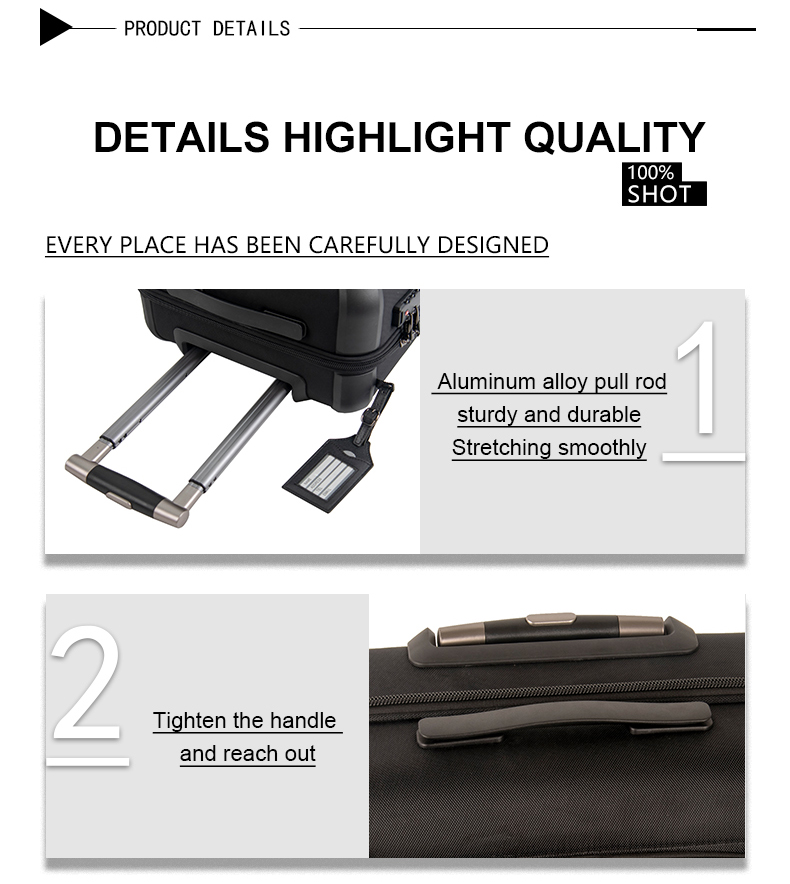
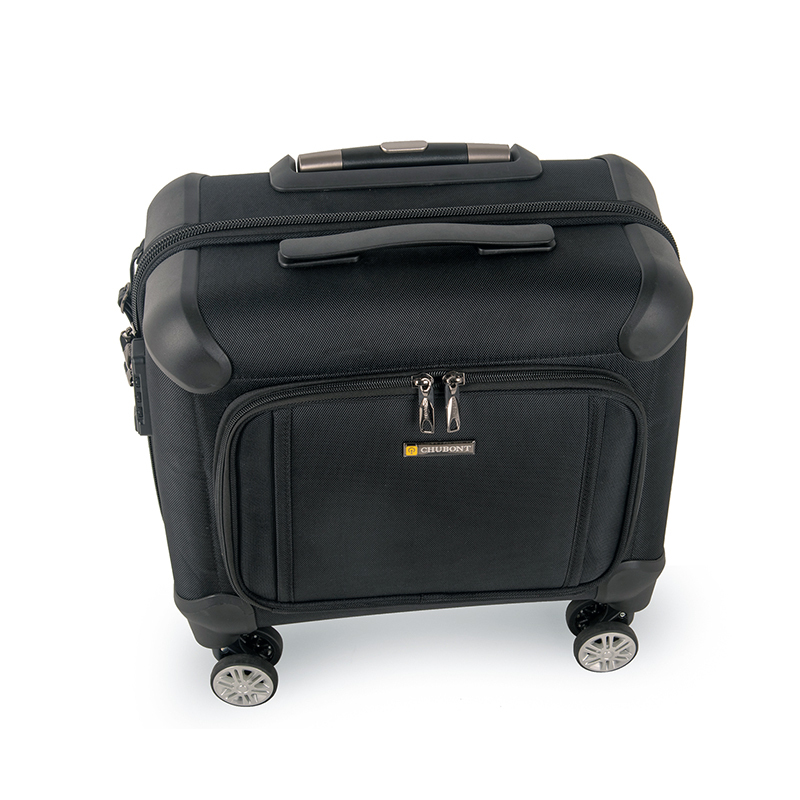
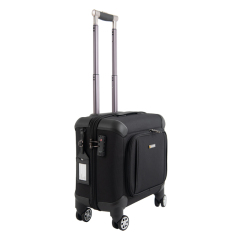
- Telescopic handle. The pull handle extends for rolling and retracts flush for the overhead bin or a car boot; when the ground is too rough to roll, the case can be carried by hand instead.
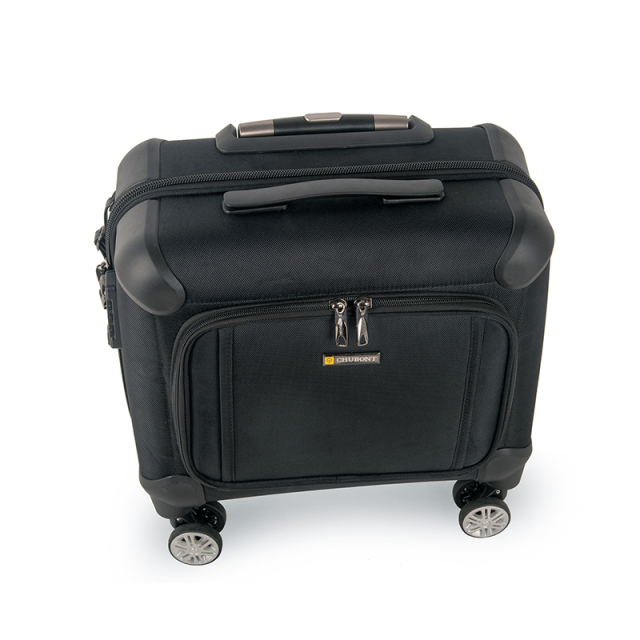
- Grab handles top and side. One at the top for lifting the case off a belt or into a bin, one at the side for carrying it flat up a staircase or out of a taxi.
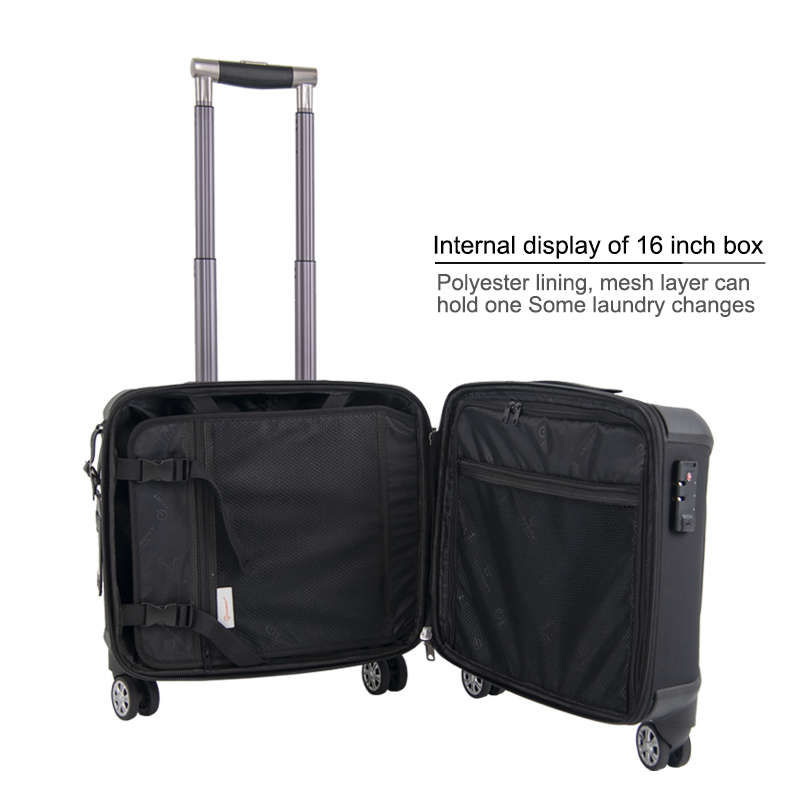
- Zippered closure. The main compartment closes with a zip that runs around the body; it opens wide when you pack and closes tight against the frame.
- Consistent build. Every spinner carry on luggage unit comes off the same line with the same frame, wheels and fittings, so a second order matches the first.
- What the frame does for the wheels. On any carry on suitcase with wheels, the frame carries the wheel mountings and the handle housing. A rigid frame keeps those mountings aligned, which is why the case still tracks straight after a few hundred trips.
Lifecycle & Spare Parts
- Wheels come off individually. The wheel assembly is modular and detachable, so a single damaged wheel can be removed and replaced on its own rather than writing off the case. - Spares can be stocked separately. A wholesale luggage buyer can hold wheel assemblies as a service part, which costs far less than replacing whole cases under an after-sales claim. - The size is fixed. Because the specification does not drift between orders, a second and third order arrive in the same footprint and the same cabin category. - The shell and corners take the wear. A protected, scratch-resistant surface slows the ageing of the visible parts, and the parts that do wear are the ones that can be identified and replaced. - What a luggage manufacturer controls. Frame, shell and wheel parts are made on our own lines, so a repeat order uses the same components rather than a substitute that happens to fit. - The economics over a three-year programme. Fewer replacements, fewer returns and a smaller spare-parts hold all lower the cost per case per year, which is the number a programme budget actually tracks. Modular parts such as the spinner wheel assembly can be serviced or upgraded, giving wholesale luggage distributors logistical flexibility. The fixed 16-inch size supports compatibility with international airline standards, and these structural choices contribute to a robust, scalable luggage system for business environments that require standardized equipment and reduced maintenance. The 360° spinner wheels provide multi-directional movement, which boosts user efficiency in congested transit points. The value is in the trips it saves you time on. A spinner carry on suitcase at cabin size takes the check-in queue, the bag-drop conversation and the carousel wait out of a short trip. On a two-day visit that is often the difference between catching the evening flight home and missing it. Efficiency measured in allowance. Because the body is light for its size, packing it does not swallow the cabin weight limit before your laptop, charger bag and samples are in. You carry more of what the trip is actually about. Durability that shows up as a lower replacement rate. A case that keeps its shape and its surface through repeated handling is bought once. A cheaper case that scuffs, dents at the corner and loses a wheel is bought again — twice as often, and at the worst possible moment. Consistency across a fleet. One size, one colour and one specification mean a replacement unit matches the twenty already in service. For a corporate programme that is what makes standardisation practical rather than theoretical. A standard body that takes a brand. The front panel takes a logo without changing the tooling, so the same model can carry a company mark on one order and stay plain on the next. That is the advantage of buying from a luggage manufacturer that builds the body itself: the shape stays the same while the finish changes. The wheel assembly uses a complete set of 360° silent universal spinner four-wheel components. Its modular, detachable structure allows individual wheels to be independently disassembled, repaired, and replaced, and wholesalers can stock wheel assembly parts separately to reduce after-sales maintenance costs. The omnidirectional rotating structure supports smooth forward, backward, left, right, and diagonal movement without blind spots, so the carry-on can move through crowded airport waiting halls, subway passages, and office building corridors with minimal resistance, reducing arm fatigue during extended dragging. The wheels are compatible with cement, tiles, airport carpets, and conveyor belts.
Size & Boarding Guide
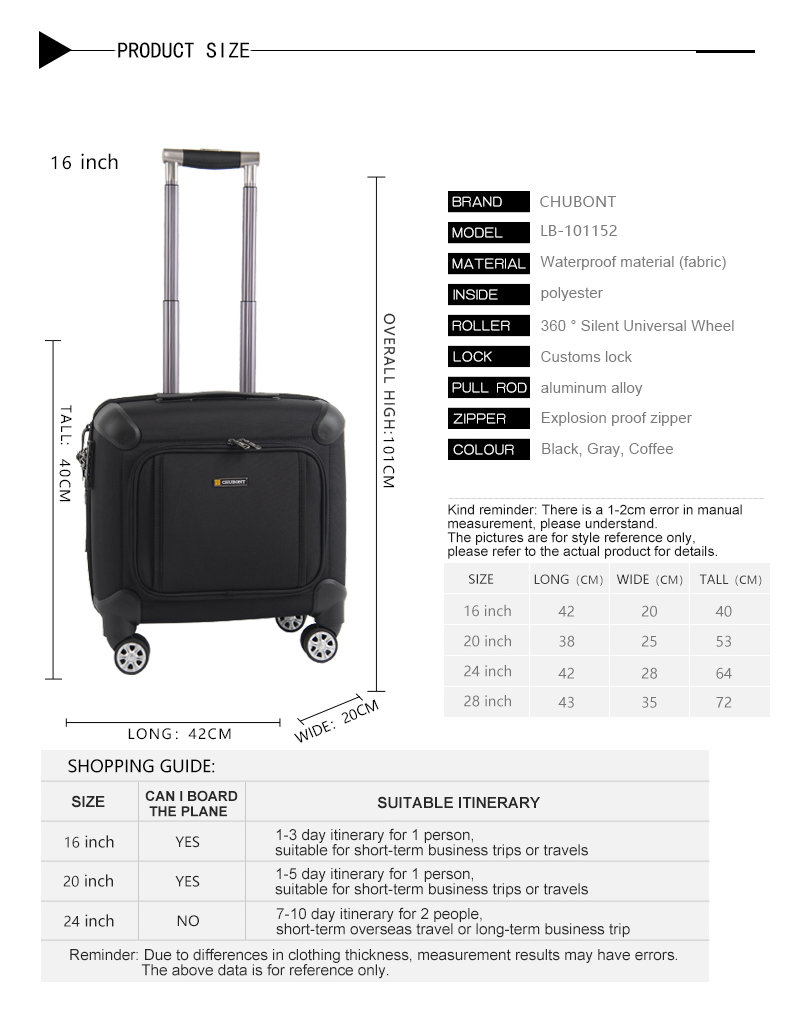
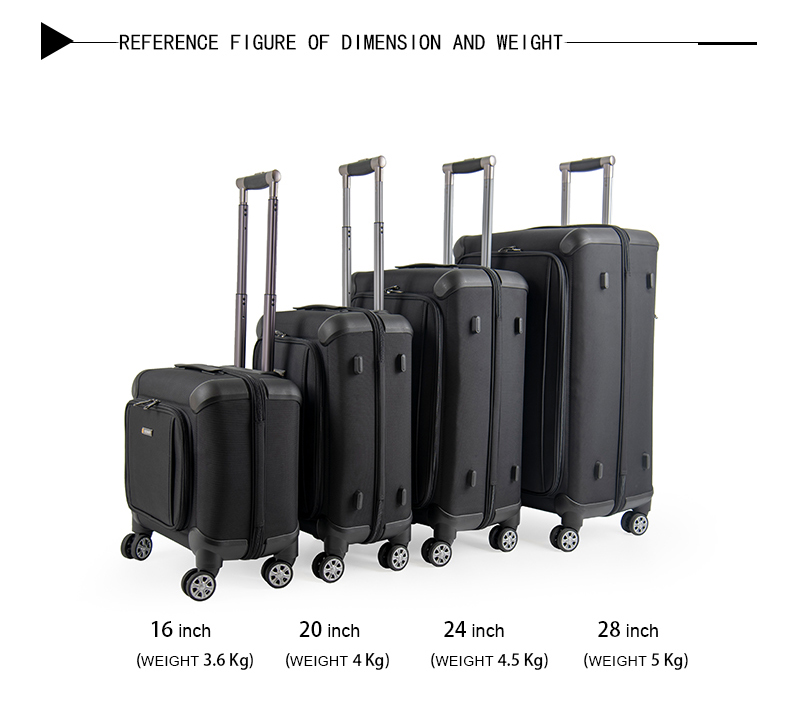
- 16 inch — cabin: yes. A 1-3 day itinerary for 1 person, suitable for short-term business trips or travels. This is the size you take when a carousel wait would cost you more time than packing a little tighter.
- 20 inch — cabin: yes. A 1-5 day itinerary for 1 person, suitable for short-term business trips or travels. Take it when most of your trips run to four or five days; where the itinerary is usually shorter, the 16-inch carry on suitcase with wheels gives you the same boarding rights in a smaller footprint.
- 24 inch — cabin: no. A 7-10 day itinerary for 2 people, short-term overseas travel or long-term business trip. It has to be checked, which makes it a different purchase entirely: more room, more waiting.
- What the difference feels like on the day. A compact body lifts into an overhead compartment with one hand and clears the seat row without being turned sideways, which is what keeps a transfer moving when the gate is already boarding.
- A note on fit. Because clothing thickness varies, packing results and measurements can differ, and the itinerary guidance above is a reference rather than a promise. Check the case against your airline's current cabin dimensions before a first production run.
- One-night client visit. Out on a morning flight, meeting in the afternoon, back the next evening. A change of clothes, a folder and a laptop fit without a second bag or a checked item. - Two-day conference or trade show. A jacket, two shirts, a charger bag and the show catalogue. This is where business travel luggage earns its keep: the case stays with you from the taxi rank to the stand and back to the room. - Site inspection or fieldwork. Documents, a laptop and safety paperwork travel protected inside a rigid frame, and the surface does not need babying between the car park and the site office. - A day of back-to-back meetings in another city. With an overnight kit packed just in case, the case rolls through an office lobby without looking like holiday luggage. - Crew and field-staff issue. One model, one colour and one specification for people who travel weekly and need a replacement that matches the rest of the team. - Demonstration stock for wholesale luggage buyers. A compact cabin size is the easiest case to present to a wholesale account: it boards, it lifts with one hand, and the corner and wheel build can be demonstrated on a tabletop.
Specifications
This carry-on fits into corporate travel logistics and wholesale luggage portfolios, where its compact profile supports streamlined packing and faster transit through security and boarding. Its alignment with airline carry-on policies helps it adapt across distribution systems serving professional travelers and institutional buyers.
| Model | LB-101152 |
|---|
| Size | 16 inch |
| Cabin boarding | Yes |
| Typical itinerary | 1-3 day itinerary for 1 person |
| Shell | High-density scratch-resistant nylon composite |
| Frame | Lightweight rigid internal support frame |
| Surface | Slightly water-repellent, wear-resistant outer layer |
| Wheels | Four 360° spinner wheels, modular assembly |
| Corners | Four thickened composite corner protectors, integrated pressing |
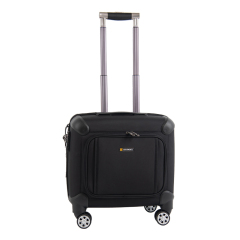
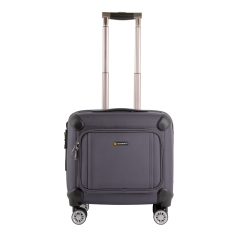
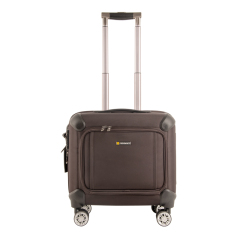
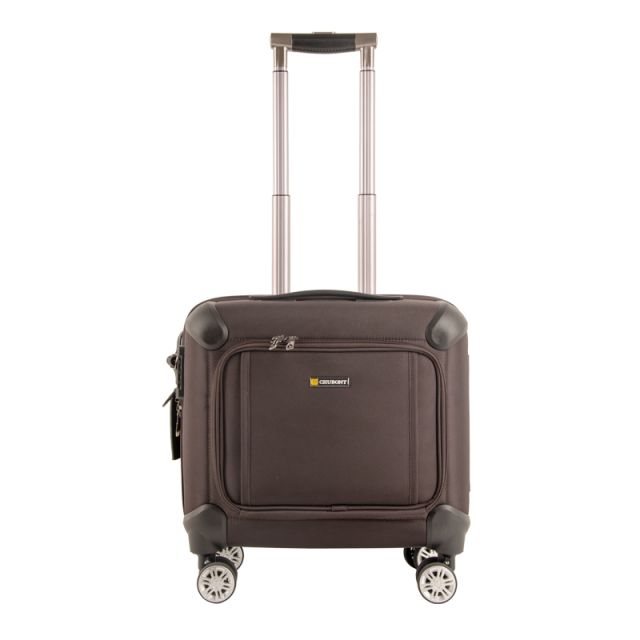
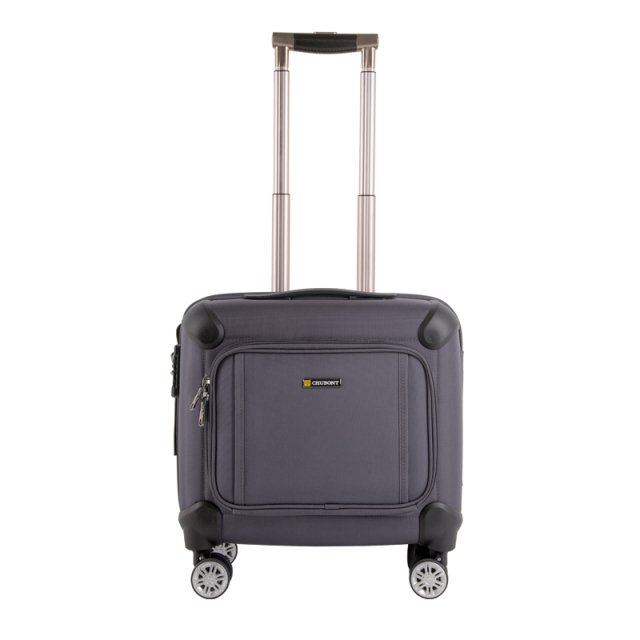
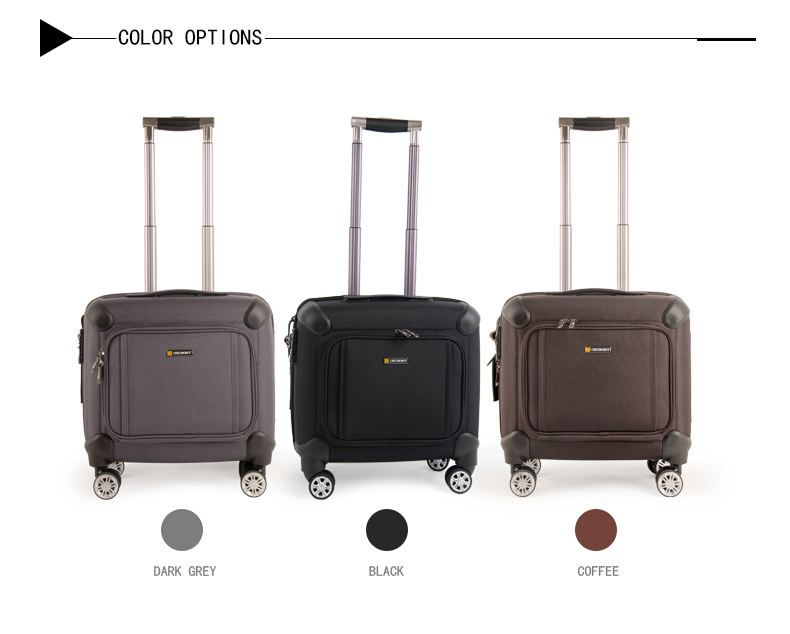
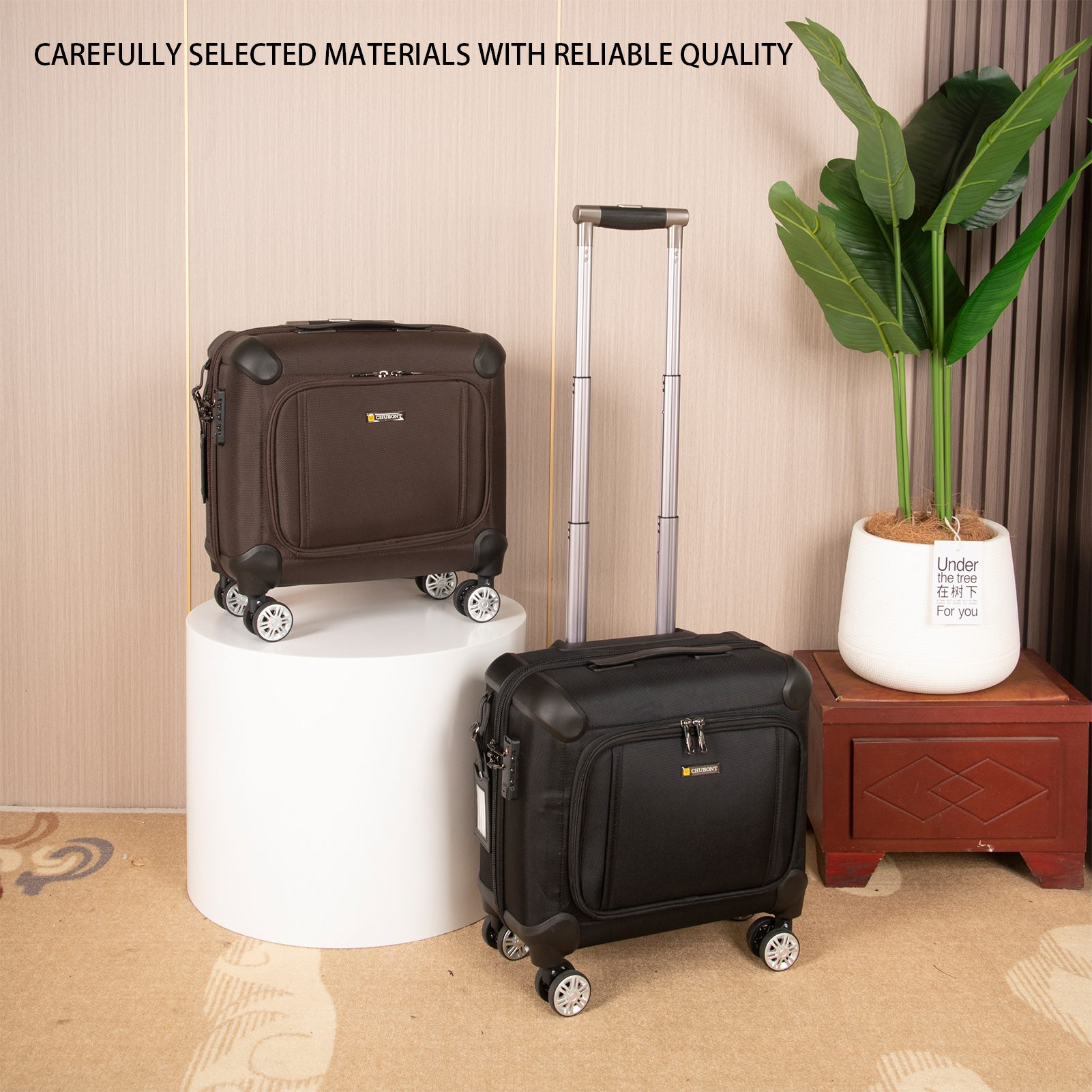
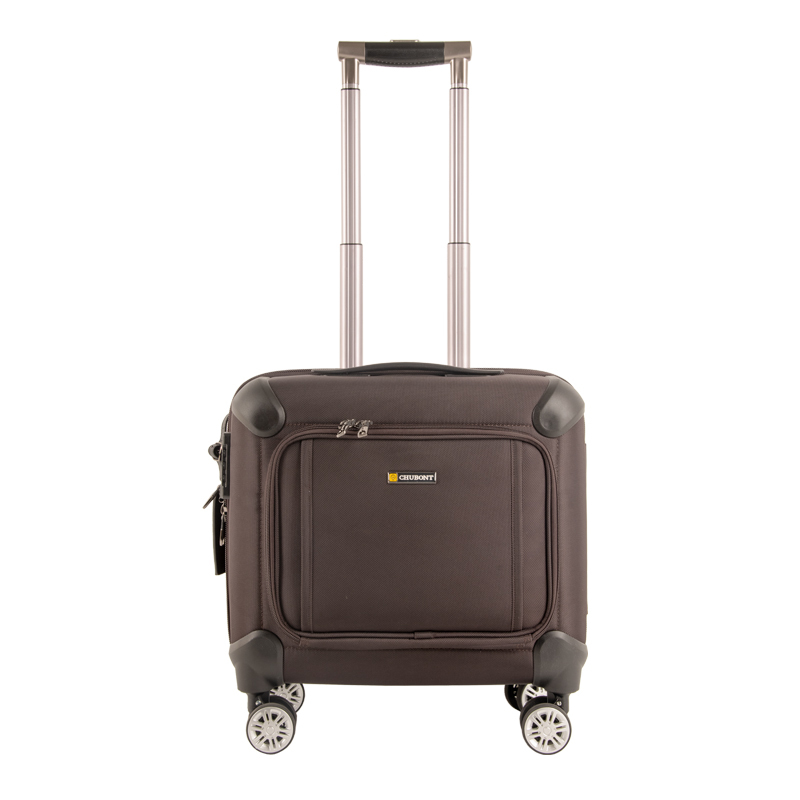
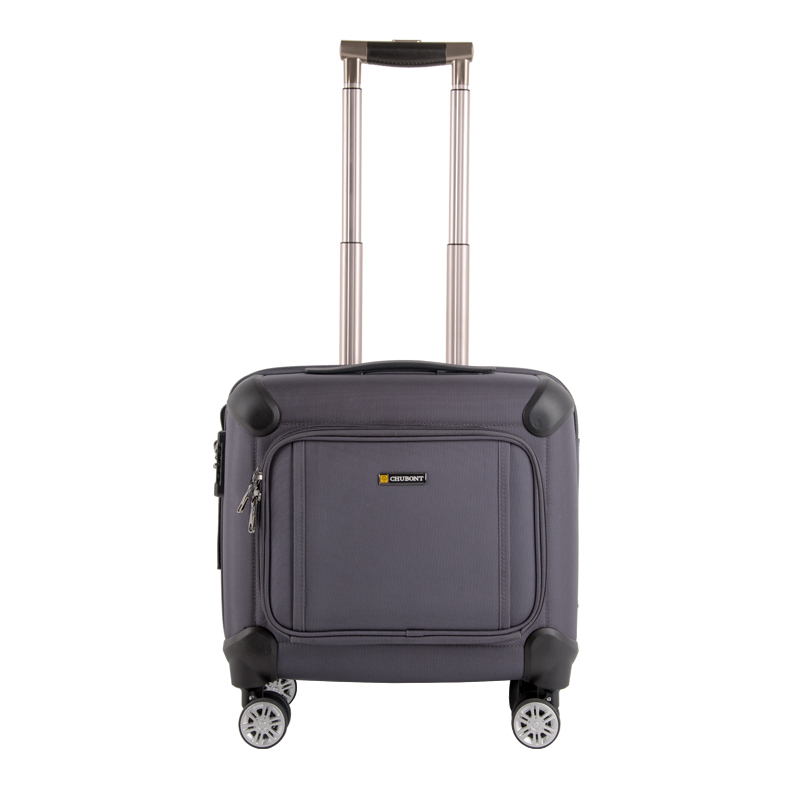
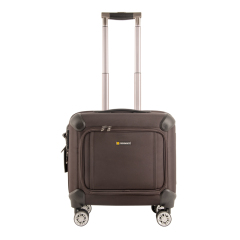
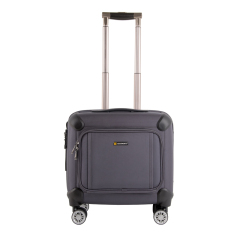
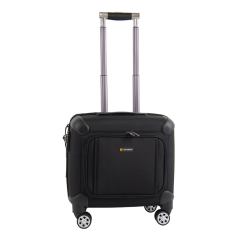
| Colours | Black, grey, brown |
| Closure | Zippered main compartment |
Corporate & Wholesale Programmes
Who buys it. Two groups. The first is the individual who flies short and often — a sales manager, a consultant, an engineer on site visits — and buys on the size, the wheels and the fact that nothing needs checking in. The second is the organisation: corporate travel and administration teams standardising cabin luggage for staff, wholesalers adding a compact cabin size to a shelf, promotional and gift suppliers building a branded run, and distributors serving markets across the Middle East, Asia and North America. A uniform look across a team. Because the size, the finish and the fittings are fixed, a replacement unit matches the ones already in service. Staff travel with the same case whether they joined this year or three years ago, and an administration team can top up a fleet without re-specifying anything. Custom luggage programmes. Logo application, colour direction and packing are set per programme, and the artwork and placement are agreed before production. Share the logo file and the colour reference you want matched, and our team will confirm what can be done on this body. The supply behind the order. We have been building luggage and bags since 1998 and run two plants with our own production equipment and skilled staff, so a large programme is planned across both rather than outsourced. The model serves frequent business travelers and corporate management who value lightweight, durable luggage with flexible airport access. For organisational purchasing, it supports unified procurement for corporate administrative travel, luggage wholesalers, and customized gift suppliers, including bulk OEM and material customization for distribution across the Middle East, Asia, and North America. As a core model in the brand's standardized business luggage range, its uniform size and workmanship make bulk purchasing easier and help companies present a consistent luggage image for employees, and it can be incorporated into a standardized travel management system to reduce overall procurement and maintenance costs. The design focuses on business efficiency: the compact size supports faster security checks and boarding, the lightweight structure preserves baggage weight allowance, and the durable build helps reduce the wear and tear costs of frequent bag replacement, balancing personal practicality with the standardized needs of corporate bulk procurement.
Ordering & Delivery
- Send the model, the size mix, the colour split and the quantity for each line, so the quotation matches what you actually need.
- Confirm the customisation: logo artwork, placement and colour direction. Your sales contact will confirm which options apply to this model and what they change.
- Choose the packing. Orders are arranged as basic packing, custom packing, or matched packaging materials, depending on the programme and how the goods will be received at your end.
- Agree the delivery schedule, the shipping terms and the inspection arrangement for the order with your sales contact. Price, lead time and terms depend on quantity, colour, logo method and packing, and are confirmed in writing for each order.
- Approve the confirmed specification before production starts, then keep the approved sheet as the reference for the next repeat order.
Quality Control & Inspection
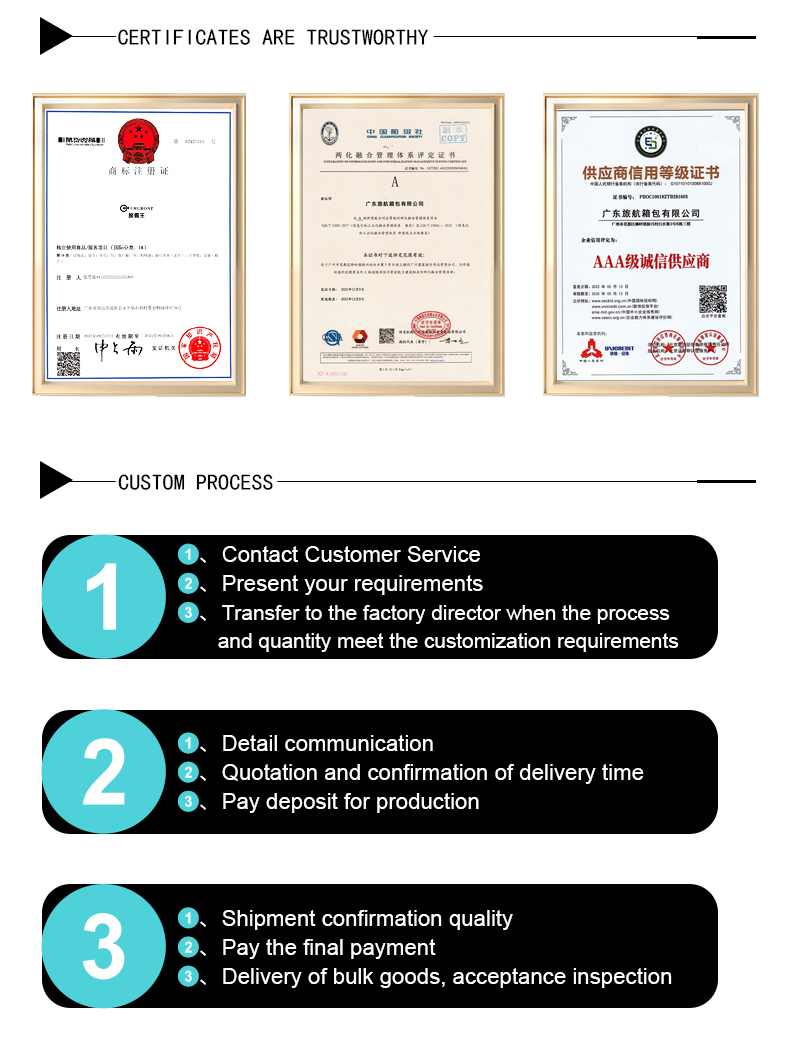
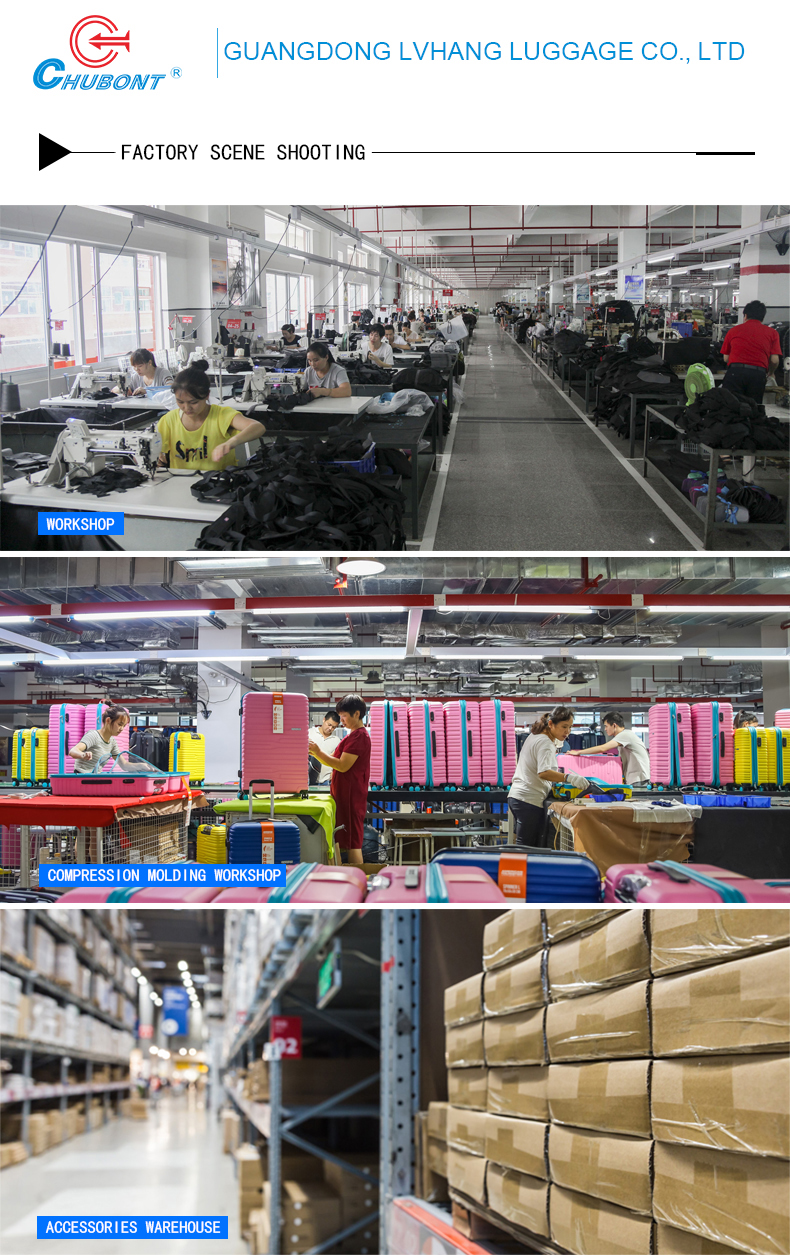
Every CHUBONT order passes five checkpoints inside our own workshops: incoming materials, pre-production samples, in-production patrols, finished-goods review, and a final pre-shipment check against the order. Batch records are kept, so buyers can see what was checked and when. You are welcome to send your own QC team, or appoint an independent inspector such as SGS or BV, to verify goods before they leave, and we support factory audits and on-site monitoring while production runs. Shipping marks, packing lists and carton labelling are confirmed against your instructions before loading.
FAQ
How do the 360° spinner wheels help when a connection is tight?
All four wheels swivel independently, so the case turns with a push of the handle instead of being tipped onto two wheels and dragged. You can move it beside you through a crowded gate area, roll it down the aisle of a train and pivot it in a lift without lifting it. That is what you get from carry on luggage with spinner wheels: the case follows your hand, and the other hand stays on a passport, a phone or a coffee.
Will a 16-inch case really cover two or three days away?
It is sized against a 1-3 day itinerary for one person: a change of clothes, a spare shirt, a laptop, chargers and paperwork. If you travel with a suit carrier, running shoes or a second pair of shoes for every day, it will feel tight, and that is when a 20-inch or 24-inch case makes more sense. For regular short business travel luggage, the compact size is what removes the check-in queue entirely.
What is the shell made of, and how does it cope with scratches?
The body is a high-density nylon composite, built over a lightweight rigid support frame, and its outer surface is finished to absorb scuffing rather than show it. Scuffs from stacking, handling and metal items in a pocket stay on the surface instead of cutting into the body, so the case keeps a presentable face through a busy season. On this spinner carry on luggage, that soft-touch surface over a firm body is what makes the difference.
Can a damaged wheel be replaced without replacing the whole case?
Yes. The wheel assembly is modular, and each wheel is a separate component that can be removed and replaced on its own. On a spinner carry on suitcase that matters, because a wheel is the part most likely to be caught by a carousel or a kerb, and a replaceable one keeps the case in service instead of writing it off. Wheel assemblies can be ordered as a service part for a distribution or fleet programme.
Which colours are available?
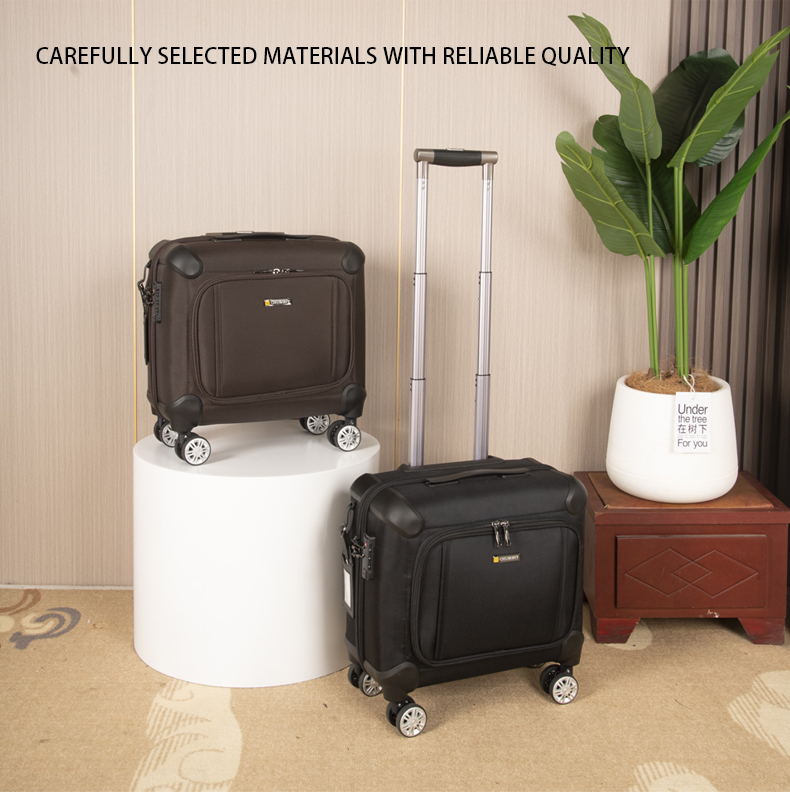
The case is finished in black, grey and brown, all three in a low-sheen surface that hides handling marks better than a high-gloss shell. If a team or a programme needs to sit in one colour, send the shade you want matched and our team will confirm what can be done before production begins.