Product Overview
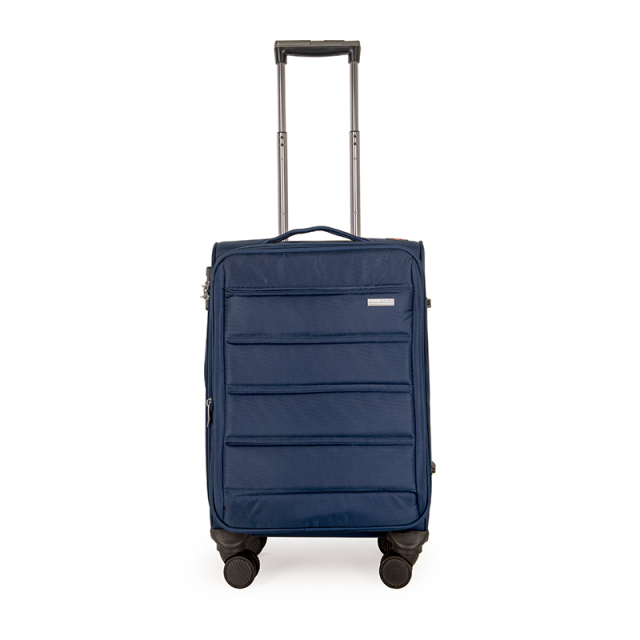
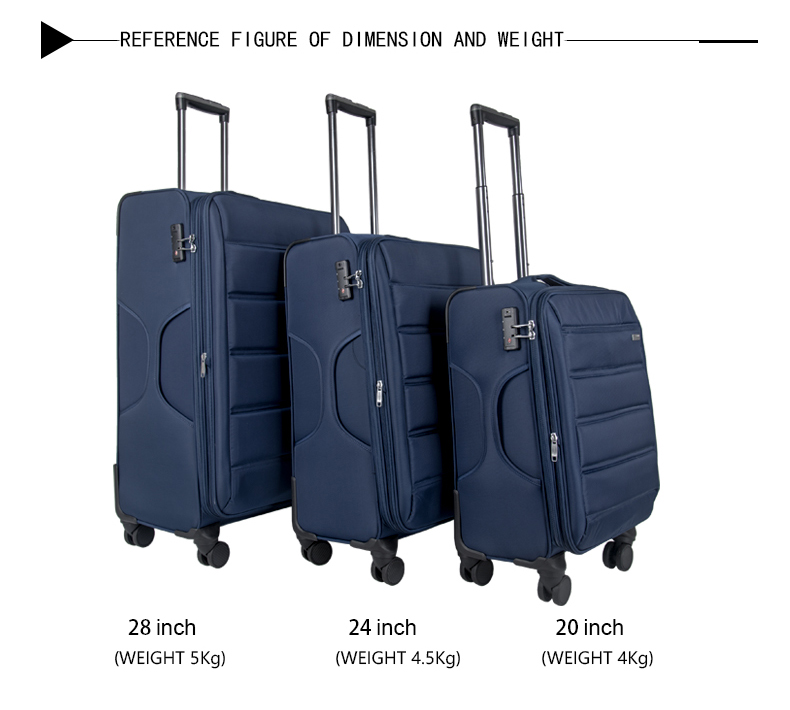
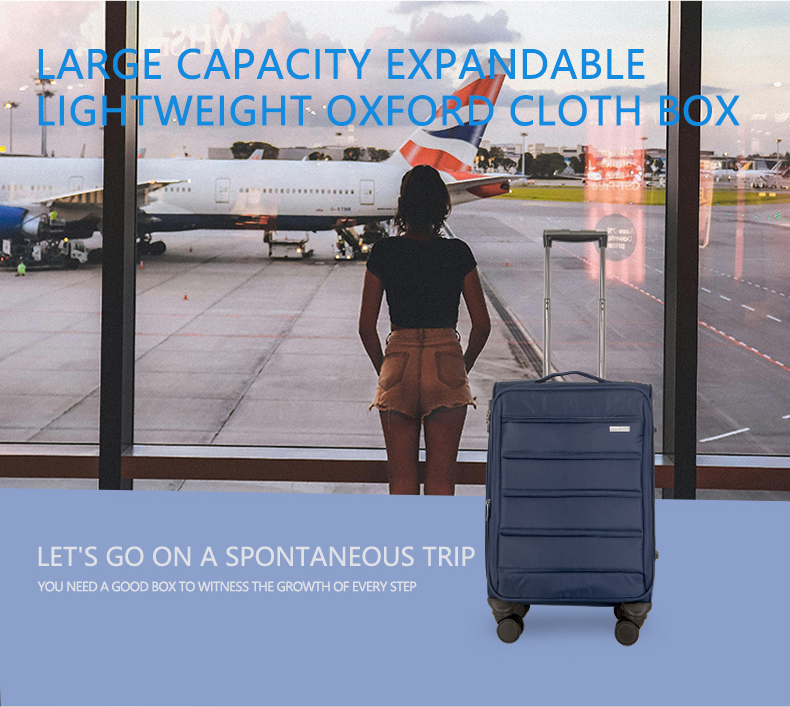
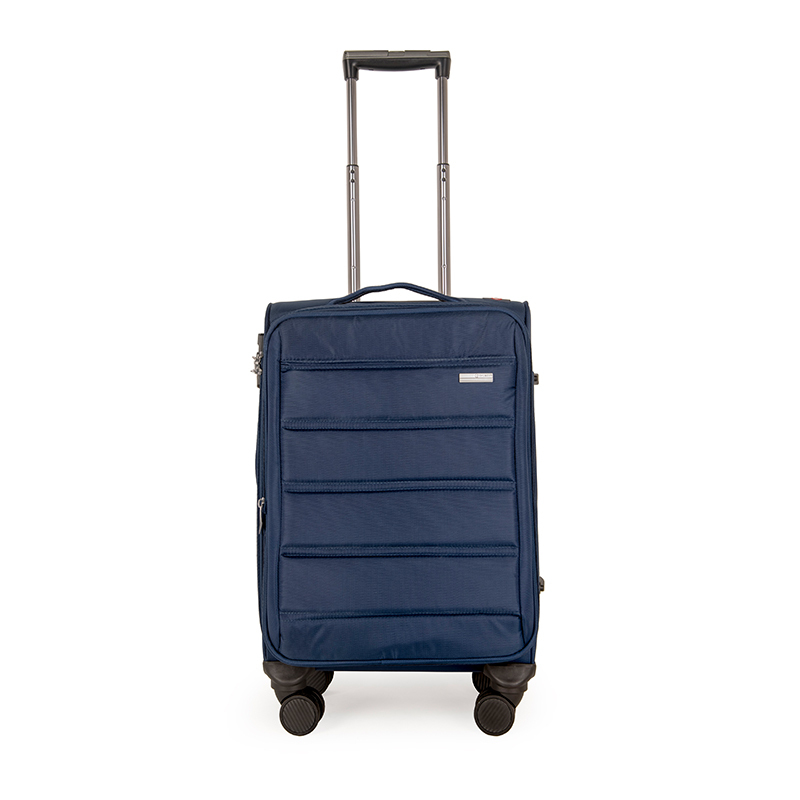
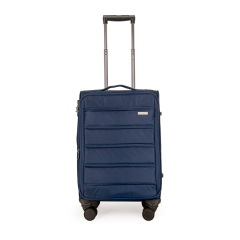
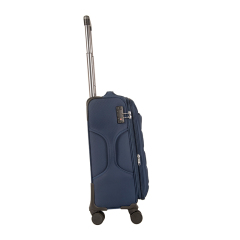
CHUBONT builds this softside range for the long-haul half of business travel, where a cabin bag alone will not cover the week and the case has to come through conveyor belts, transfer coaches and hotel luggage rooms still looking like it belongs to a company that cares. Three sizes — 20, 24 and 28 inch — share one Oxford shell, one wheel set, one handle and one lock, so a traveller can move up a size and a team can be issued luggage sets with spinner wheels that read as one design on the carousel.
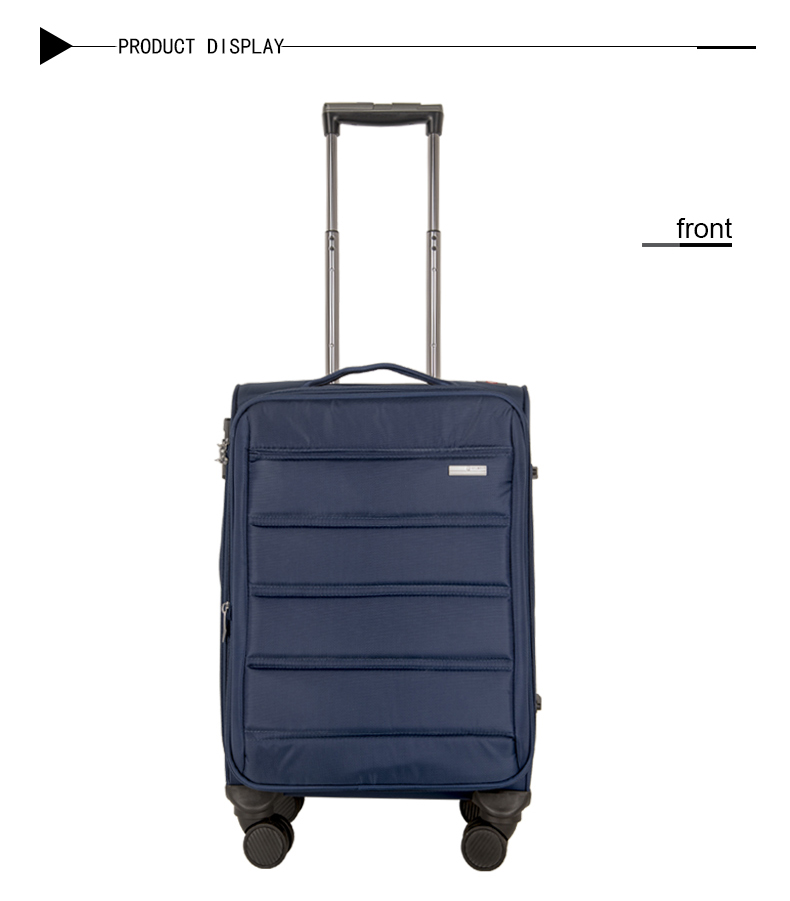
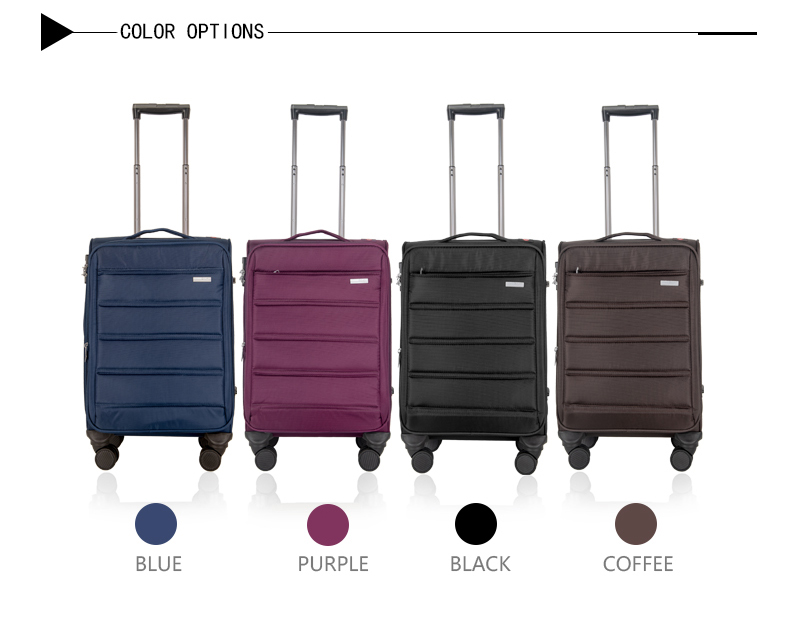
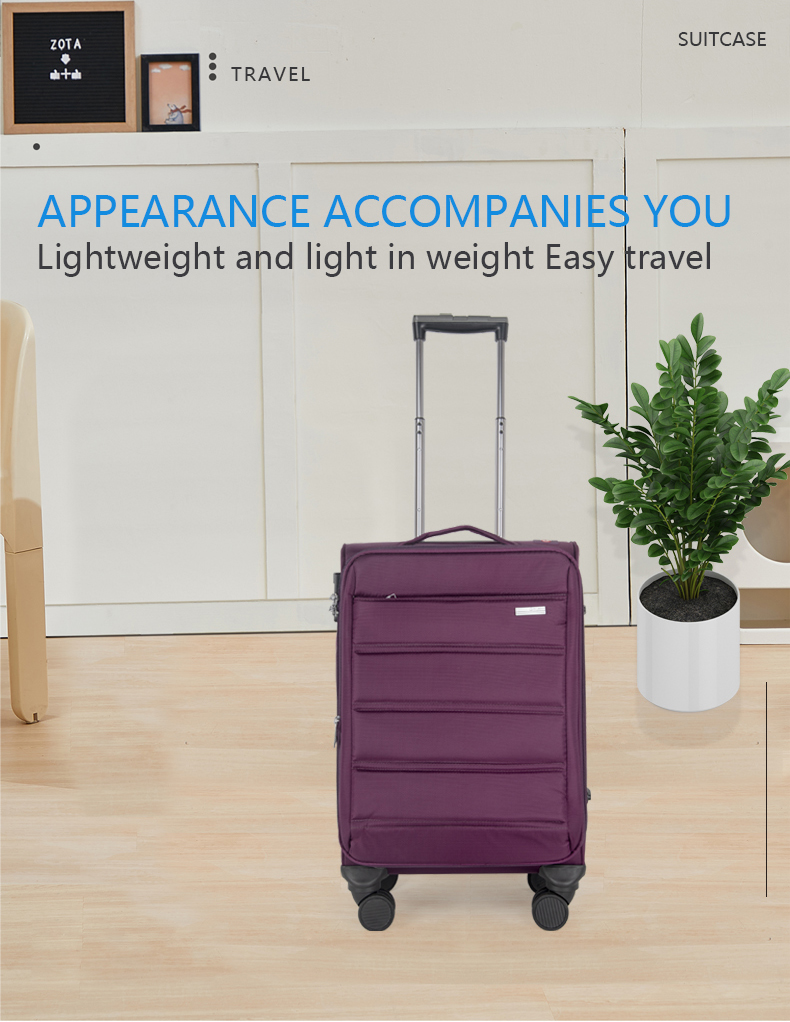
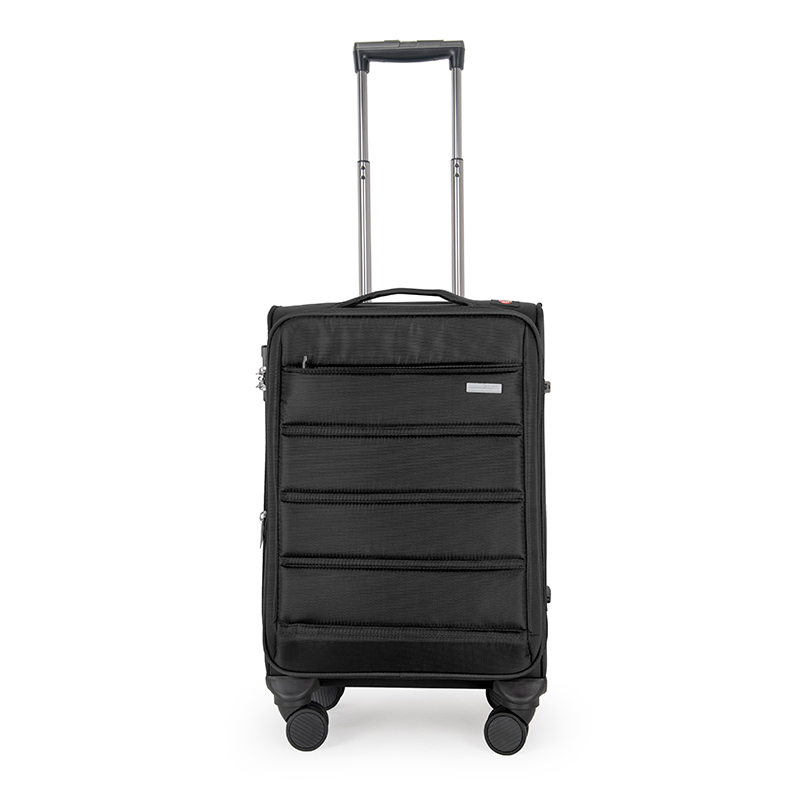
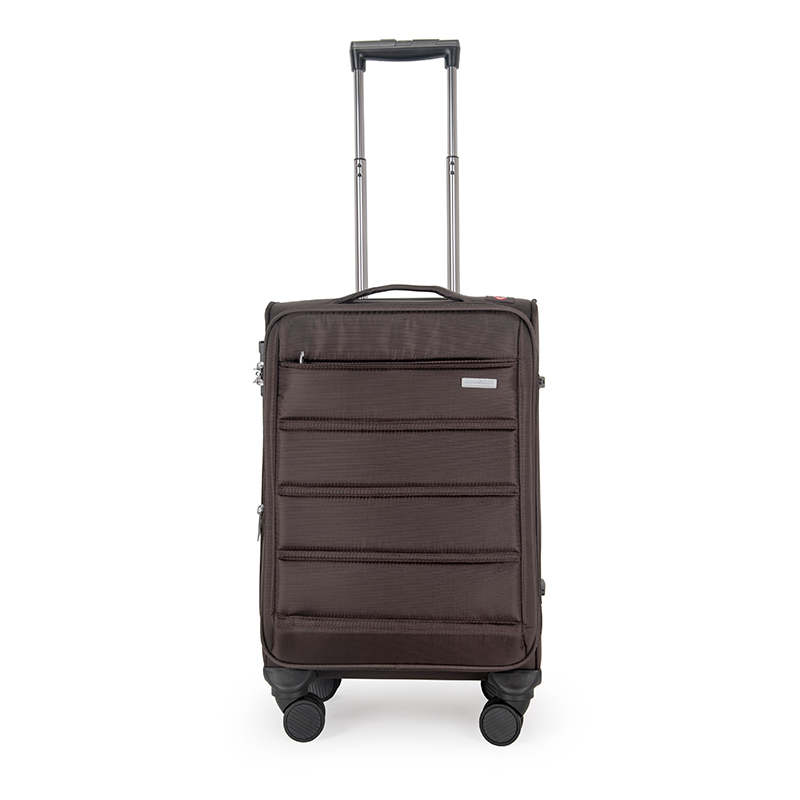
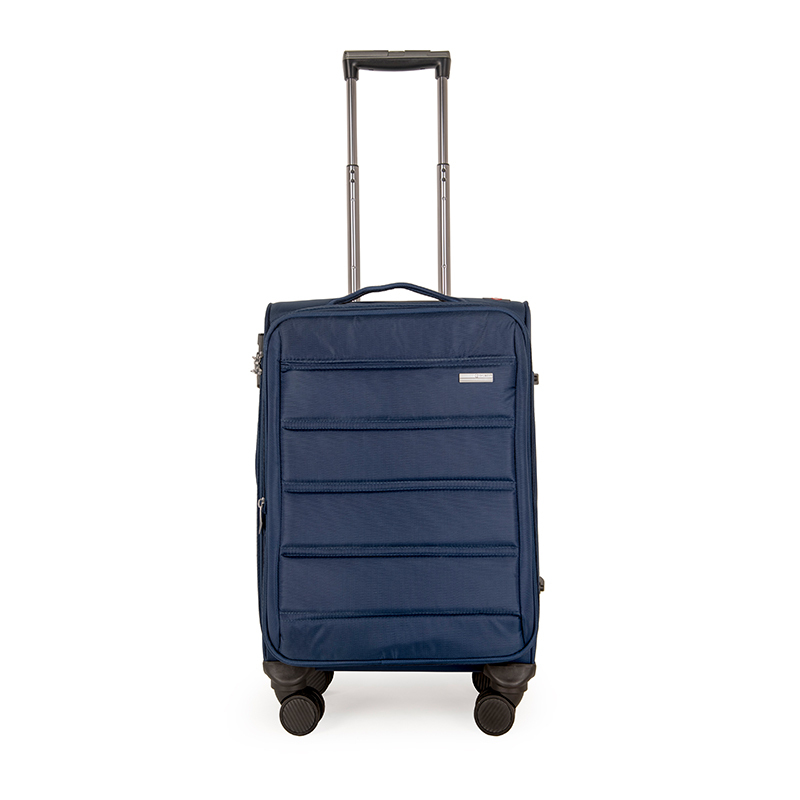
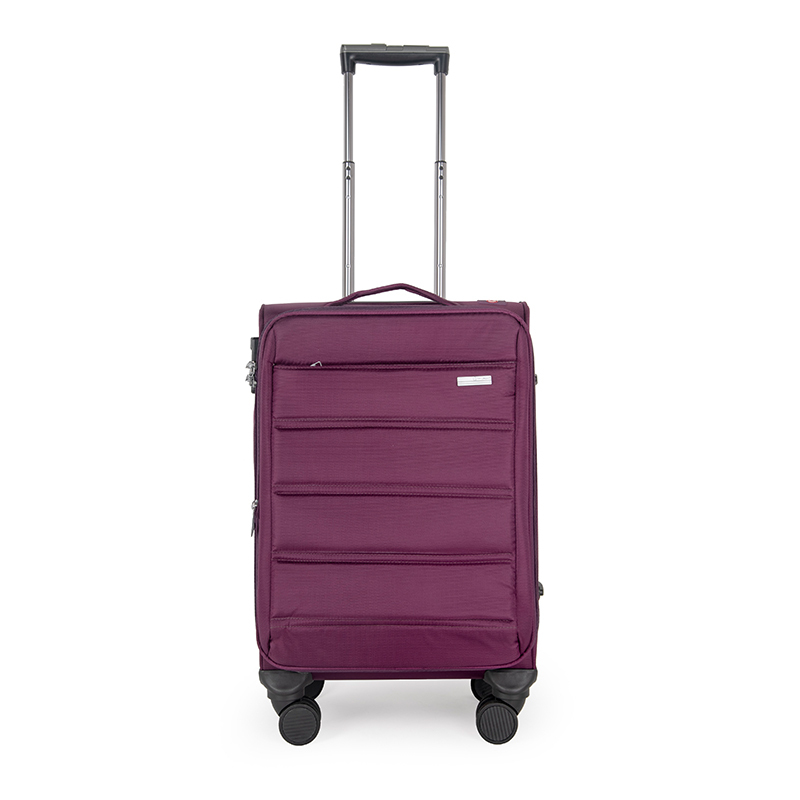
Colour options across the Oxford softside luggage range are black, brown, blue and purple, and every size is cut to the same pattern, so a mixed order still looks deliberate rather than assembled from three different products.
Soft-sided construction is the real difference. The fabric flexes when the case is pressed into a full bin or stacked in a coach hold, and it spreads a knock instead of passing it straight through to the contents the way a hard shell does. Unisex in styling and available in three sizes, this is travel luggage that serves an individual frequent flyer as readily as a corporate programme standardising kit across a department.
Size Selection & Boarding Rules
A regional sales team flying out Monday and back Friday is the shape of trip this case is built for: one case per person, checked on the way out, wheeled straight from arrivals to a taxi rank, and packed again in a hotel room the night before the return leg. The Oxford shell takes the handling, and the embedded lock keeps a laptop and printed materials out of sight between appointments. For distributors and importers, the range covers the three sizes a sales floor needs without three separate designs — one shell, one wheel set, one handle and a colour plan that runs across the family. Buyers who spend their week comparing travel luggage manufacturers can see the whole build in a single sample instead of guessing from a spec sheet: fabric, stitching, zipper, wheel seat and lock are all visible on the case in front of them. Family and long-haul leisure travel is the other half. Two travellers, one 28-inch case, a week to ten days away, several transport segments and a hotel change in the middle — the soft side gives a little when the souvenirs come back, and the spinner wheels keep the case moving through a station with tired children in tow. Buyers who already source from business travel luggage manufacturers for corporate accounts often take this range for their leisure lines as well, because the design does not read as purely functional.
Oxford Fabric & Build
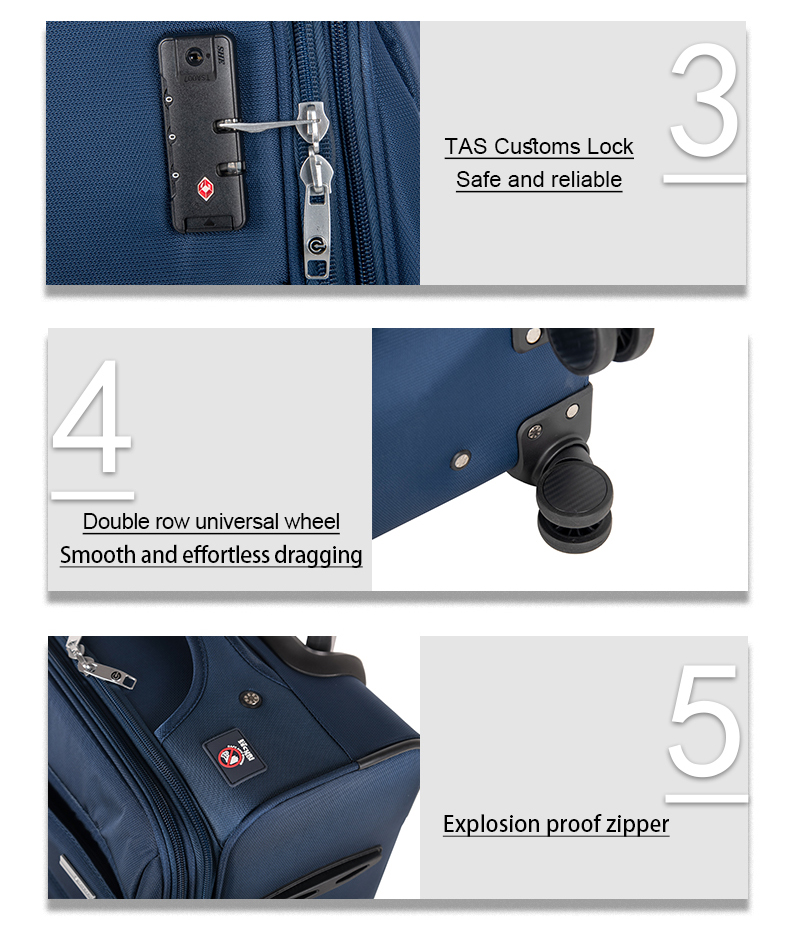
- Thickened Oxford shell. The exterior of this Oxford softside luggage is a thickened, wear-resistant Oxford cloth, a nylon-blend weave chosen because it shrugs off the friction of airport conveyor belts and repeated baggage handling without pilling or scuffing through. - High-density polyester lining. Inside, a high-density polyester lining adds a second wear layer where packed items rub against the shell over long trips. - Light water resistance. The fabric carries a dense waterproof coating, so rain and wet ground water stay on the outside instead of soaking in and reaching a laptop or a folder of documents. - Less shell weight. A soft-sided case weighs less than a hard-shell case of the same volume, which leaves more of an airline's weight allowance for the things you actually need to carry. - A little give. Oxford fabric stretches slightly, so a full case can take one more folded layer on the return leg without the shell fighting back. - Double-layer seam stitching. Stitching is reinforced throughout, with double-layer stitching at the seams — the points that carry the load every time the case is lifted by its handle. - Heavy-duty #10 double zipper. The main closure is a #10 anti-theft double zipper, sized so a tightly packed case does not split or burst along the zip line. - Impact spread, not impact transfer. Checked luggage gets stacked, dropped and pressed against other bags in transit; the fabric-and-lining combination spreads that energy across the panel rather than concentrating it at one point. The bearing seals keep dust and sand out of the wheel assembly, cutting maintenance and replacement frequency, and the wheel seats use a reinforced injection-molded structure.
360° Spinner Wheel System
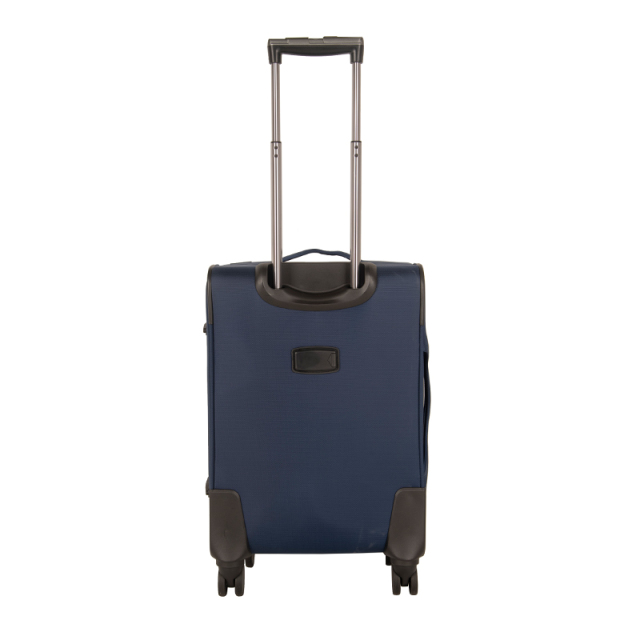
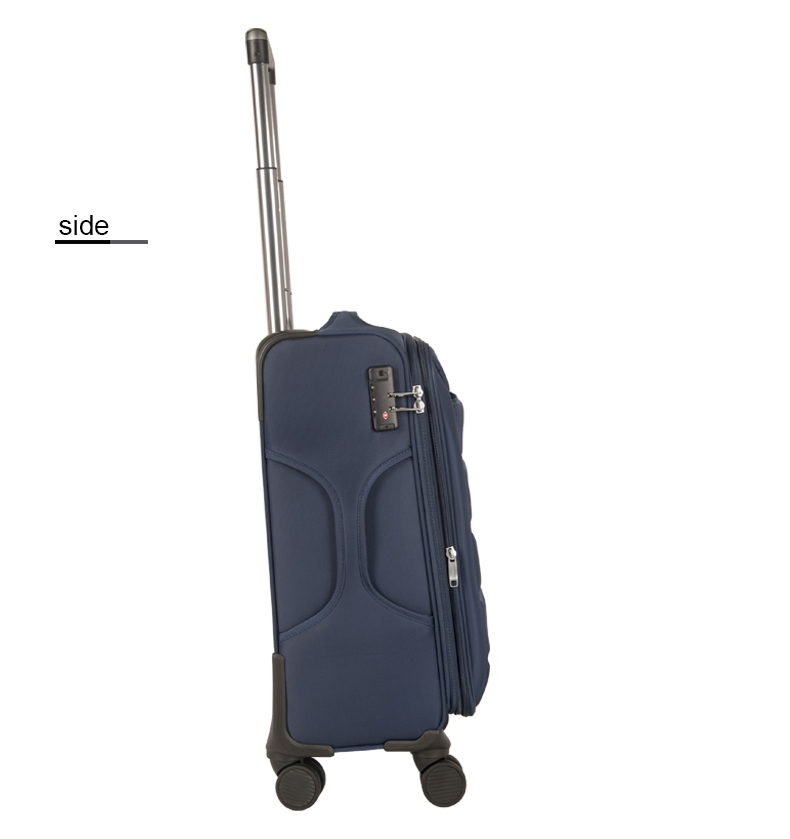
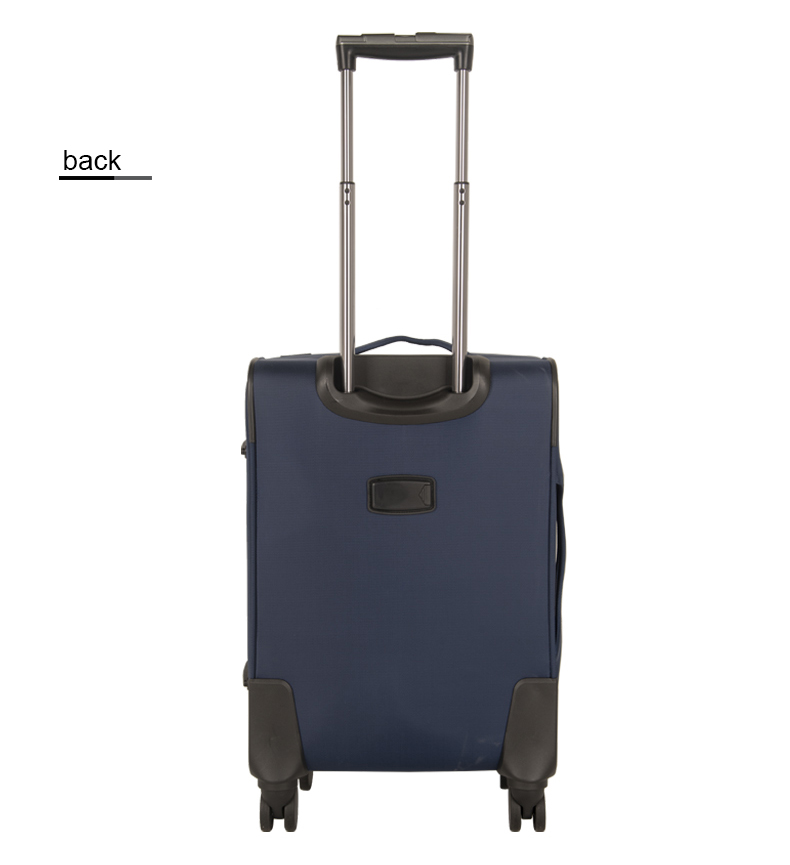
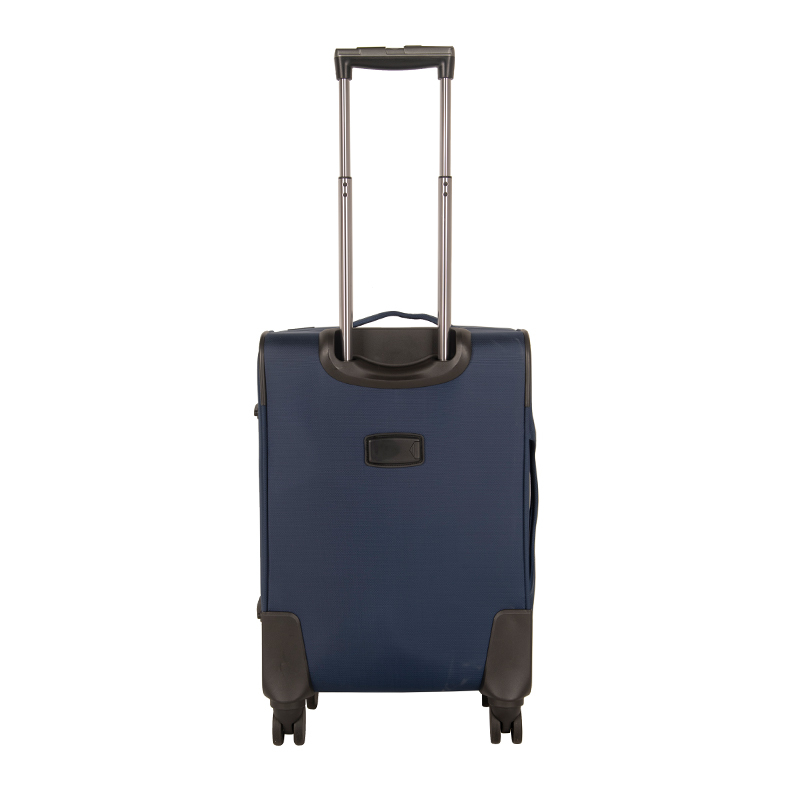
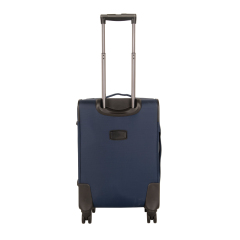
The case runs on four independent silent spinner wheels, each on a sealed bearing, so it turns on the spot and travels forwards, sideways or diagonally without being tipped onto two wheels. The set is built to airport baggage load-bearing requirements: even fully packed, it does not jam or tip on a sloped terminal floor. On the move, this is what decides the day. A loaded 28-inch case can be steered with one hand through a check-in queue, along hotel corridor carpet, across tiled concourses and over the uneven paving outside arrivals, which takes the strain off the wrist on the long walk between gates. The sealed bearing housing keeps dust and grit out of the assembly, so the wheels hold their smoothness over repeated trips and need less attention than open castors. Every wheel seat is a reinforced injection-moulded part that resists cracking when the case is dragged over kerbs and door thresholds, and each wheel set is checked for smooth running before it leaves the line. The spinner layout earns its keep in tight space too: a sideways push down a narrow aircraft aisle, into a lift, or between the seats of a transfer bus works because the case never has to be leaned back to change direction. This is the first component buyers compare business travel luggage manufacturers on, because a wheel set is where a cost-reduced case reveals its limitations before anything else does.
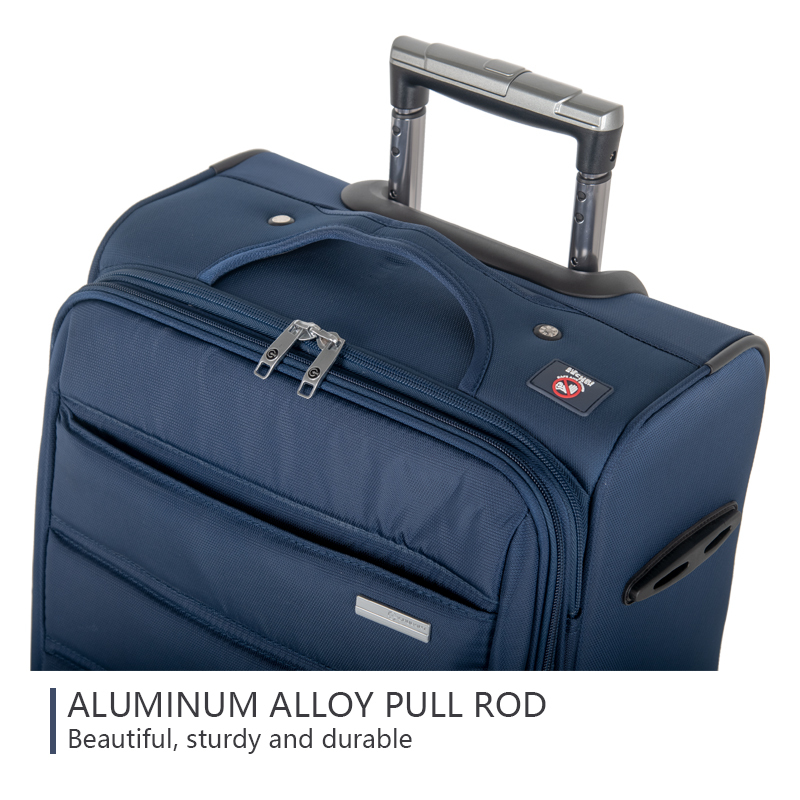
Telescopic Aluminum Handle
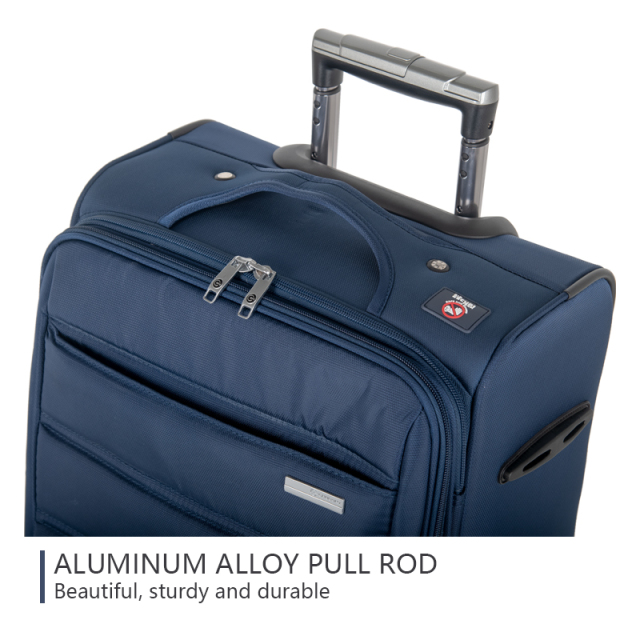
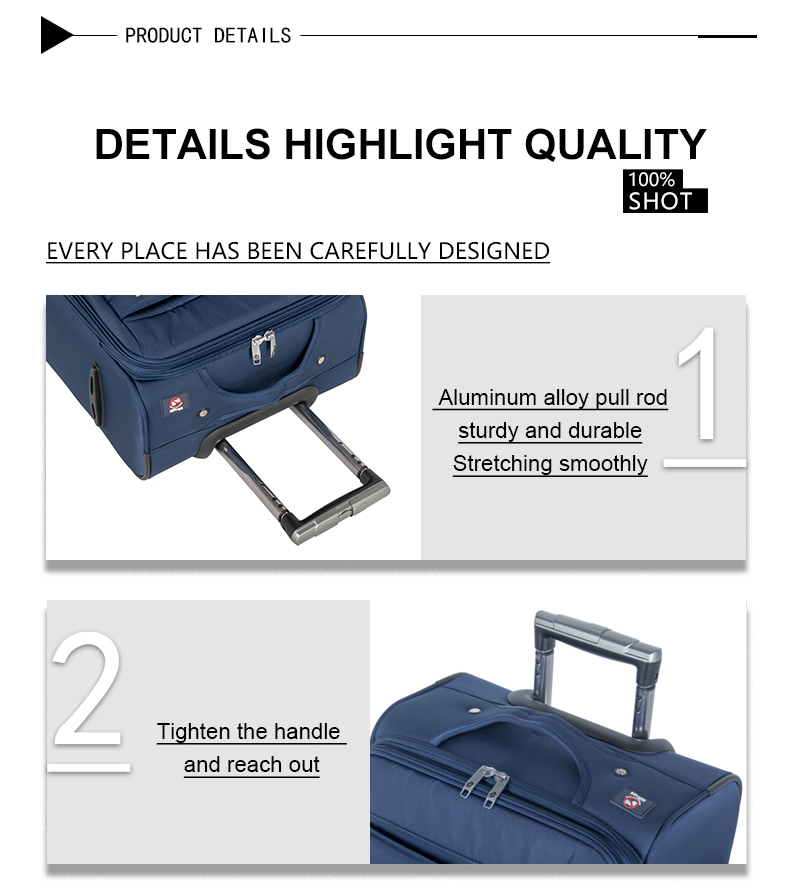
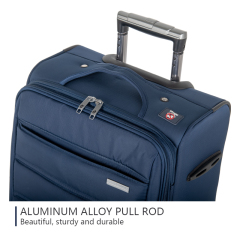
- All-aluminium multi-section rod. The pull handle is built from aluminium alloy sections rather than a plastic tube, so it stays straight under a loaded case and does not flex when you pull at an angle.
- Height settings for 150-190 cm. Multiple locking positions let the same case suit a 150 cm and a 190 cm traveller, which matters in a wholesale travel luggage programme where one pool of cases is shared across a team.
- Anti-slip locking buckle. A built-in buckle holds the rod at the chosen height, so it does not sink back down once the case is packed with heavy items.
- No wobble, no rattle. Extension and retraction run smoothly without jamming, and the rod stays tight in the locked position — no rocking, no looseness and no noise on a tiled concourse.
- Reinforced base. The rod base is integrated into the case body and stitched through, so the connection points do not tear away during years of dragging.
- Folds flush. Closed, the handle sits against the case instead of standing proud, so cases stack neatly in a store room, a van or a container.
- Built for security checks. Repeated extension and retraction at airport security desks and hotel check-in is exactly the cycle the handle is designed around.
TSA Combination Lock
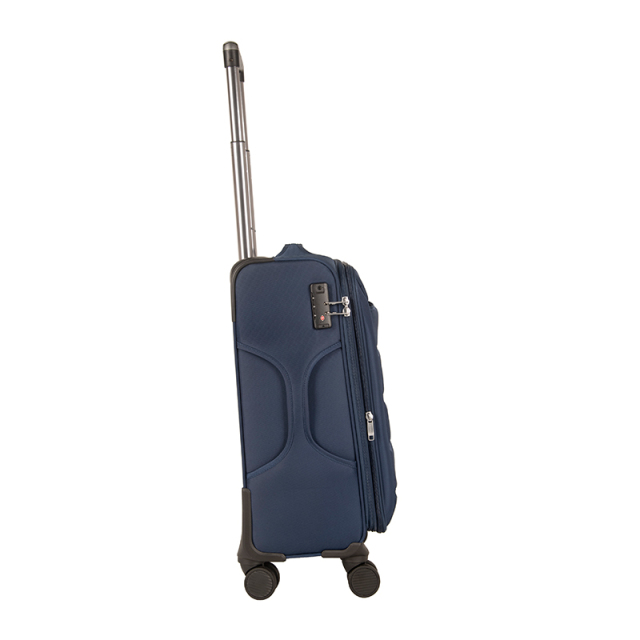
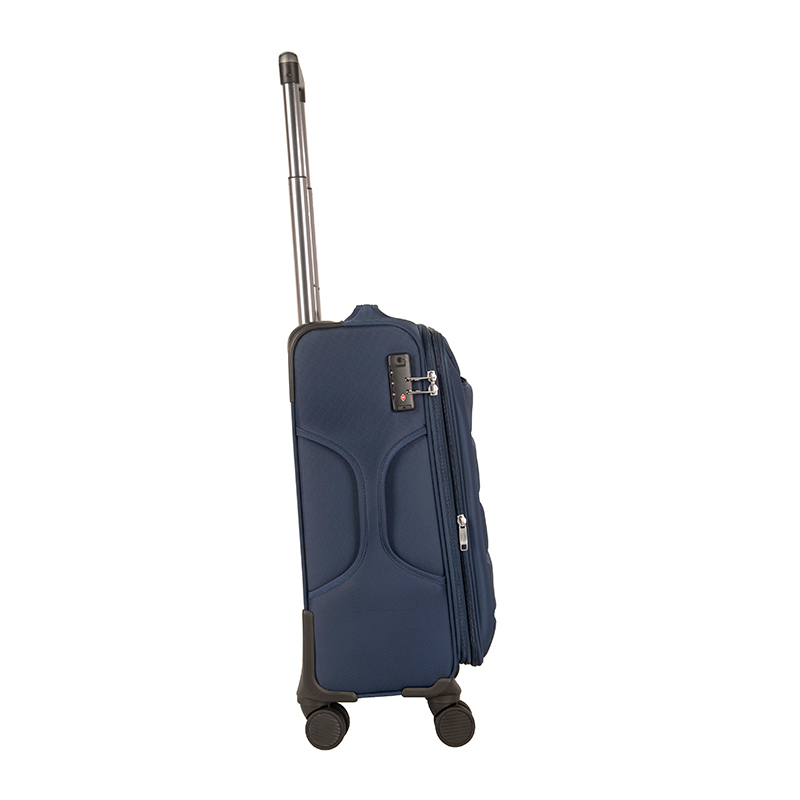
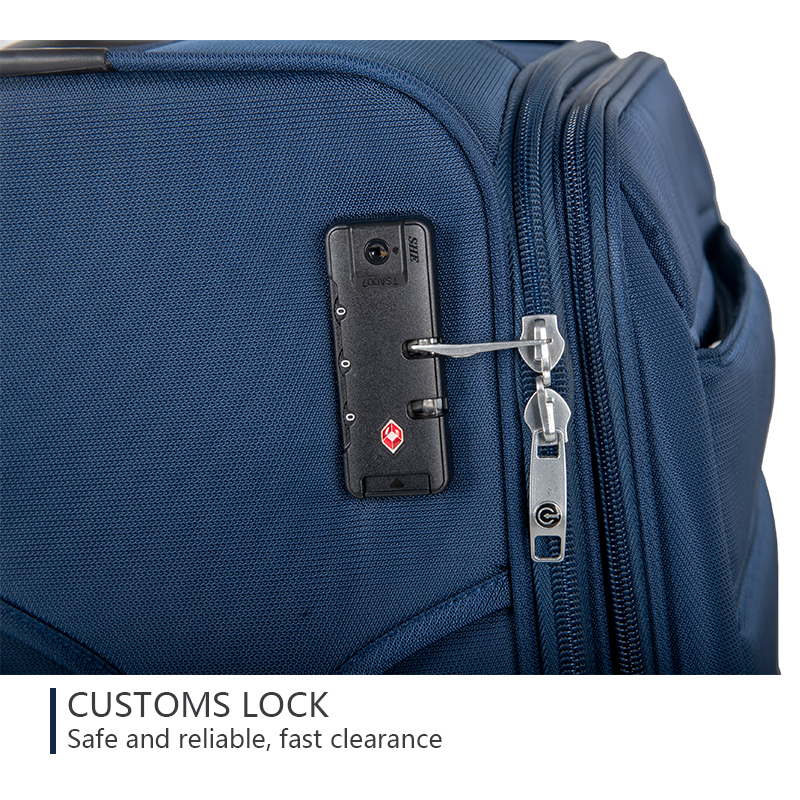
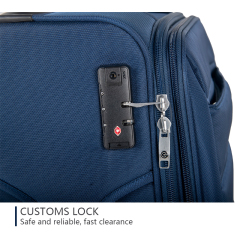
The case carries a TSA combination lock built into the shell rather than hung on the outside. You set your own three-digit code, so clothing, electronics and business documents stay private between the hotel room and the airport.
The point of the lock is what happens at an inspection. Customs officers hold a special TSA key that opens the case for checking and re-locks it afterwards, so a routine inspection does not end with a forced zip or a cut-off lock in the middle of an itinerary. On business travel luggage that crosses borders regularly, that is the difference between a five-minute check and a damaged case for the rest of the trip.
The lock body is embedded and hidden, so it does not catch on conveyor edges or trolley frames, and the lock cylinder is reinforced against prying — more resistance than a padlock hanging off a zip pull. Because the lock is part of the shell, there is nothing to lose, forget or leave behind at the hotel.
Interior Layout & Handling
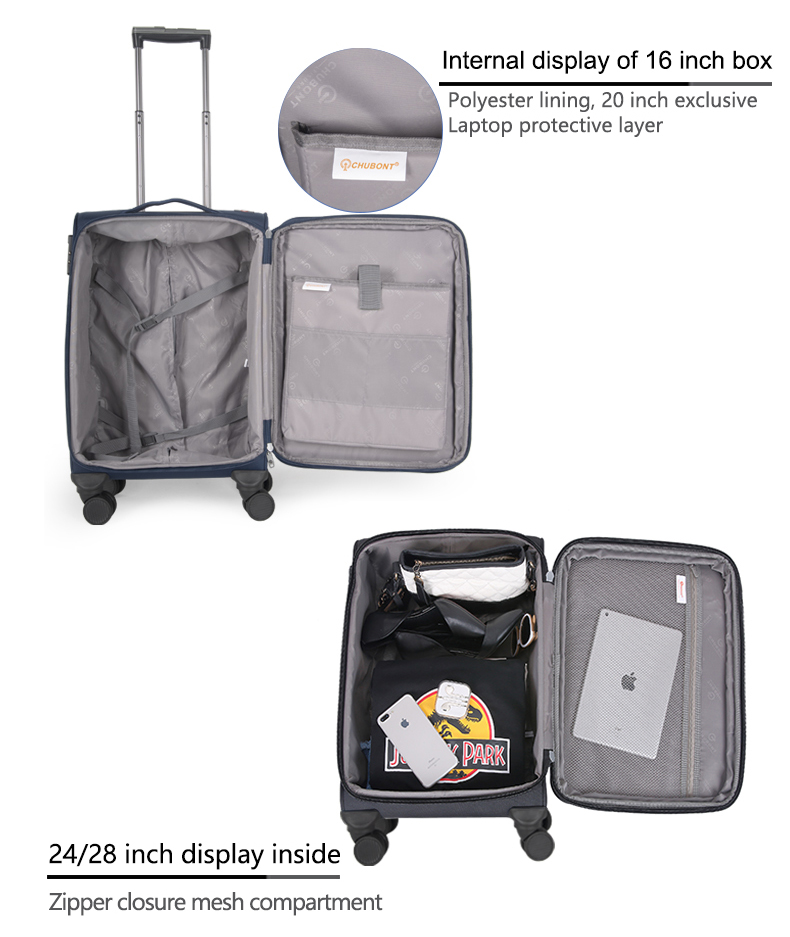
- Layered compartments. All three sizes of this Oxford softside luggage use a compartmentalised interior, so shirts, files and chargers do not end up in one pile by the second hotel.
- Zoned packing. Clothing in the main compartment, documents and a laptop flat against the back panel, small items in the front zip pockets you can reach at the check-in desk.
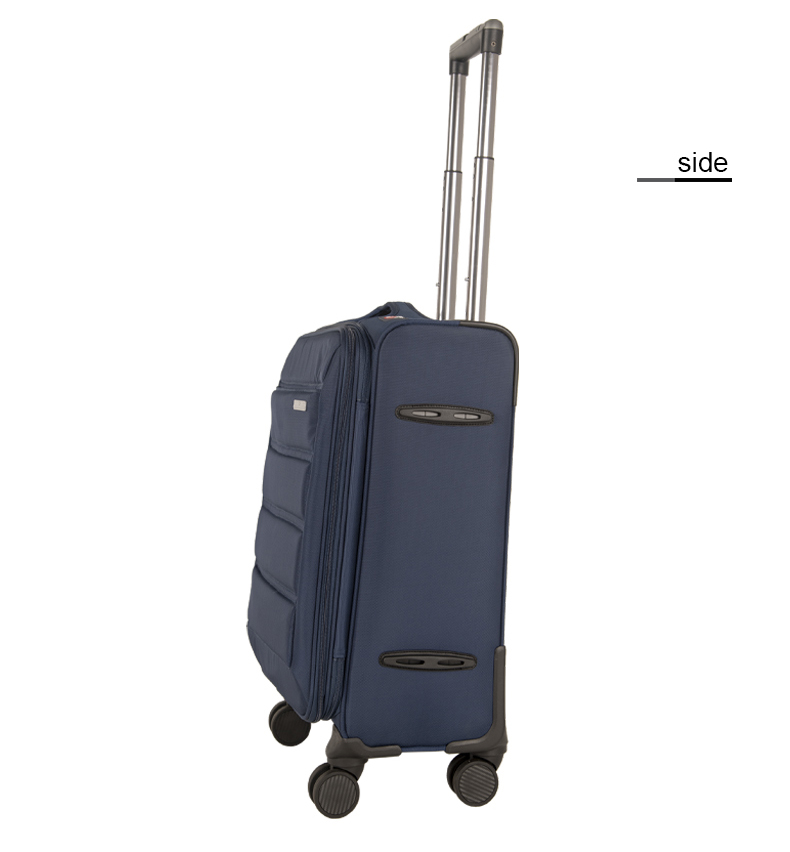
- Top grab handle. A top handle lets you lift the case off a carousel or carry it up a short flight of stairs without hugging it against your body.
- Side handle. A side handle puts two hands under the weight when loading the case into a coach hold, a car boot or onto a luggage rack.
- Front zip pockets. Zipped pockets on the front keep a passport wallet, boarding pass and charger within reach without opening the main compartment.
- Load it wheel-end heavy. Pack the heavier items over the wheel end so the case rolls balanced and the handle is not carrying the whole load all day.
Care & Storage
Fabric. Brush loose dust off with a soft brush, then wipe the Oxford cloth with a cloth wrung out in lukewarm water and a little mild soap. Work around the seams and the zip tape, and rinse the cloth rather than pouring water over the case. Do not machine wash, bleach, tumble dry or dry-clean it; the water-repellent coating and the double-layer stitching are what suffer first. Let the case stand open in the shade until the lining and the zip tape are completely dry before closing it again.
Wheels. Lay the case on its side and pick hair, carpet fibre, sand and grit out of each wheel housing with a soft brush or a pair of tweezers. The sealed bearing keeps most dust out, but grit packed around the axle is what makes a spinner feel rough. Wipe the wheel seats and the point where the housing meets the shell, then spin each wheel through a full circle to check it still turns freely.
Zipper and lock. Run a dry brush along the #10 zip teeth to clear lint, and close the zip fully before the case goes into storage so the teeth are not left open and exposed. Keep the lock instructions with the case, and leave the dials on a code the next user can change rather than a code nobody records.
Storage. Store the case upright with the handle retracted, in a dry room away from direct sun. Do not stack heavy boxes on a softside case for months; the Oxford shell can take a knock in transit, but it is not a storage crate. In a loft or container, use a breathable cover rather than a sealed plastic bag so condensation can escape.
Common mistakes. Zipping a wet case shut traps moisture against the lining; dragging the case by its top handle over a kerb puts load on the handle base instead of the wheels; and forcing an overpacked zip strains the teeth and the stitching at the zip ends. A few minutes with a brush after each trip keeps business travel luggage ready for the next departure.
OEM/ODM & Matched Sets
Logo, fabric colour scheme and internal compartment layout are all open for project work, so the same case can carry a brand's mark, a hotel group's colour or a corporate travel programme's identifiers. Tell us the artwork, the colour direction and the compartments you need and our team will confirm what is possible for your order before anything is cut.
Custom business travel luggage projects usually start from one size and grow: a buyer approves the 24 inch, then adds the 20 and the 28 once the sample is signed off. Because all three sizes use the same shell and the same hardware, adding a size does not mean a second design review.
All three sizes are finished in the same Oxford shell and colour, so an order that combines them arrives as a visually consistent set — which is what buyers assembling luggage sets with spinner wheels for a season actually need on the shelf.
Ordering & Packing
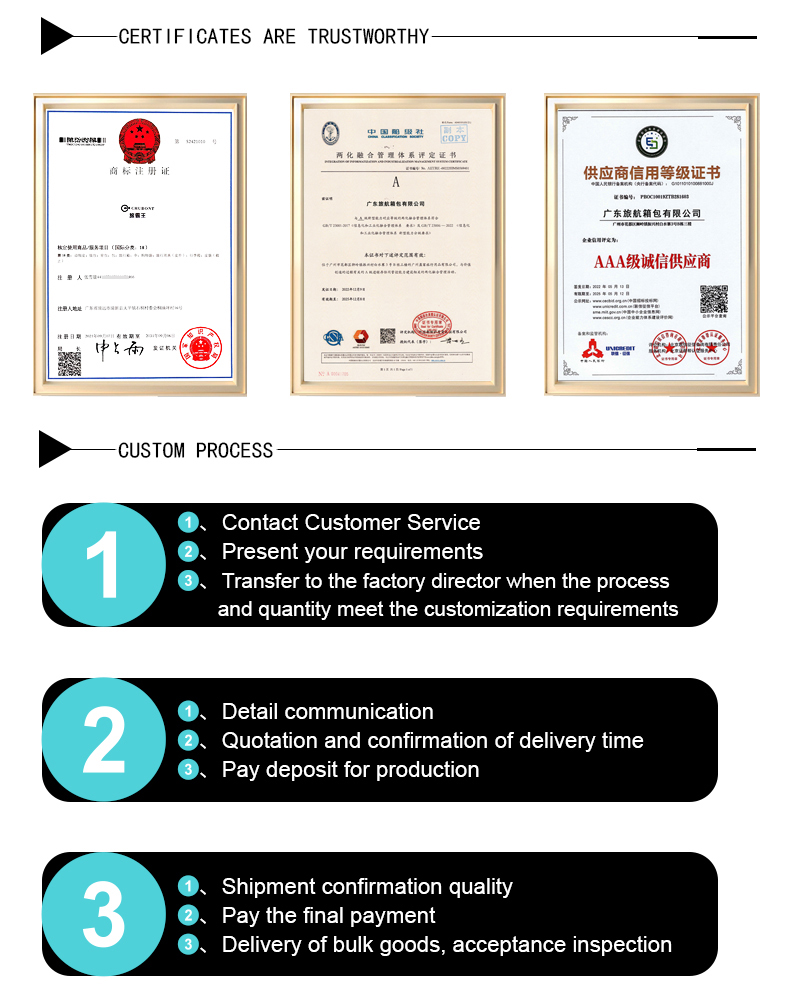
- Send the brief. Sizes, quantities, colour plan, logo artwork and destination market are enough to start. We quote as the factory that will produce the order, not as a broker sitting between travel luggage manufacturers and the buyer.
- Confirm the commercial terms. Minimum order quantity, lead time, payment terms and shipping arrangements are confirmed per order with your sales contact — they vary with model, colour and level of customisation.
- Approve the sample. For custom business travel luggage, logo position, fabric colour and compartment layout are agreed against a physical sample before mass production starts.
- Choose the packing. Three levels are available: basic packing, custom packing, and supporting materials such as cartons, labels and inserts made to your instruction.
- Fix the shipment details. Port of loading, shipping marks, carton specifications and consolidation are agreed with your sales contact and checked against the order before loading.
- Set the replenishment rhythm. Wholesale travel luggage orders are planned around your sell-through; tell us your target in-market dates and we will confirm the production schedule that fits.
- Confirm the lock specification. Every case is fitted with a TSA combination lock; if your market needs the lock specification documented, say so when the order is placed.
Quality Control & Inspection
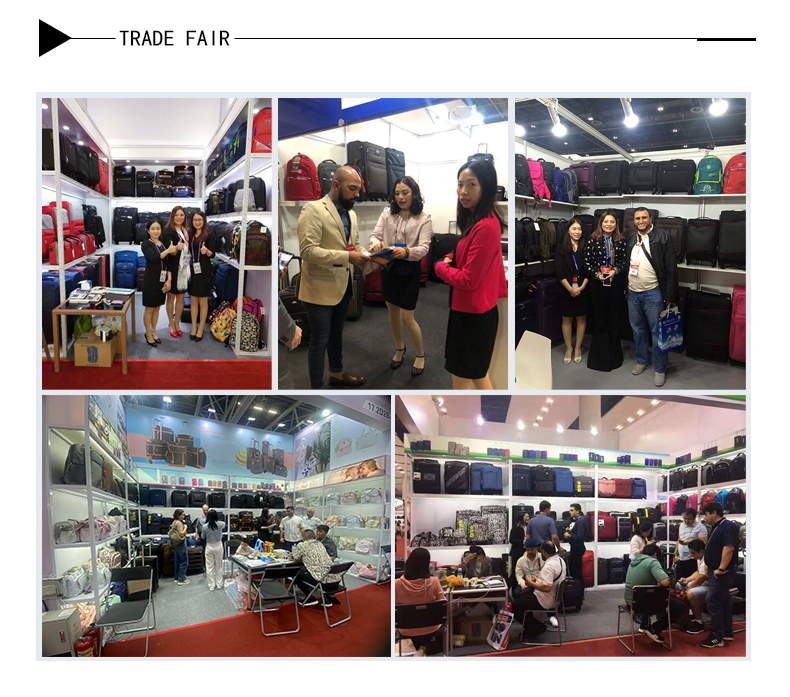
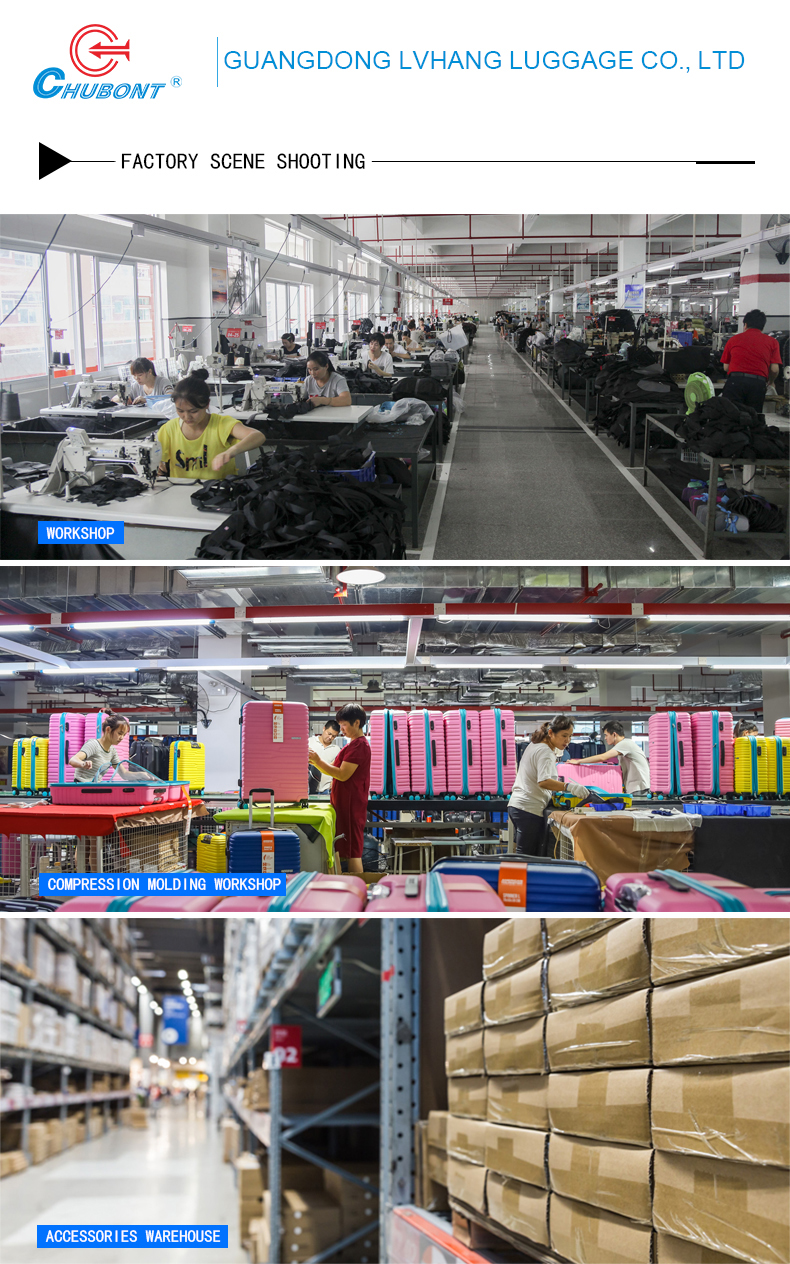
Every CHUBONT order passes five checkpoints inside our own workshops: incoming materials, pre-production samples, in-production patrols, finished-goods review, and a final pre-shipment check against the order. Batch records are kept, so buyers can see what was checked and when. You are welcome to send your own QC team, or appoint an independent inspector such as SGS or BV, to verify goods before they leave, and we support factory audits and on-site monitoring while production runs. Shipping marks, packing lists and carton labelling are confirmed against your instructions before loading.
FAQ
What materials are used in CHUBONT’s large checked luggage?
The shell is a thickened, wear-resistant Oxford cloth — a nylon-blend weave — over a high-density polyester lining, with an aluminium alloy handle, four 360° spinner wheels and an embedded TSA combination lock. The combination is what lets this travel luggage keep its shape and its appearance through a long run of trips: the Oxford takes the abrasion, the lining protects what is packed, and the metal handle carries the pull.
How do the 360° spinner wheels improve airport mobility?
Each of the four wheels runs on a sealed bearing, so the case turns in its own footprint and moves forwards, sideways or diagonally without being tipped onto two wheels. In a crowded terminal that means steering with one hand while the other holds a passport or a coffee, and pushing the case sideways down a narrow aircraft aisle instead of carrying it. It is also the component buyers weigh first when they compare travel luggage manufacturers, because a wheel set is where a lower-specification case reveals its cost before anything else does. As business travel luggage manufacturers, we check every wheel set for smooth running before the case leaves the factory.
What quality controls does CHUBONT apply before shipment?
Every order goes through 100% pre-shipment inspection covering the wheels, handle, zippers, locks and stitching, backed by third-party AQL inspection. The check runs on the goods that are about to leave, not on the sample that was approved weeks earlier.
Can CHUBONT customize travel luggage for business use?
Yes. Logo, fabric colour and internal compartment layout are all open for project work, and most projects start from one of the three sizes and grow from there. Buyers building luggage sets with spinner wheels for a season usually approve a single sample, then add the other sizes once the design is signed off, because every size shares the same shell and hardware. Tell us the artwork and the compartment plan and our team will confirm what is achievable for custom business travel luggage on your order.
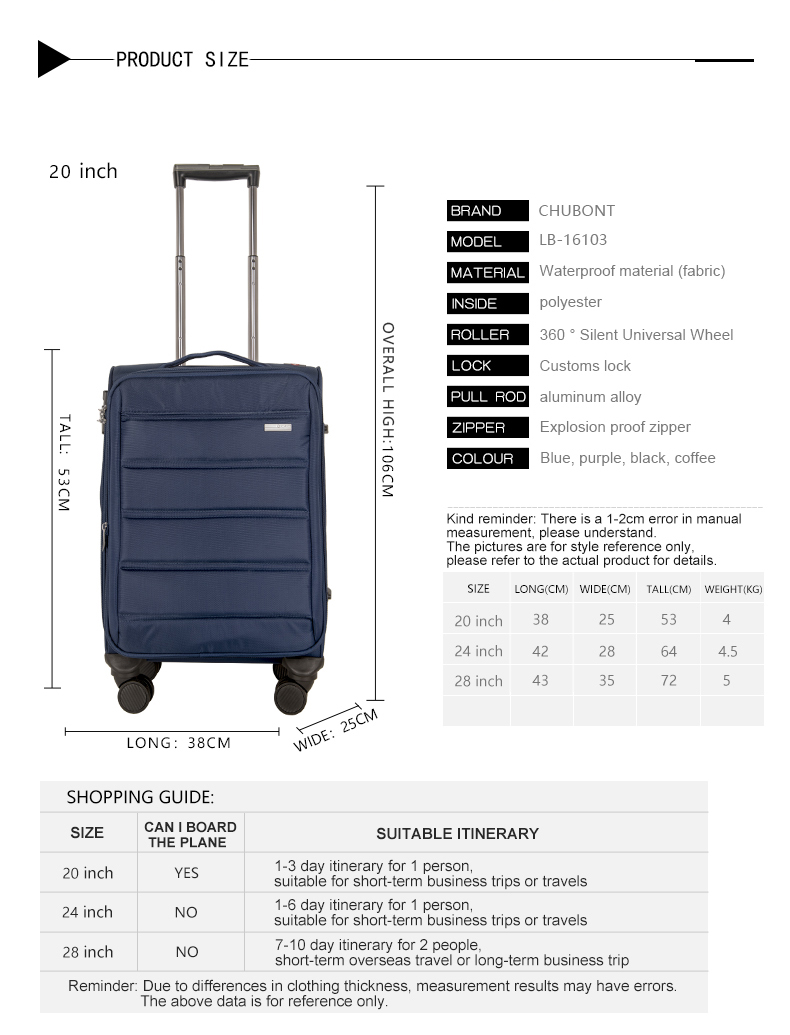
Can I take the 20-inch case into the cabin?
Yes — the 20-inch is built to standard carry-on dimensions and is the size we mark as cabin-approved, while the 24 and 28 inch are both checked baggage. Allowances differ between airlines, fare classes and aircraft, so check your carrier's published limits for the route you are flying before you rely on it.
How should I look after the Oxford fabric and the wheels?
Wipe the fabric with a damp cloth and mild soap, then let it air dry fully open before it goes back into storage — do not machine wash or tumble dry it, and do not leave it soaking. Clear hair, grit and sand from the wheel housings every few trips, and store the case upright with the handle retracted so the rod and the wheel seats are not under load between journeys.