Product Overview
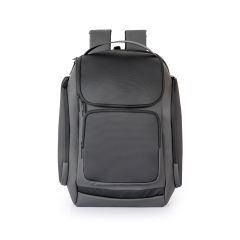
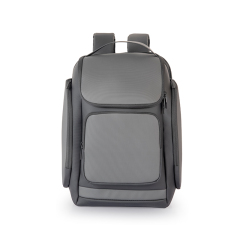
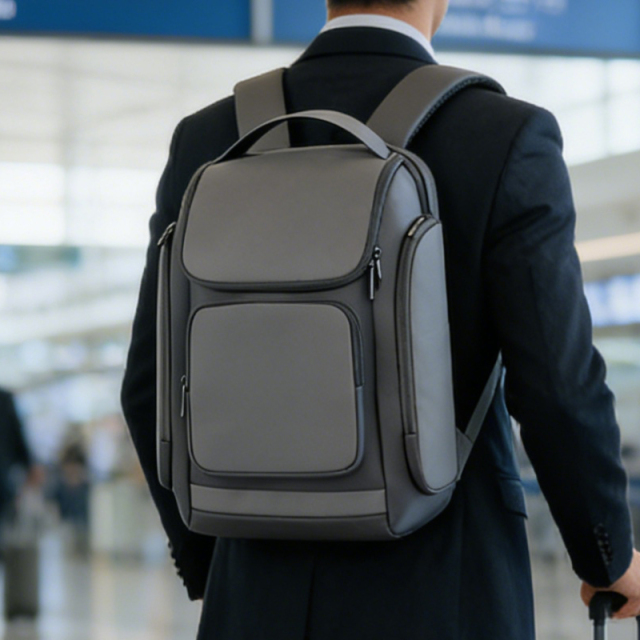
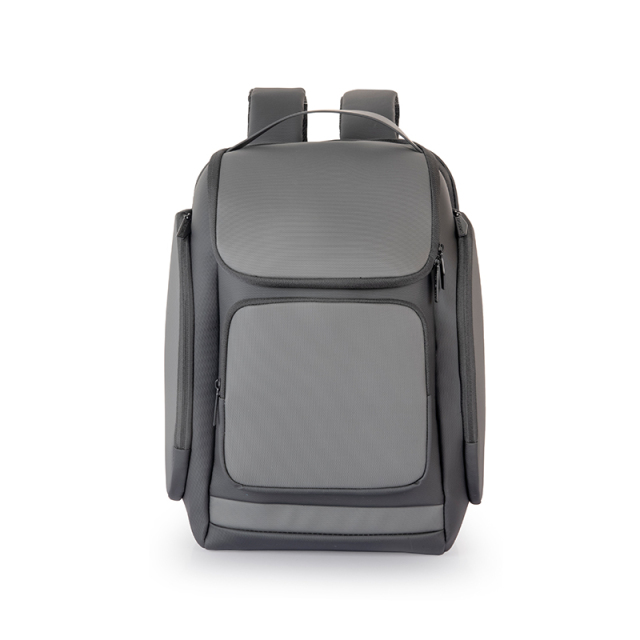
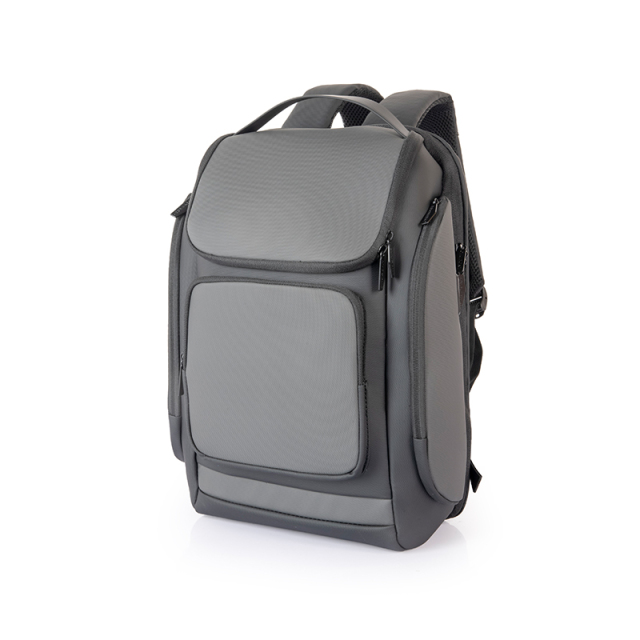
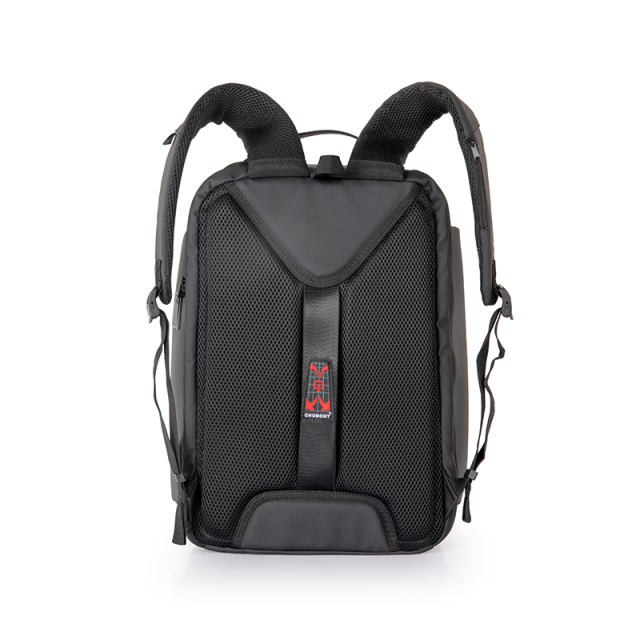
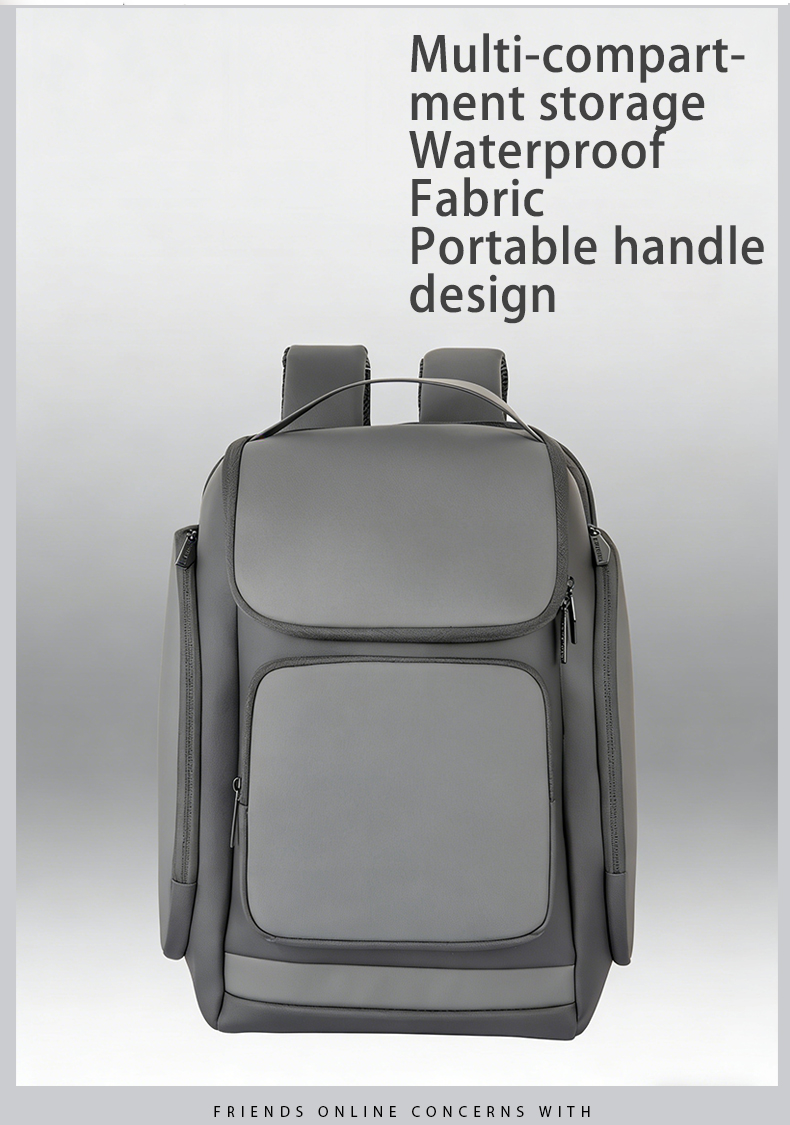
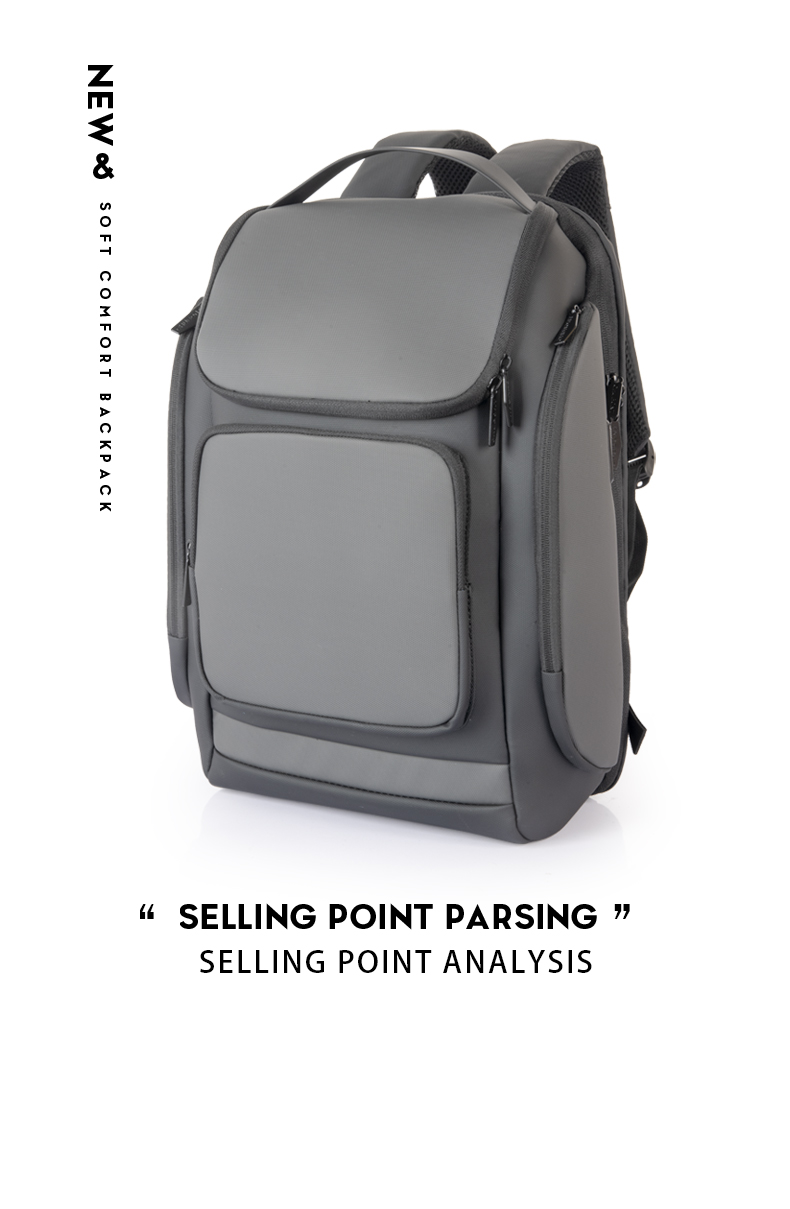
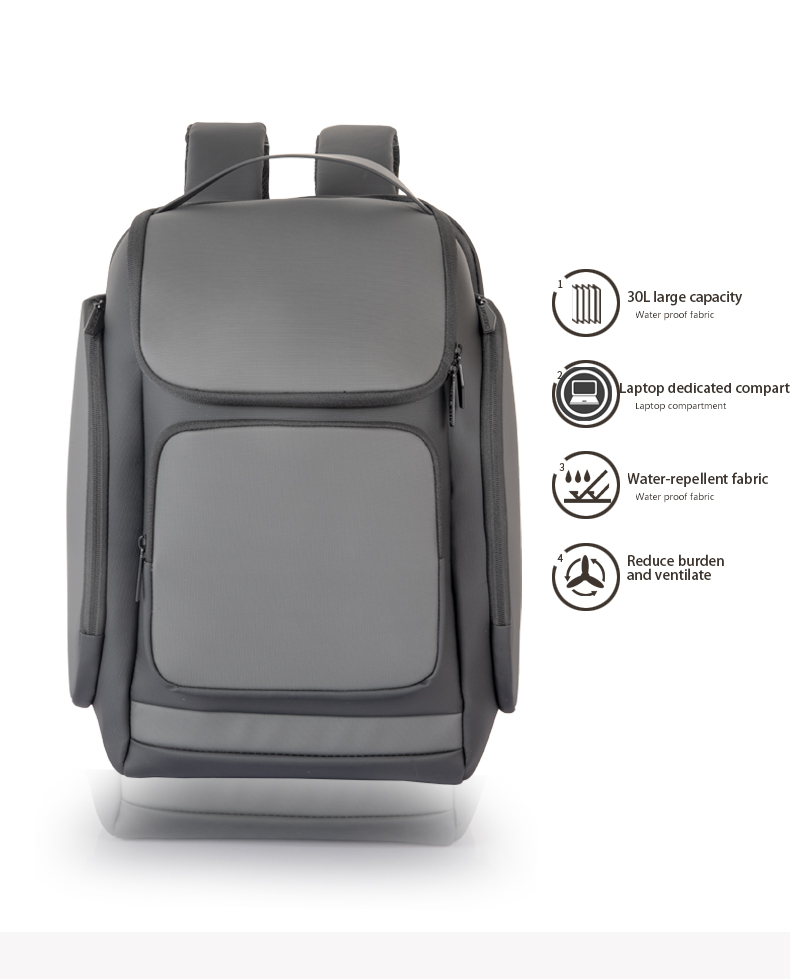
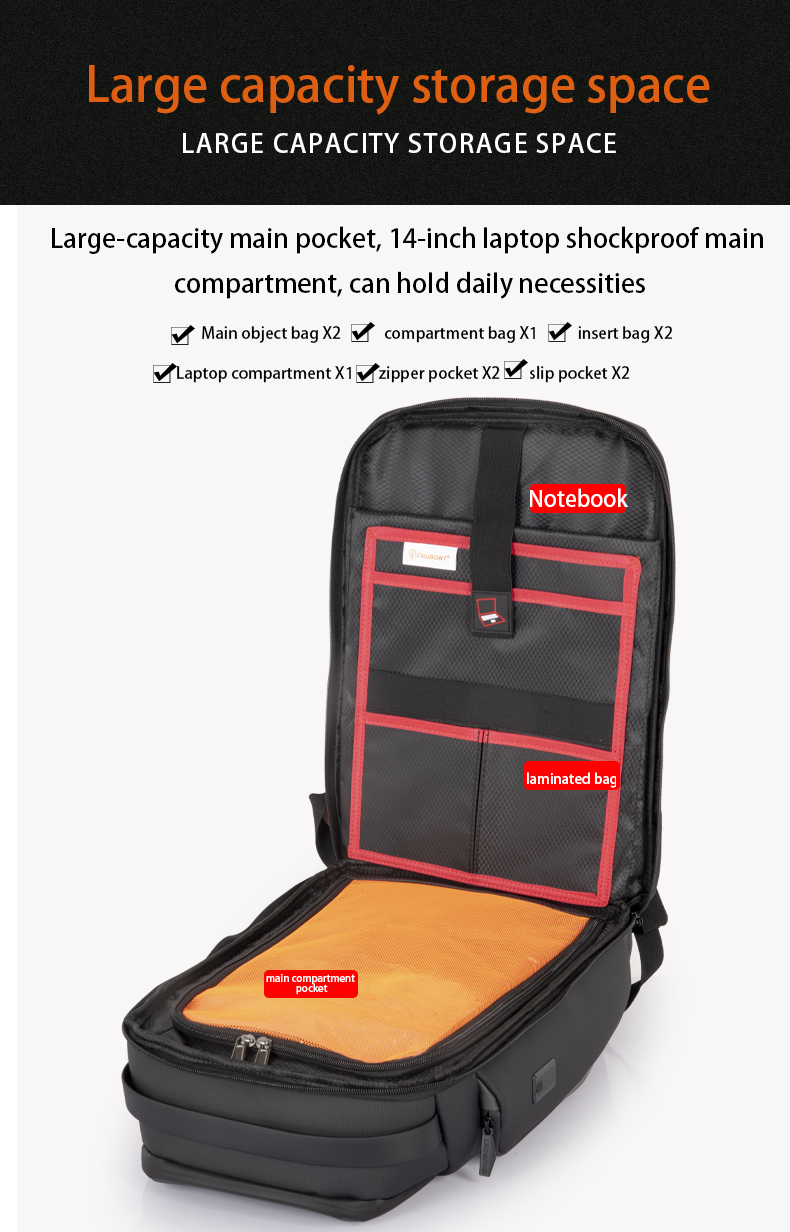
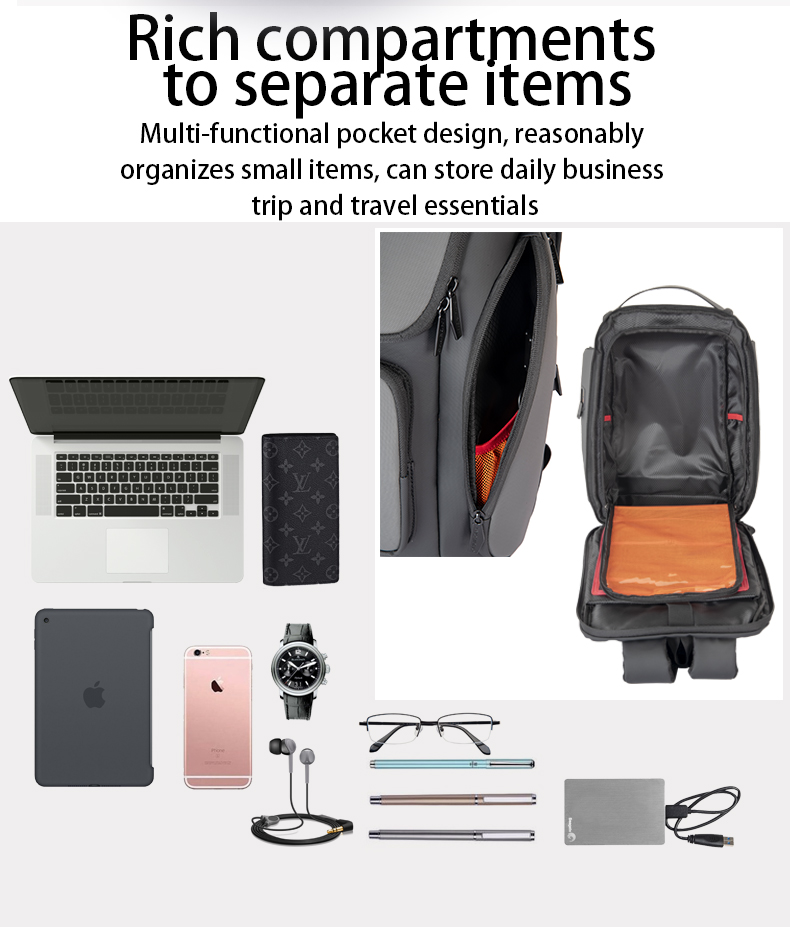
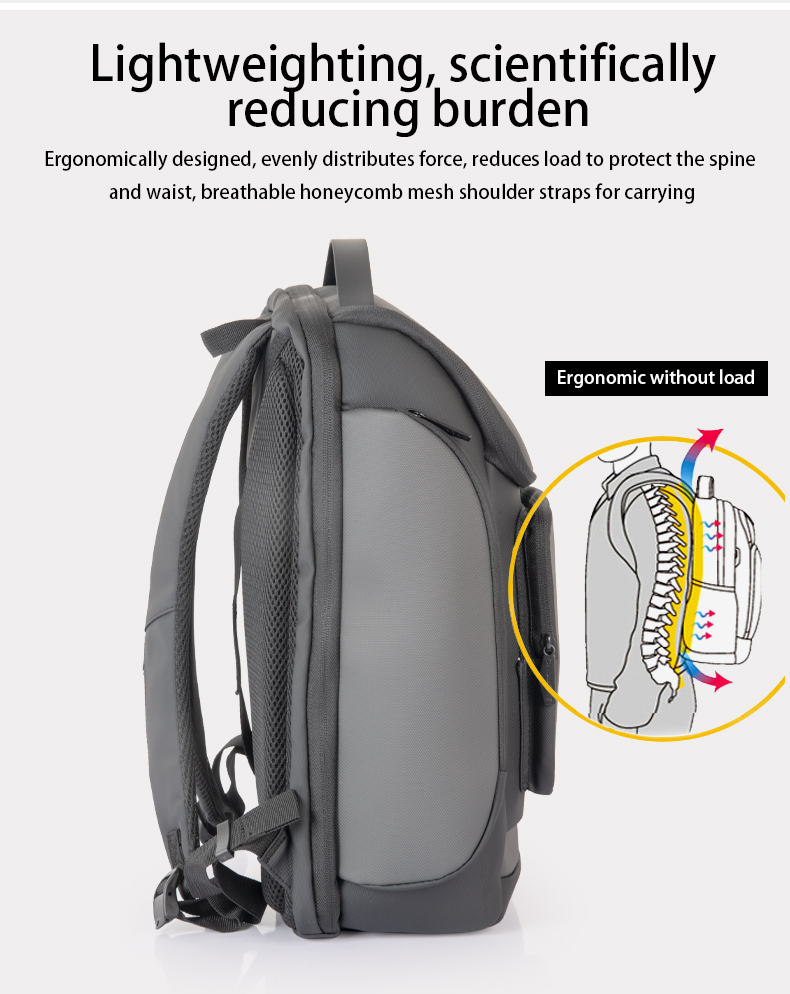
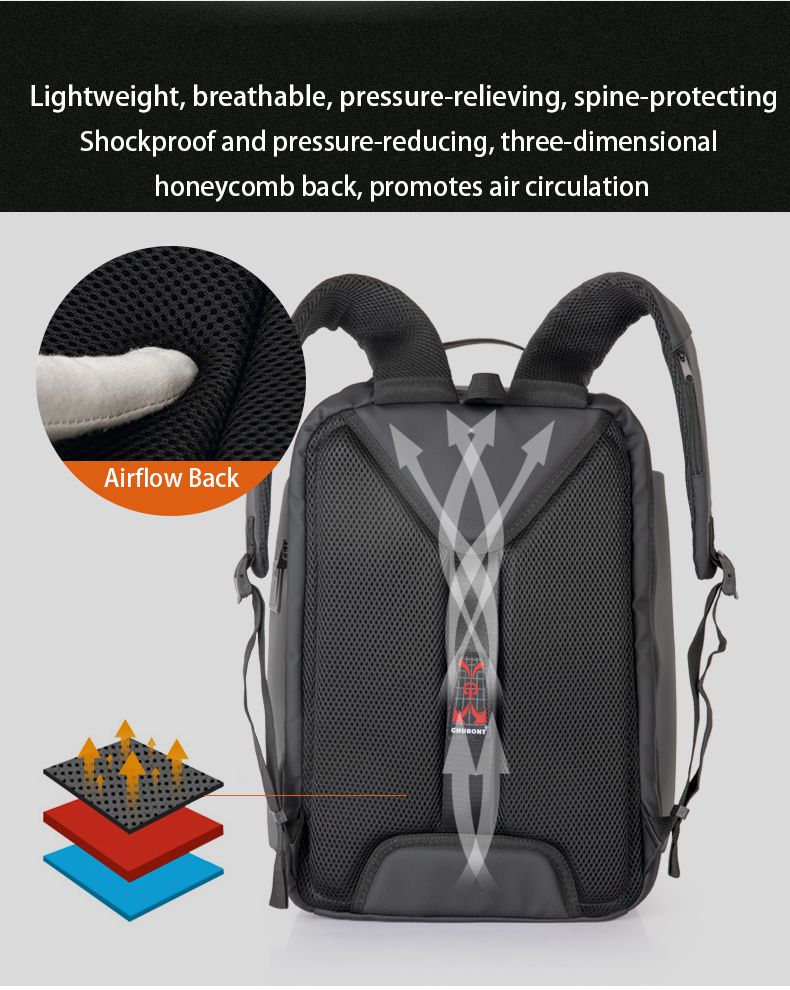
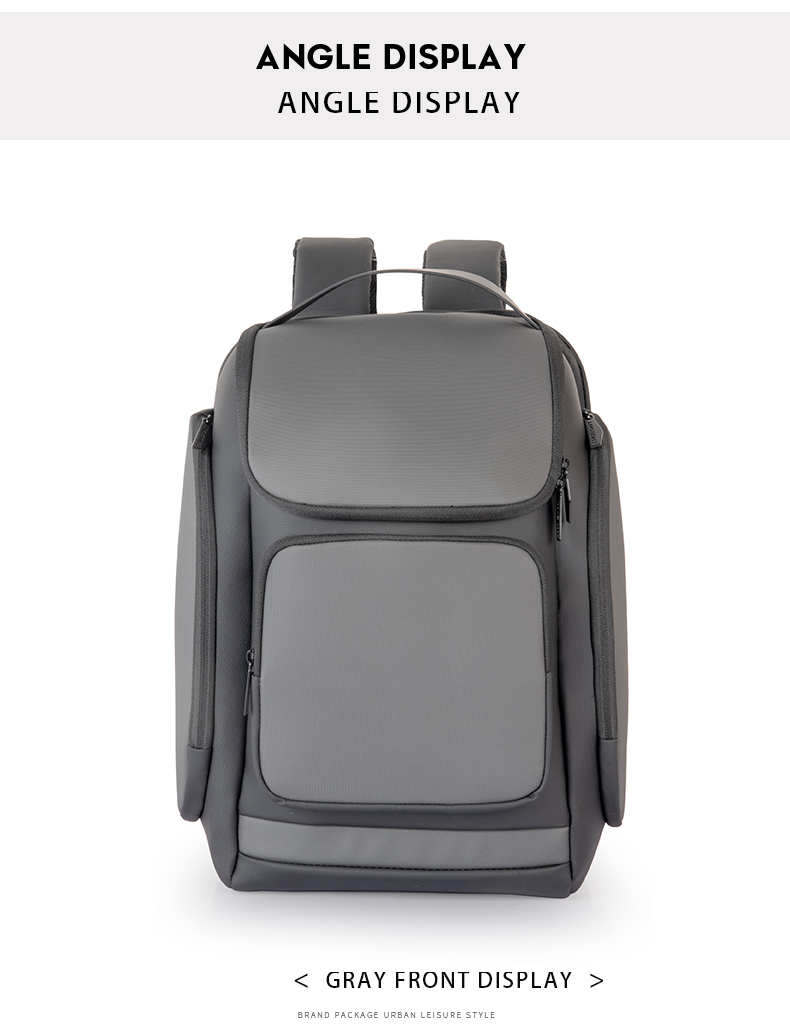
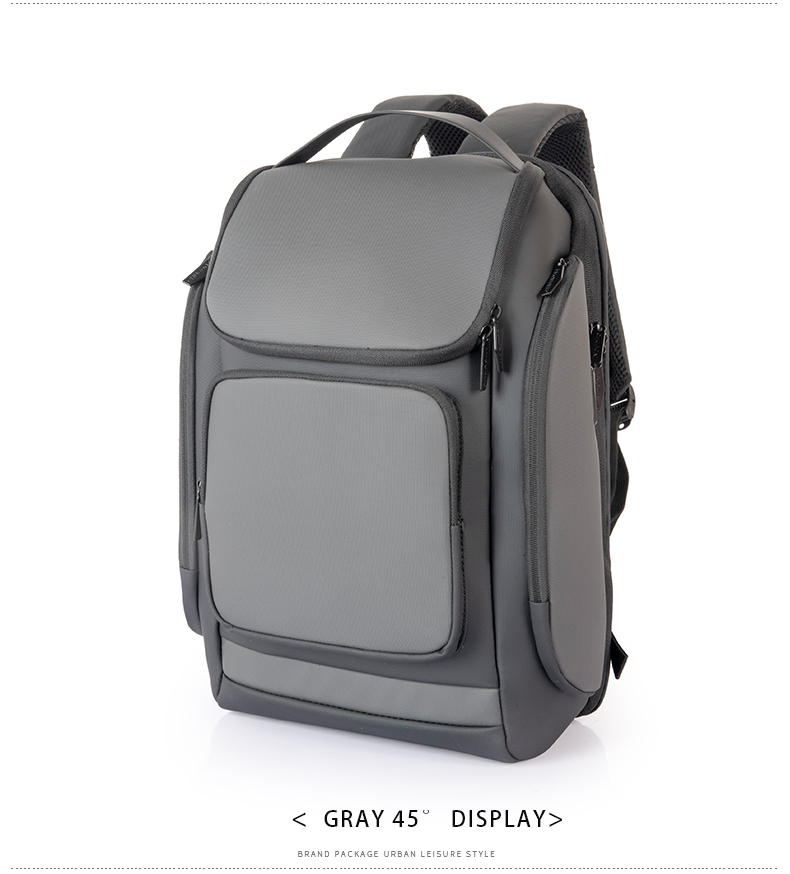
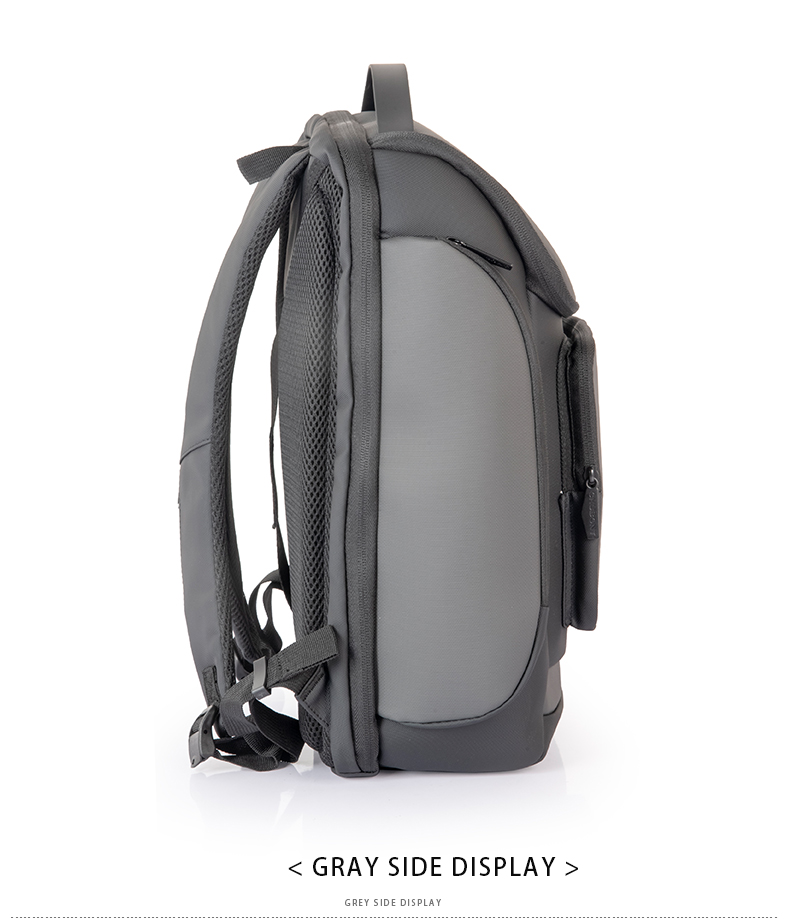
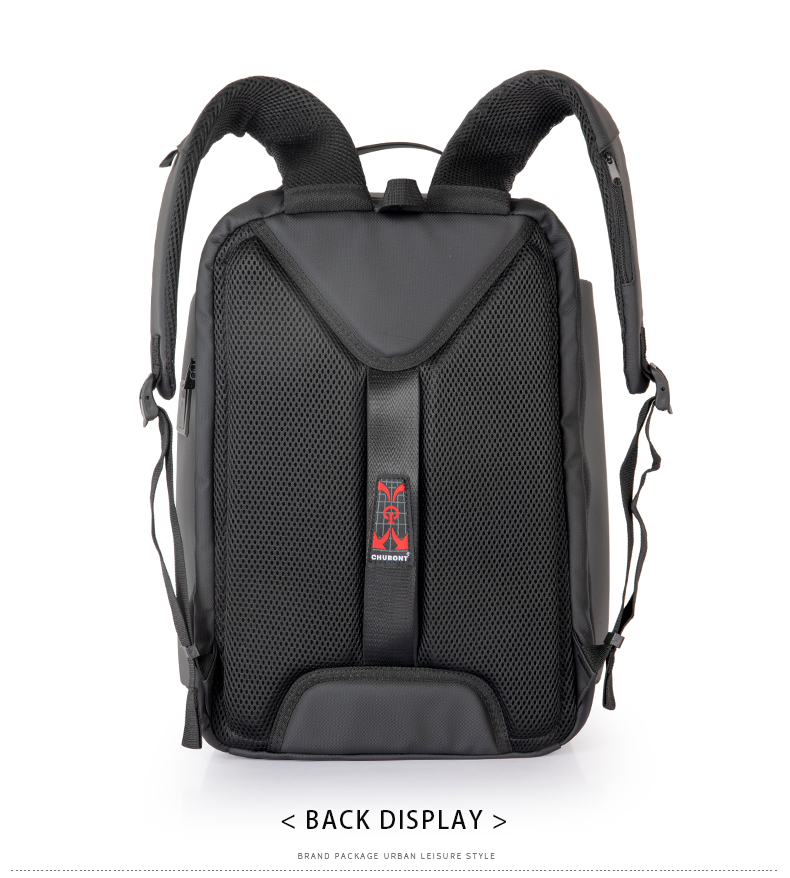
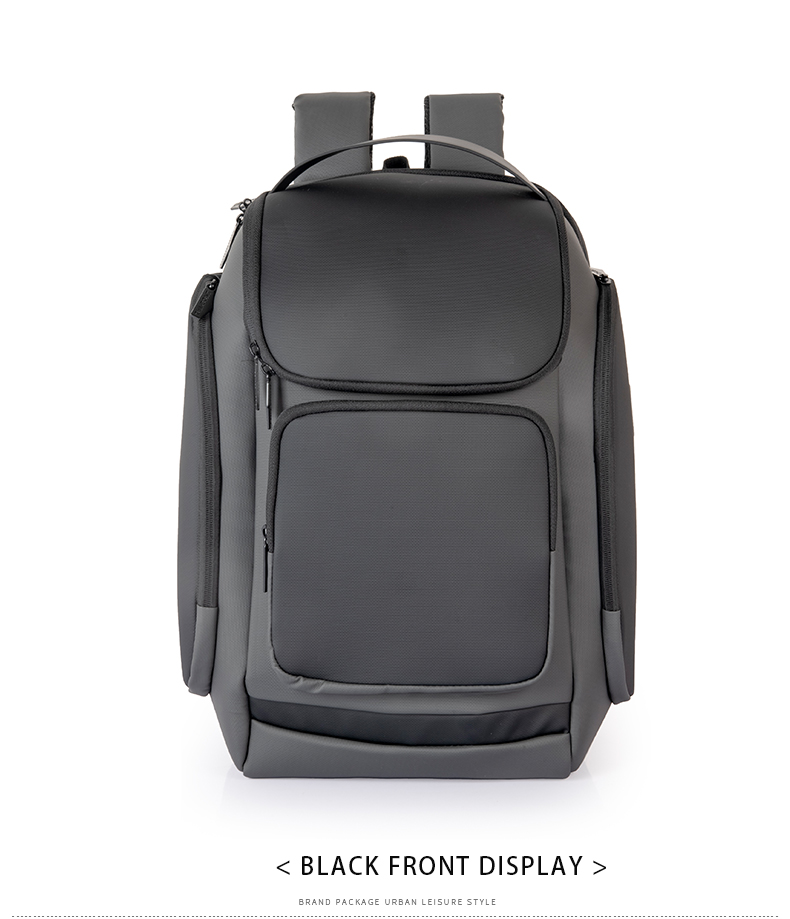
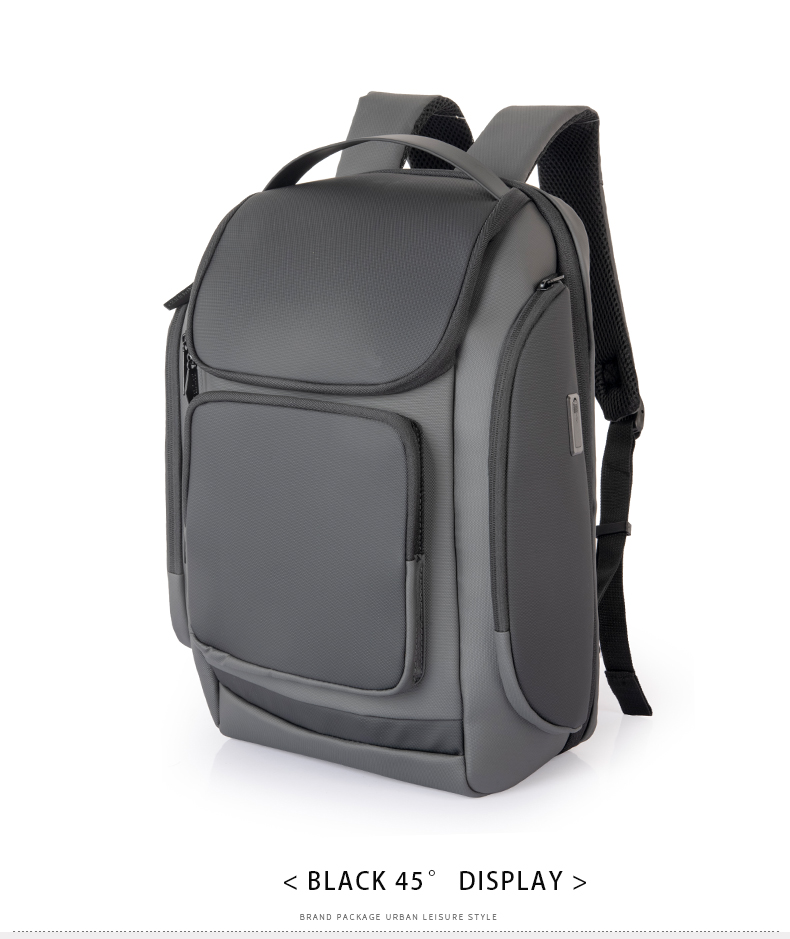
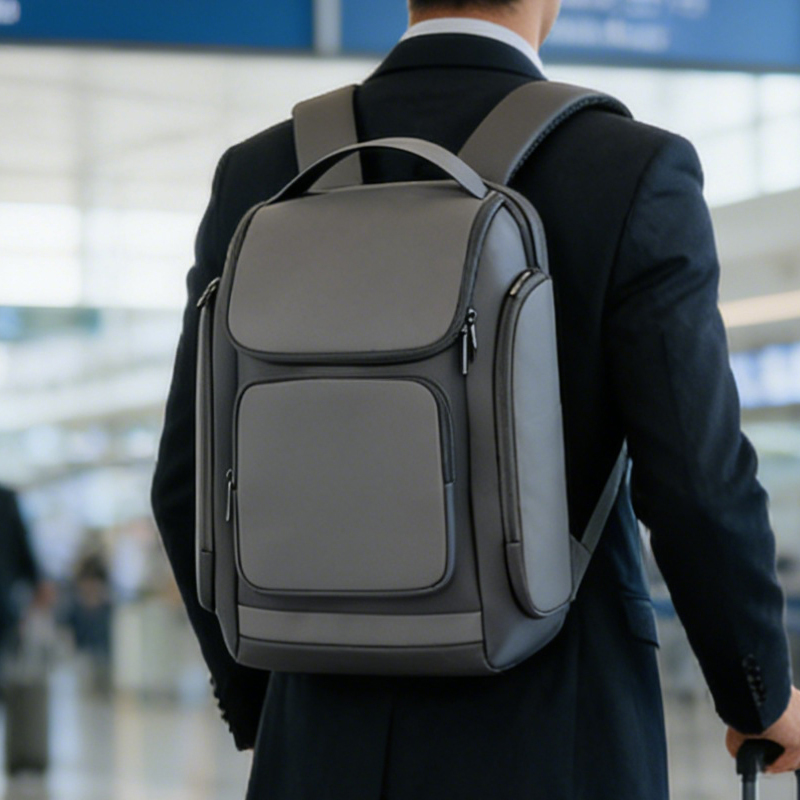
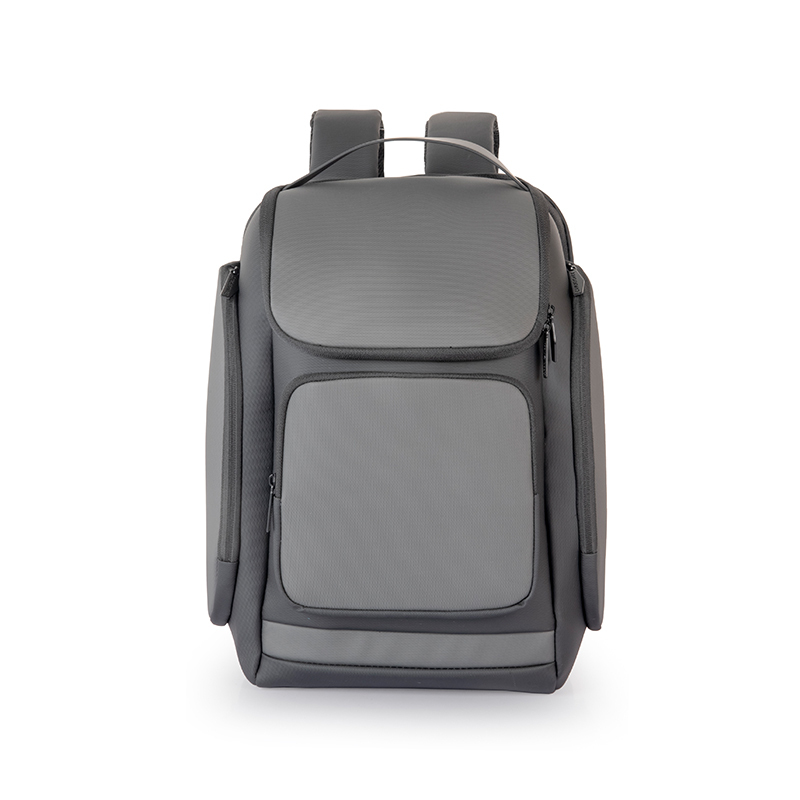
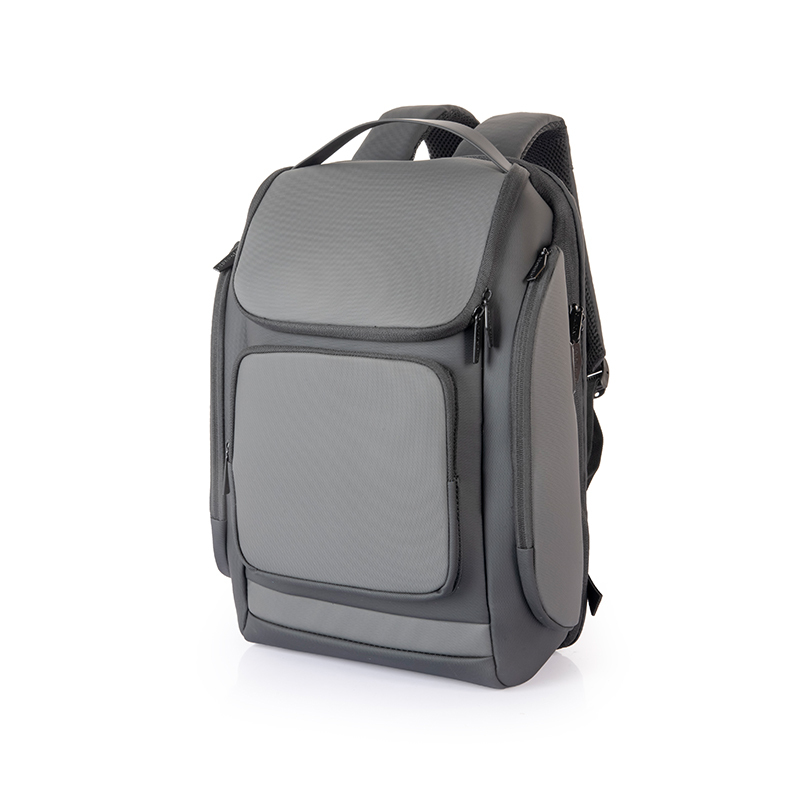
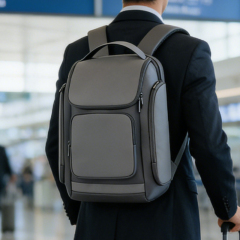
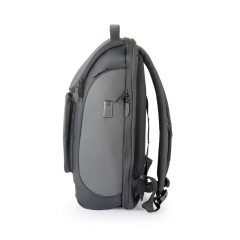
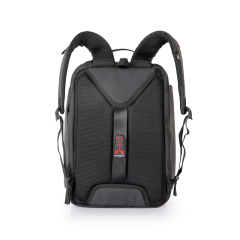
The main compartment is built around a padded device sleeve, and the pockets around it separate chargers, cables, a notebook and paper files, so the bag can be opened, checked and closed again without unpacking it on a counter. It comes in black and blue, with a squared, slightly curved profile that holds its shape even when the bag is half empty. The front panel has a woven texture that resists scuffing, the openings run on weather-resistant zipper tracks, and the stitching is reinforced at the points that take the load: strap anchors, the top handle and the ends of the zip. As a custom bag manufacturer, we build this model for private-label ranges, corporate travel programs and distributor stock, so color, logo treatment and packing follow your brief rather than a fixed catalogue specification. It also replaces the two-bag habit. A tote for documents and a backpack for the laptop become one carry that keeps both within reach, which is the point of a men's business bag on a day that starts at an airport and ends in a plant room. Ergonomic shoulder straps and a padded back panel are built to balance load-bearing with comfort over longer periods and reduce fatigue. - One business laptop backpack for the whole itinerary — a change of clothes sits next to the device sleeve, so a two-day trip needs no second bag. - Hardware that survives being used — two-way die-cast pulls, reinforced strap anchors and a stitched top handle are the parts a bag supplier is judged on first, and the parts that decide whether year two looks like year one. - Comfort that lasts past the first hour — the mesh back panel and padded straps spread load across both shoulders instead of concentrating it on one side. - A profile that stays professional — squared lines and a matte panel finish keep the bag appropriate in a client meeting and in a catalog photograph. - Two commercial colors on one pattern — black suits conservative corporate issue, blue gives the assortment a visible alternative, and both run on the same hardware and stitching.
Waterproof Construction and Hardware
- Water protection starts with the shell. The body is made from a waterproof material, and the main openings close on weather-resistant zippers rather than open-tooth fashion zips, so a walk from a station to an office in steady rain does not finish with a damp laptop sleeve. Judged as a waterproof travel bag, its job is to buy you the ten minutes between cover: it is built for rain and splashes, not for immersion, and we would rather say that plainly than let a buyer find the limit on a wet Tuesday.
- Stitching is where bags of this type usually fail first, so it is reinforced at the anchors: where the shoulder straps meet the body, where the top handle is attached, and at the ends of the zip tracks where the pull turns the corner. Those are the details a bag supplier either gets right or photographs around.
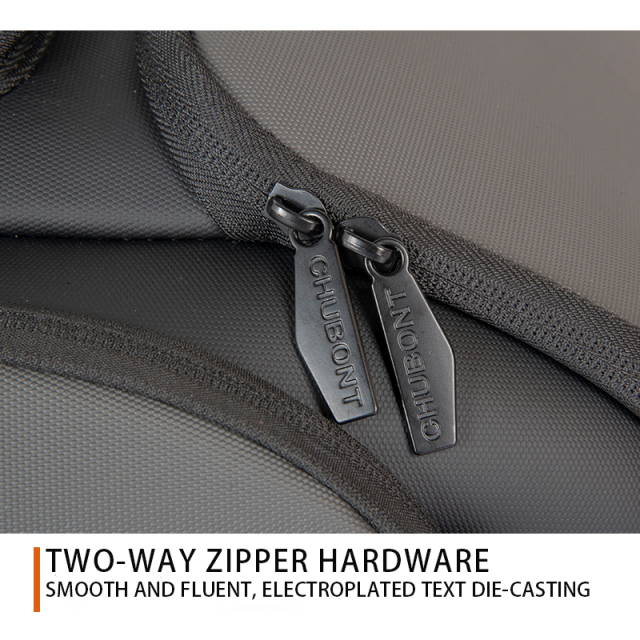
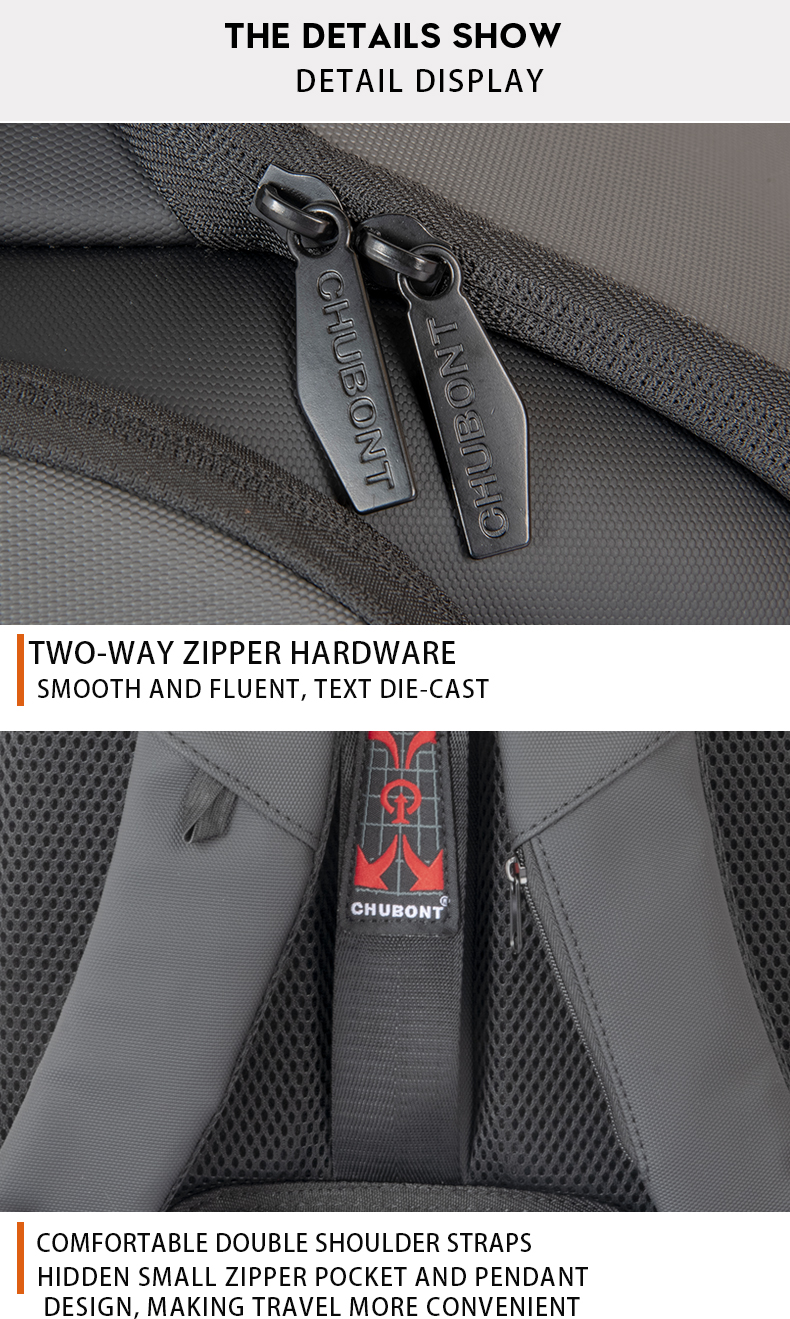
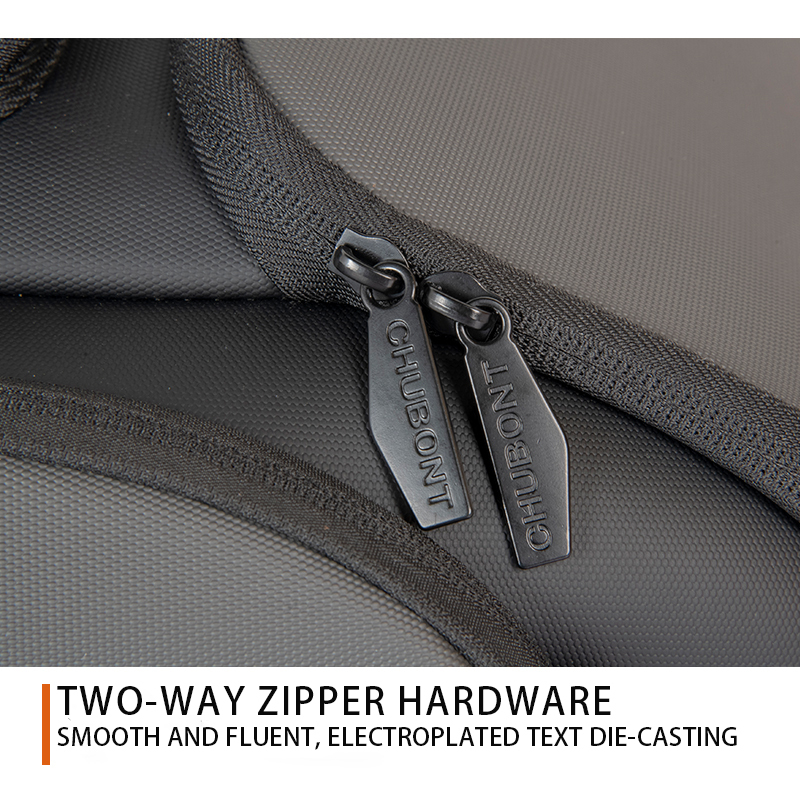
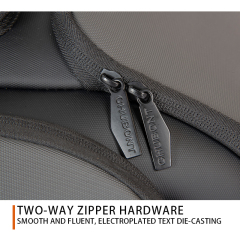
- The hardware follows the same logic. Two-way pulls on the main opening let you open the bag from either end, the pulls are die-cast with an even electroplated finish so they glide rather than snag, and the buckles are sized for the strap width instead of being borrowed from a smaller pattern.
- Materials are chosen for tensile strength and wear resistance rather than for a soft hand-feel, because this bag is expected to be set down on concrete, wedged into an overhead bin and carried by one strap across a platform.
- The main opening is a system, not a strip of teeth: a weather-resistant track, two-way die-cast pulls and reinforced stitching at the tape ends all have to hold for the opening to stay smooth after a year of use.
- Two-way pulls let you open from the side nearest the device sleeve when the bag is on a desk, or from the top when it is on your lap in a departure lounge.
- The stitching at both ends of the track and at the corners where the pull turns is reinforced, because that is where a slider gets forced past its stop when a full bag is closed in a hurry.
- The padded 15.6-inch sleeve sits against the padded back panel, with the charger pocket in front of it, so a knock on the front of the bag meets fabric and pocket contents before it meets the laptop.
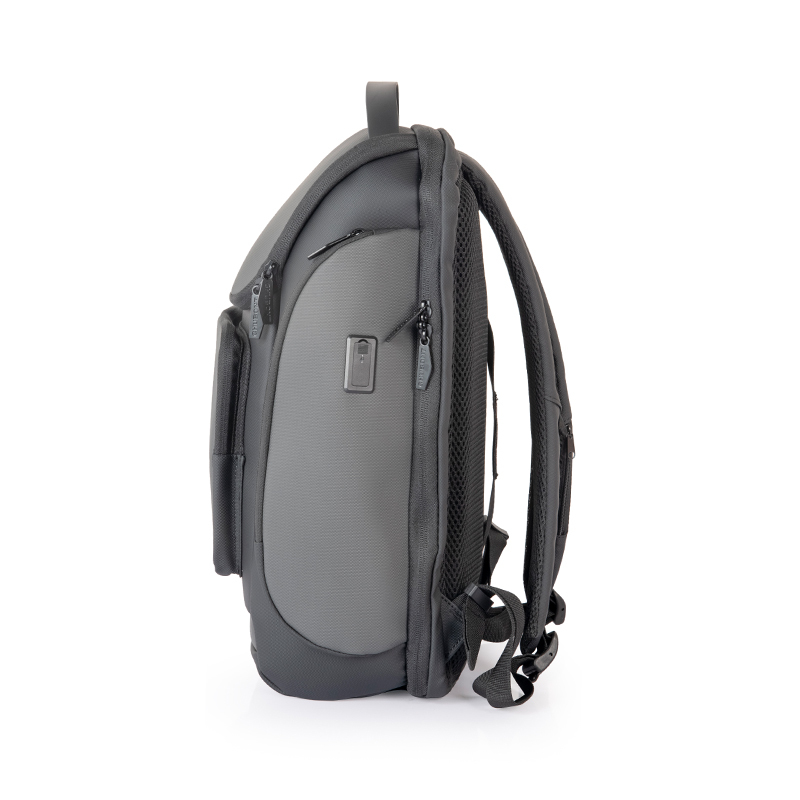
- The squared front panel and curved side profile hold their shape, so the bag lands on a panel rather than collapsing onto the device inside when it is set down on a platform or a plant-room floor.
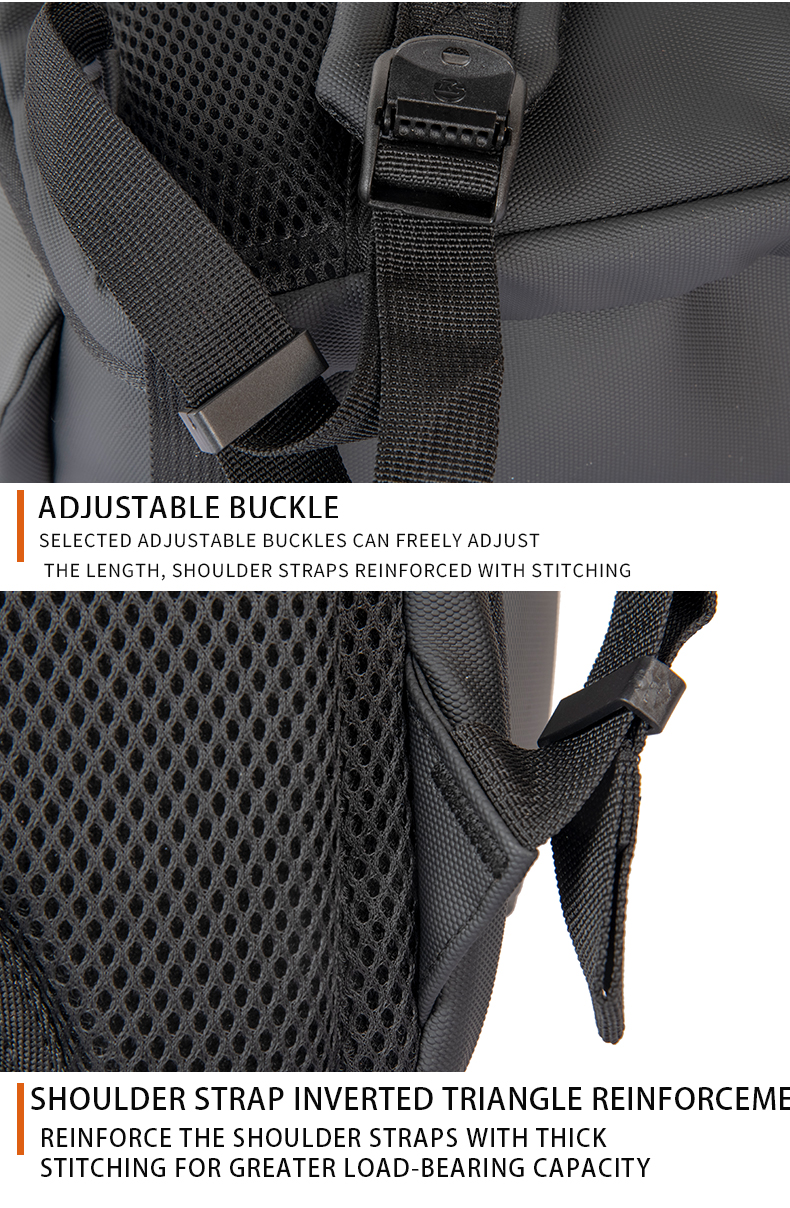
- The shoulder-strap attachments and the top handle are stitched at the load points, so lifting a full business travel backpack by one strap does not pull the shoulder straps away from the bag body.
- Run the zip from both ends with the bag full, press the front panel against the sleeve, and lift the bag by the top handle; those three checks tell you more about the build than a spec sheet, and they are the ones a bag supplier should be willing to repeat in front of you.
Carry System and Comfort
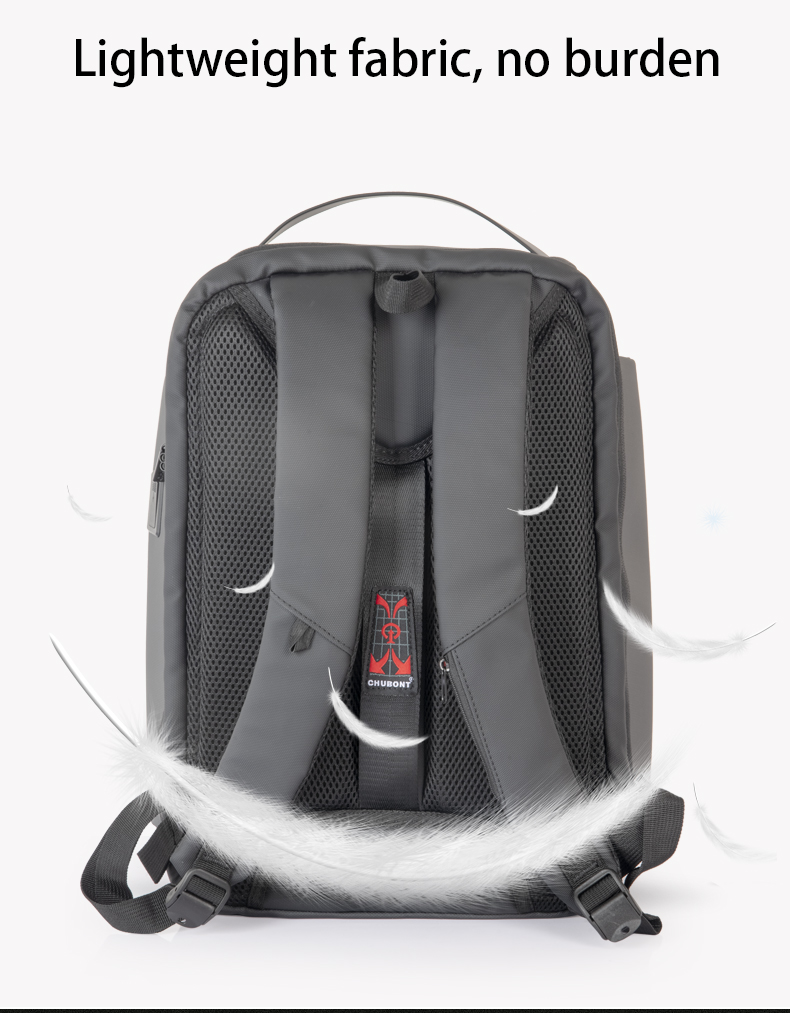
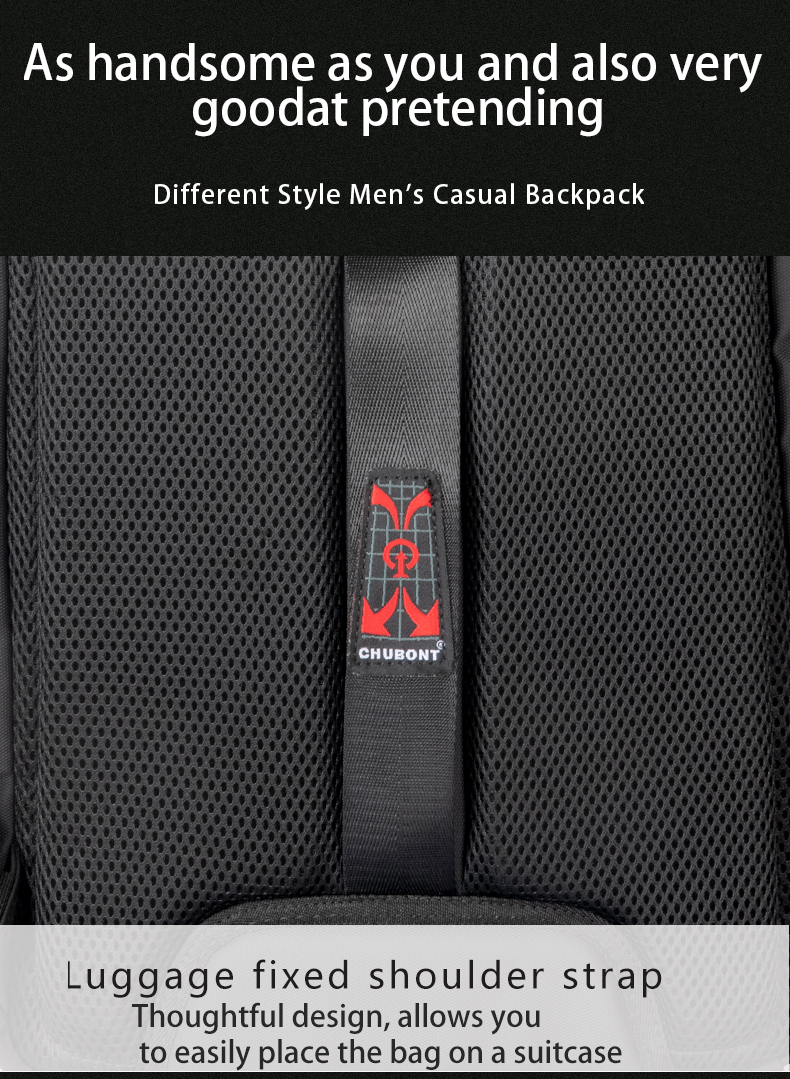
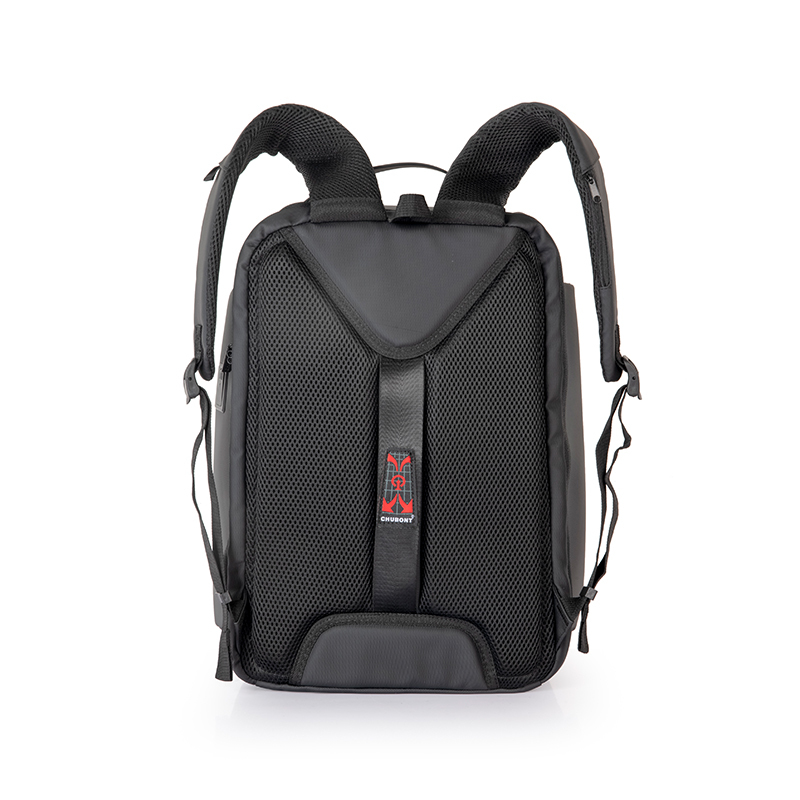
- Load that sits high and close — padded shoulder straps and a padded mesh back panel hold the bag against your spine instead of letting it swing, which is the difference between arriving fresh and arriving stiff after a long terminal walk.
- A men's business bag you can wear all day — the silhouette is squared and low-bulk, so it reads as a briefcase over one shoulder and still sits properly on both straps when the walk gets longer.
- Straps that stay set — adjustable buckles hold the fit you choose through a jacket change, a coat and a warm afternoon.
- Handle-first transitions — a stitched top carry handle for lifting the bag into an overhead bin, off a car seat or onto a luggage trolley when the straps are not needed.
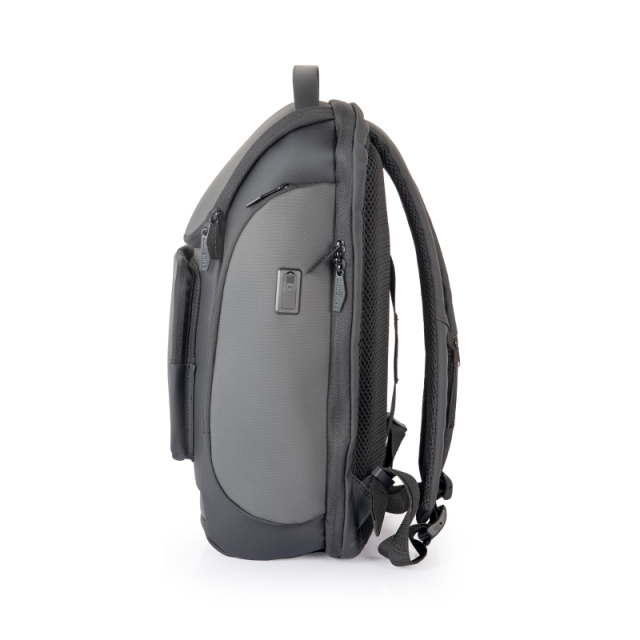
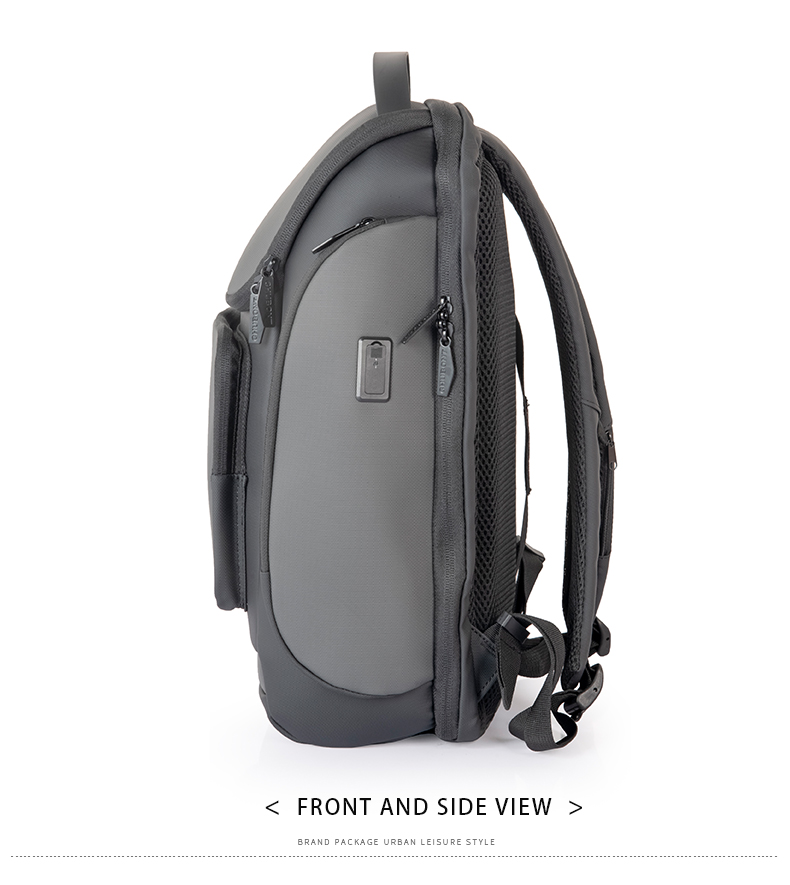
- Side access without opening the main body — zippered side pockets keep the things you reach for most, such as a travel card, a charger or a folded umbrella, out of the main compartment.
Structural and Compartment Design
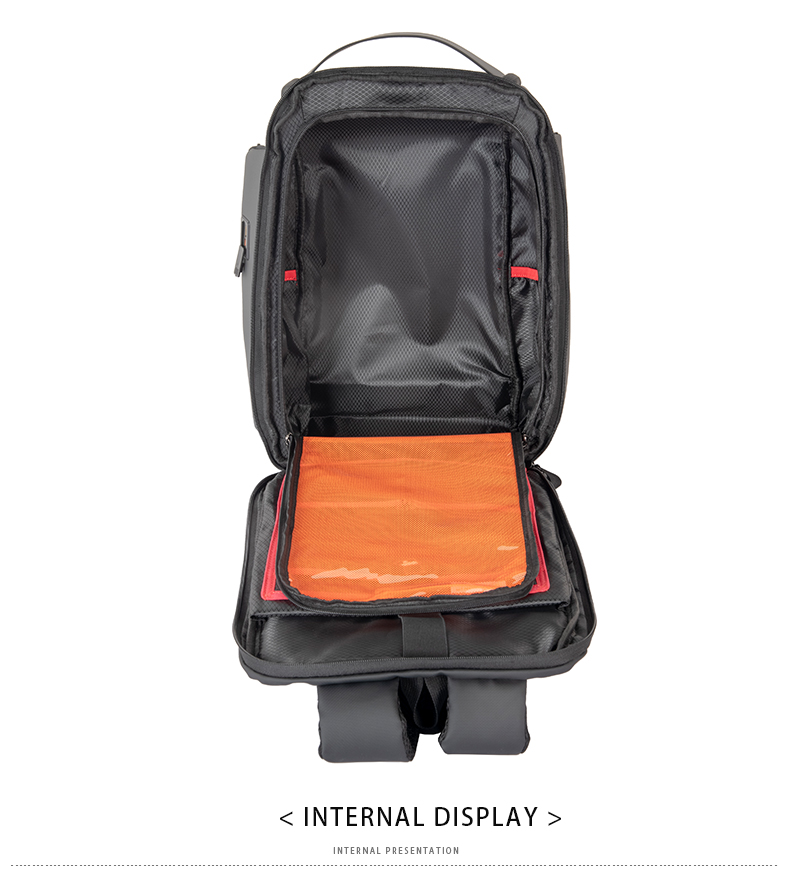
The inside is organized in zones rather than one open cavity. A padded sleeve sits against the back panel, a shallow pocket in front of it takes the charger and mouse, and the remaining volume is deep enough for a folder, a dopp kit and a change of clothes. Nothing is shared between zones, so a leaking toiletry bag never reaches the paperwork.
Packing becomes a sequence instead of a search. Device into the sleeve, cables into the front pocket, documents flat against the back, clothing into whatever space is left: the same order every night, which is what makes an early checkout quick.
The exterior geometry does real work. Squared lines and a curved side profile keep the bag standing when it is set down in a reception area or on a wet platform, and they stop a partly packed bag from sagging into the shape of whatever is inside it. The small logo plate on the front panel is deliberately understated, so the bag reads as a men's business bag rather than a hiking pack.
Volume is arranged like a large travel backpack. The main compartment takes a full change of clothes alongside the work kit, so one bag covers a two-day trip without a suitcase.
Use Scenarios
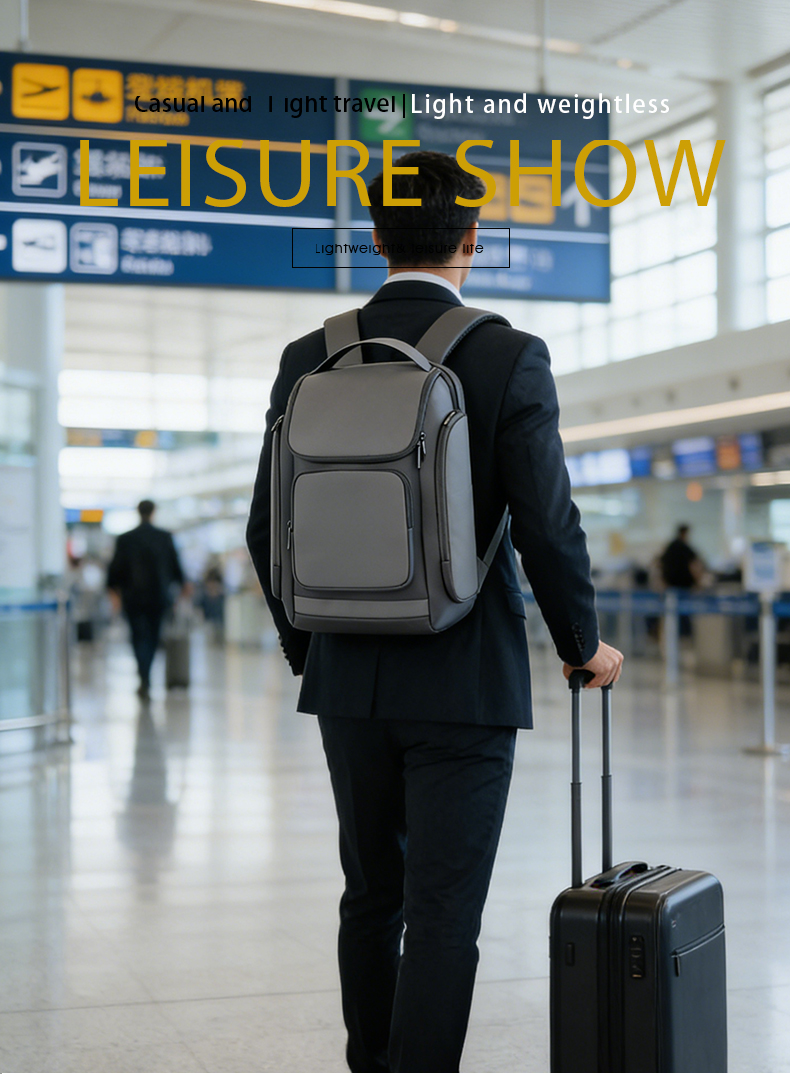
A two-day client trip is the clearest test. Laptop, charger, one shirt, one pair of trousers and a dopp kit fit in a single business travel backpack, which means no checked bag and no wait at a carousel before an evening meeting.
A wet walk from the station is the second. This is where a waterproof travel bag earns its name: the shell and the zipper line take the rain while the device sleeve stays dry, and the bag still looks presentable when it is carried into the building.
A full conference day puts the carry system under load. Padded straps and the mesh back panel spread the weight across both shoulders, and the side pockets keep a phone and a card holder out of the main compartment while you are standing and talking.
Hot-desking weeks test the organization. Moving between three offices with the same bag means the sleeve, the document pocket and the cable pocket stay in the same place every day, so nothing has to be reorganized at each desk.
The site visit tests the material. Set down on gravel, carried through dust and splashes, loaded with a laptop and a folder of drawings: the structured body keeps its shape and the shell wipes clean at the end of the day.
- Field engineers and auditors — a laptop, a diagnostic kit and a folder of paperwork travel in one bag, with the device sleeve keeping the machine away from tools and cables. - Wet sites and coastal weather — the waterproof shell and weather-resistant zippers matter most where there is no shelter between the vehicle and the building. - No desk, no problem — the structured body stands on the floor of a plant room or a site cabin without collapsing, and the padded back panel still works on the walk back. - Capacity for a week of site work — a large travel backpack layout takes a change of clothes next to the work kit, which removes the second bag from short deployments. - Coworking and remote weeks — between an office, a café and a client's meeting room, the bag carries the same kit and opens onto the same pockets every time.
- Empty every pocket after a trip — the main compartment, the device sleeve, the front zip pocket and both side pockets of this business backpack. A pen or a travel card left in a side pocket is what marks the lining over a season, and a charger left in the sleeve puts pressure on the padding.
- Wipe the shell with a cloth wrung out in water and a little mild soap. Do not use solvent cleaners, bleach or an abrasive pad on the woven front panel; the texture resists scuffs, and a harsh cleaner takes the finish off before the fabric wears out.
- Clean the zipper line with a soft brush and close the bag only after the track is dry. Grit in the teeth is what makes a pull feel heavy, and a zip forced over a dirty track is the quickest way to lose a slider.
- Air-dry the bag open, away from a radiator, a hair dryer or direct sun. Heat can distort the coating on the shell and soften the structured front, and a bag that is put away damp will smell before it wears out.
- Store it flat or hanging with the straps loosened, not under another suitcase or a box of stock. The squared body holds its shape when it is not compressed, which is what keeps the bag presentable on the next trip.
- For a corporate program, keep issued bags in a dry room between trips and check each one before it goes out: a zip that has been forced, a strap anchor that has been pulled or a lining that has been marked is easier to catch in storage than at the airport.
- Do not over-pack the main compartment. Close the zip with the bag resting on a table rather than forcing it shut on your knee; the zip and the corner stitching are built for a full bag, not a compressed one.
Specifications
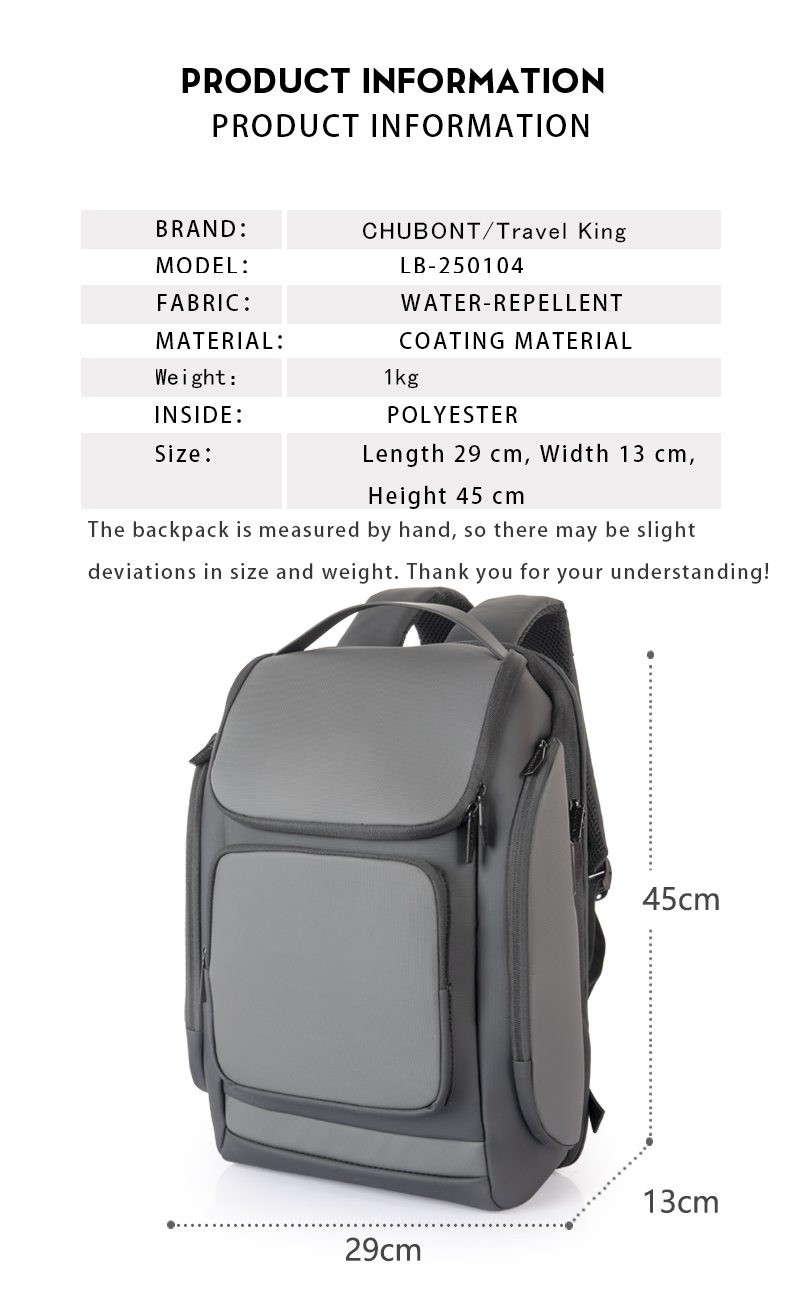
| Model |
LB-250104 |
| Type |
Business laptop backpack with padded 15.6-inch device sleeve |
| Laptop fit |
Up to 15.6 inches |
| Colors |
Black, blue |
| Shell |
Waterproof material with woven textured front panel |
| Zippers |
Weather-resistant main opening with two-way die-cast pulls |
| Stitching |
Reinforced at strap anchors, top handle and zip ends |
| Carry |
Padded shoulder straps, padded mesh back panel, top carry handle |
| Pockets |
Main compartment, device sleeve, front zip pocket, side zippered pockets |
| Intended use |
Business trips, daily commute, field and site work |
| Customization |
Logo, lining, color direction, hardware finish and packing confirmed per order |
Corporate Travel Coordination
Corporate buyers usually order this model in one of two ways: as a company-issued bag for a defined group of travelers, or as part of an onboarding or gifting kit. Both need the same thing, which is one specification that does not drift between orders.
Color is the first decision. Black suits conservative dress codes and hides the marks of travel; blue gives a team something recognizable on a carousel and gives a company merchandise program an alternative to a wall of black bags.
Because we are a custom bag manufacturer, the front logo plate, lining, hardware finish and packing can be set once and repeated on the next run, which is what keeps a second batch consistent with the first on color reference, stitching and hardware.
Volume matters in a program too. One large travel backpack per traveler, sized to double as a personal item, is easier to administer than a laptop case plus a holdall, and it simplifies issue, replacement and storage between trips.
Replacement planning is the last piece. Because the pattern stays fixed, a lost or damaged bag can be replaced from a later run without the new one looking different from the rest of the team's.
Ordering, Packing and Lead Times
- Send us the brief — model, quantity, color choice from black and blue, logo artwork and packing preference. Minimum order quantity depends on the model, material, color, logo process and packing, so we confirm it against your brief rather than quoting one figure for everyone.
- Approve a sample — sampling typically takes 3 to 7 days after artwork confirmation. Ask your sales contact about sample availability for this model.
- Confirm the approved sample and place the deposit.
- Production — mass production typically runs 30 to 45 days after sample approval and deposit.
- Settle the packing — standard packing, custom packing or coordinated packing materials, agreed in writing before the run starts. When you compare one bag supplier with another, ask for this in writing; it is the part of a quote most often left vague.
- Inspection and dispatch — the finished order is checked against the approved sample and your packing instructions before it leaves.
Quality Control & Inspection
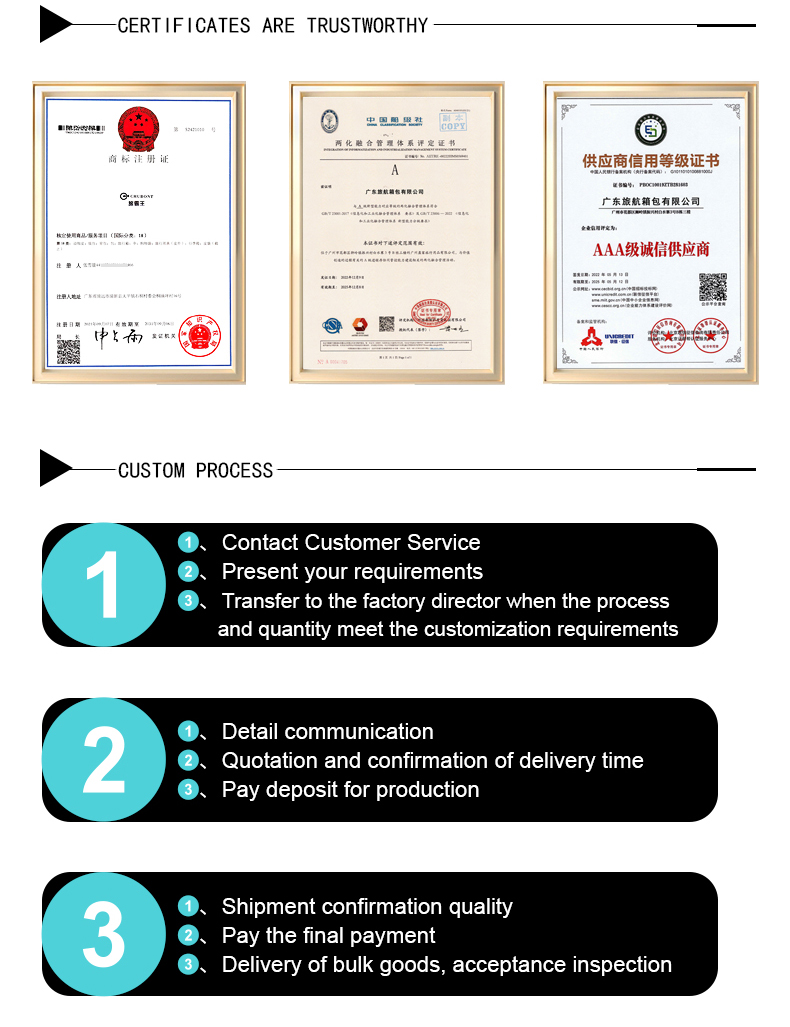
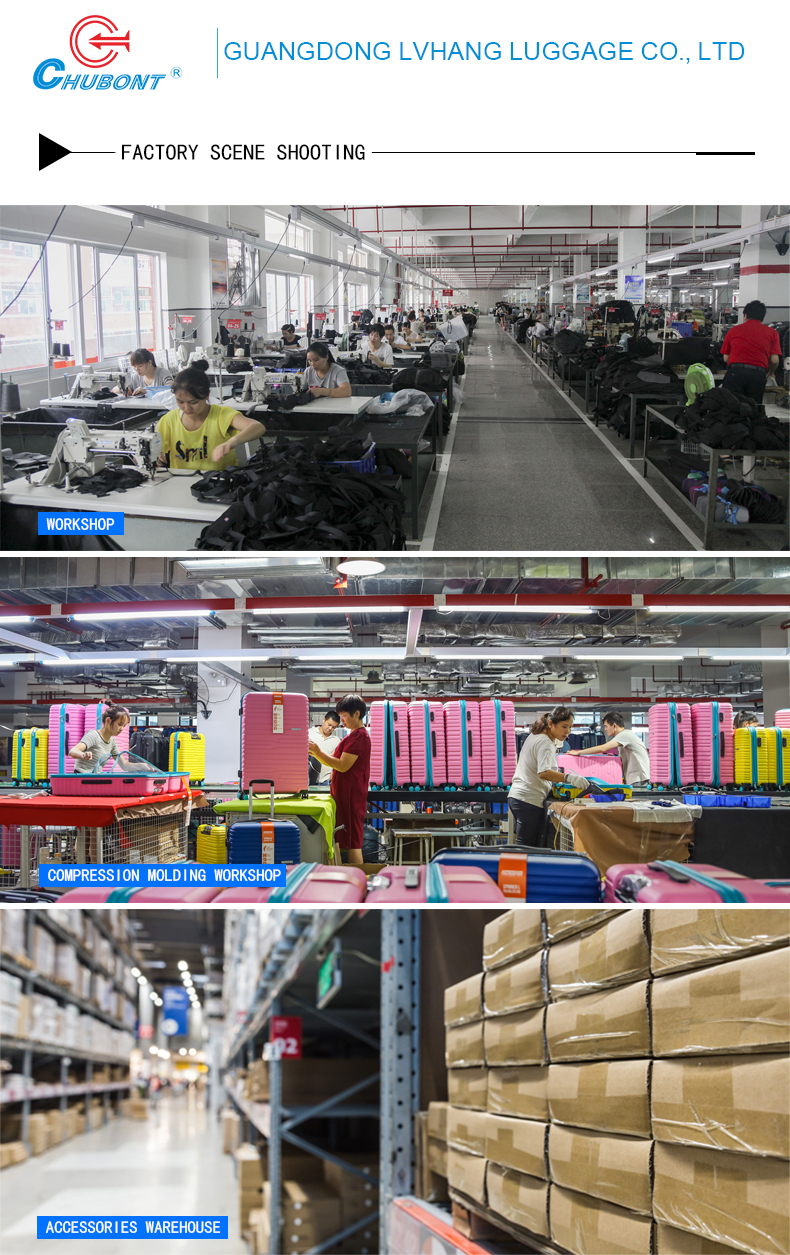
Every CHUBONT order passes five checkpoints inside our own workshops: incoming materials, pre-production samples, in-production patrols, finished-goods review, and a final pre-shipment check against the order. Batch records are kept, so buyers can see what was checked and when. You are welcome to send your own QC team, or appoint an independent inspector such as SGS or BV, to verify goods before they leave, and we support factory audits and on-site monitoring while production runs. Shipping marks, packing lists and carton labelling are confirmed against your instructions before loading.
- Carry-on checks before a program is signed — the bag is built around standard carry-on proportions, but cabin limits differ between carriers, so verify the airlines your travelers actually fly before you commit. - Security lanes without a repack — the device comes out of its sleeve and goes back in while everything else stays in its zone, which keeps a queue from turning into a floor display. - A packing routine that repeats — because the zones never move, the bag repacks the same way every night, which shortens turnaround between cities. - Fewer items per traveler — one business travel backpack replaces a laptop case plus a holdall, cutting what has to be tracked, stowed and retrieved. - Waiting time — the strap system stays comfortable on the back and the structured base lets the bag stand beside a seat instead of being balanced on a knee. - Hotel storage — an empty bag holds its shape in a wardrobe and packs flat enough to sit inside a larger case when the return leg carries more.
FAQ
What materials are used in this waterproof business backpack?
The body is made from a waterproof shell fabric with a woven, scuff-resistant front panel, closed with weather-resistant zippers and reinforced with stitching at the load points. Fabric content is set per order, with nylon, polyester and PU the usual options for a bag of this type, so confirm the exact composition against your approved sample before the first batch is signed off.
Can we add our own logo, colors and packaging?
Yes. As a custom bag manufacturer we handle OEM and ODM work on this model: logo plate and logo placement, lining and color direction, hardware finish, pattern development and packing. Send artwork and a color reference and we will confirm what the current pattern can carry before any tooling is discussed.
How do you check the quality of each bag?
Every unit passes a pre-shipment inspection against the approved sample, covering stitching tension and reinforcement, zipper glide and pull attachment, handle and strap anchors, and the condition of the waterproof shell and zipper line. Checks follow in-house and third-party AQL standards, so a defect is caught before packing rather than after delivery.
Is it fully waterproof?
It is built for rain. The shell is waterproof and the main openings use weather-resistant zippers, which keeps a laptop and documents dry through a wet walk, a platform wait or a soaking on site. Treat it as a waterproof travel bag for weather rather than a dry bag for immersion: no fabric backpack should be submerged, and we prefer to set that expectation before you order.
Will a 15.6-inch laptop and a tablet both fit?
Yes. The padded sleeve is sized for a 15.6-inch machine, and the compartment in front of it takes a tablet or a slim folder alongside the charger. If your team carries 17-inch workstations, tell us before ordering, because this business laptop backpack is built around the 15.6-inch format and we would rather match you to the right model than have the limit surface on the first trip.
How should we clean and store it?
Wipe the shell with a damp cloth and a little mild soap, then let it air dry completely before storing. Empty the pockets, loosen the straps and keep the bag flat or hanging rather than under other luggage, and the structured front will hold its shape between trips.