Travel Highlights at a Glance
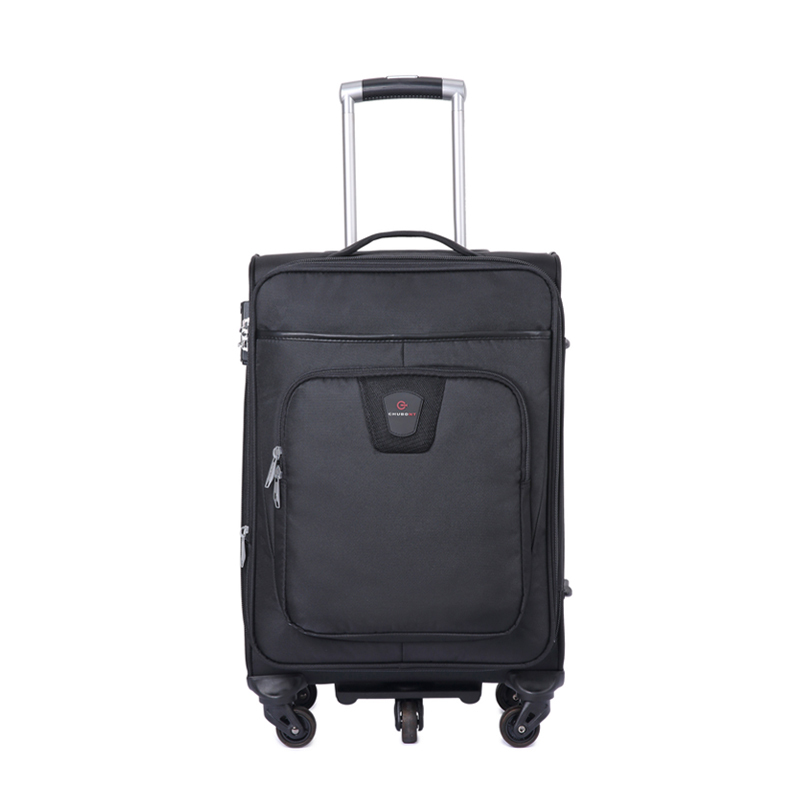
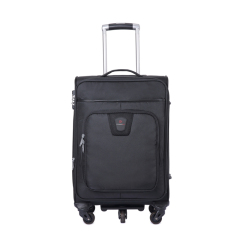
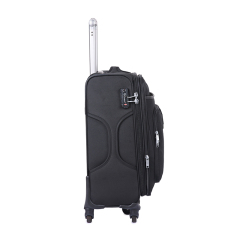
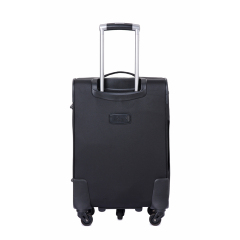
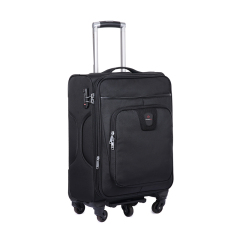
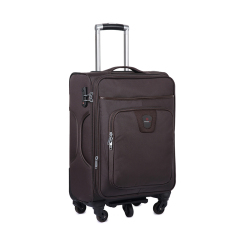
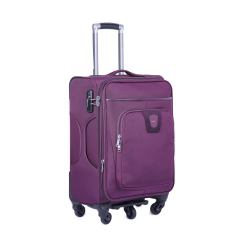
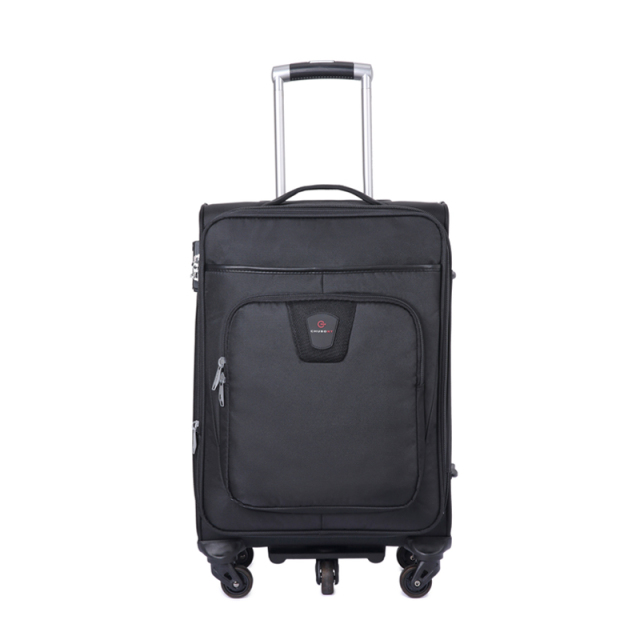
LB-101391 is a four-wheel spinner case built around a TSA-accepted combination lock. It is the model we supply to buyers building a spinner luggage line who want a TSA lock suitcase that airport security can open, inspect and relock instead of cutting — ordered on its own or as the anchor piece of a matched set.
The case is made in our own workshops in Qingyuan, Guangdong, where we have worked as a luggage manufacturer since 1998. Every order is built to the brief agreed at quotation — body material, colour, lining, logo method and packing — so the same construction can ship as plain stock for a distributor or as a branded case for private label luggage programmes.
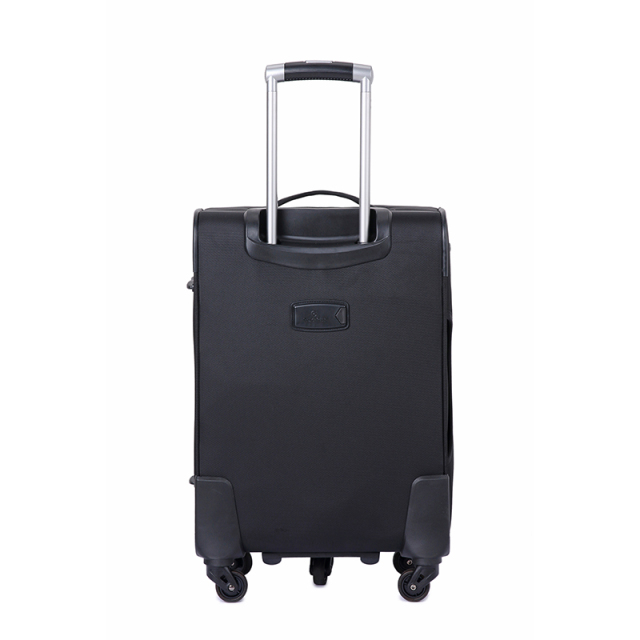
In daily use it opens flat like a book: two packing halves, a compartmented lining on one side and a full-depth side for shoes or folded jackets. It rolls upright on four wheels through a terminal, stands square at check-in, and can be pulled at an angle down a narrow aircraft aisle without tipping. Top and side grab handles take over when the case has to be lifted into an overhead bin or off a baggage belt.
It suits distributors adding a lock-equipped case to a shelf, brands building a first spinner line, and corporate travel programmes that issue one model in one colour to staff. For longer trips it pairs naturally with a rolling duffel or a foldable second bag.
Four Core Functions
- The lock sets the price tier. A TSA-accepted combination lock is the reason most buyers choose this model over a plain zip case. If any part of your market is North America, treat it as a shelf requirement rather than an upgrade; for other destinations, decide whether it earns its cost against a keyed lock, and settle the lock specification at quotation.
- Wheels decide how the case is used. A four-wheel spinner is bought by travellers who keep the case upright and steer it; a two-wheel case suits buyers who expect to tilt and pull. If your shelf already carries two-wheel cases, this one is the natural upgrade step for a buyer moving into spinner wheels luggage, and the sample needs to be rolled loaded before you commit to a volume.
- The trolley handle carries the load. Pull it fully out and press down with the case loaded. Each stage should lock cleanly with no sideways play, and the grip should sit at a comfortable height for the people who will actually pull it. Look at the stitching at the corners and how the sliders park — that is the part a handler's grip lands on.
- Material and weight follow the brief. Body fabric, coating and hardware are agreed per order, and case weight counts against the traveller's airline allowance, so say early if a lighter build matters more than a heavier coated one. Custom spinner luggage programmes can be quoted in more than one material where your price points need it.
The TSA Combination Lock
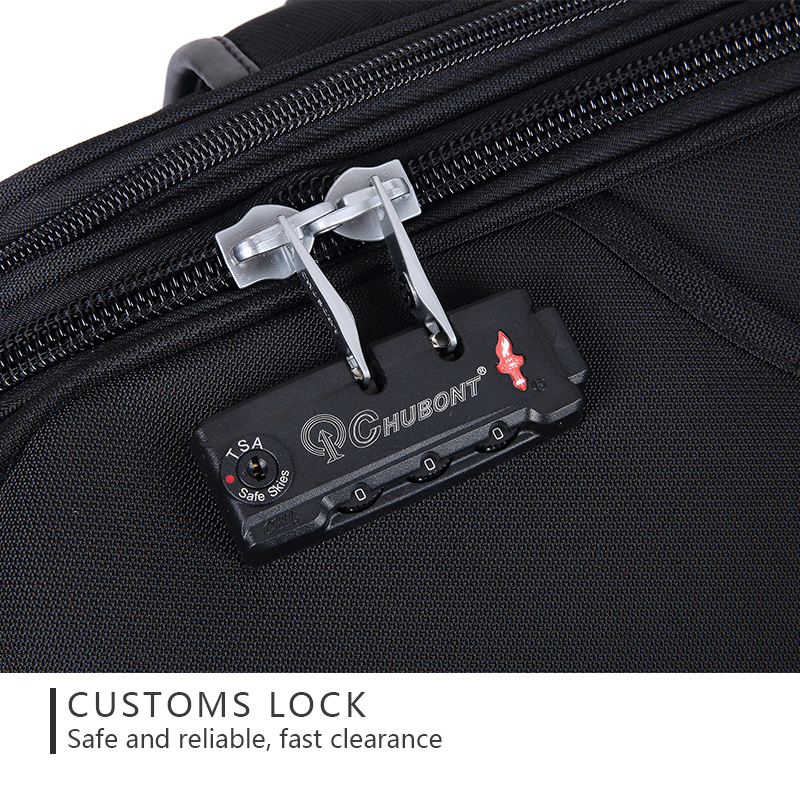
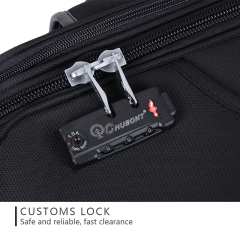
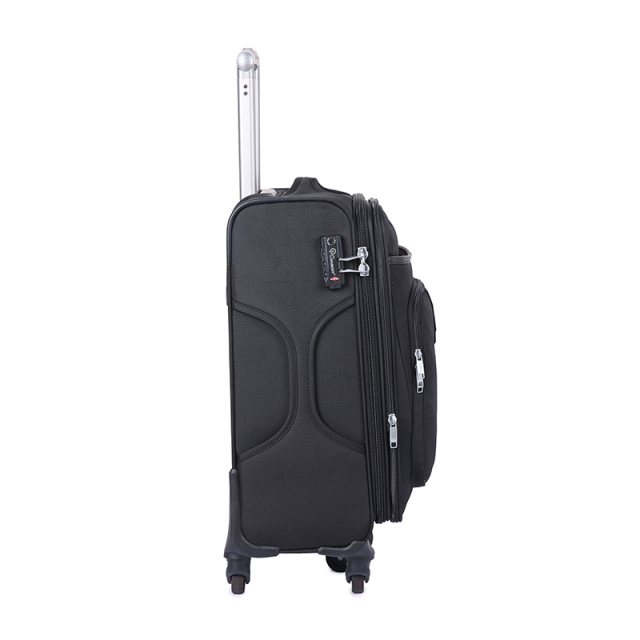
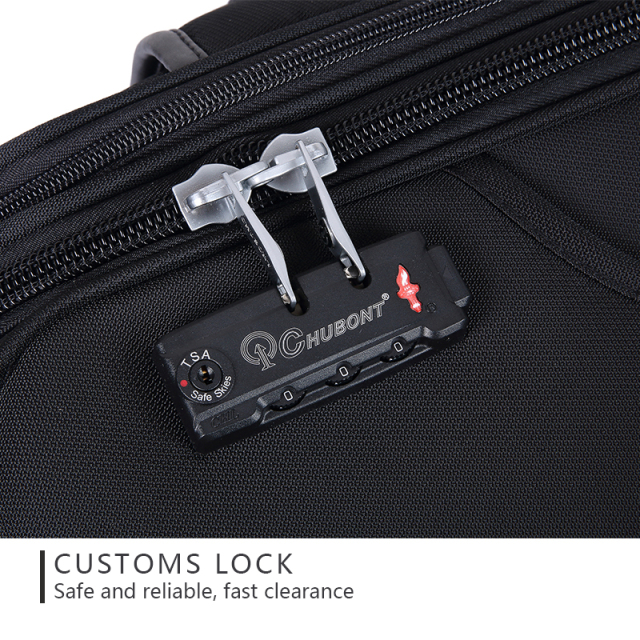
What the lock does. A TSA-accepted lock is a combination lock that screening staff recognised under the Travel Sentry programme can open with a master key, look inside and relock — instead of cutting the zip and leaving the traveller with a ruined case and a claim. On a North America route that single difference is usually what sells a TSA lock suitcase.
How to describe it. The lock we fit is supplied by a licensed lock manufacturer, and it is fitted hardware: the licence sits with the lock maker, not with us. Write it up as a TSA-accepted lock and avoid “TSA certified” or “TSA approved”, which would claim a certification the case does not hold. We are happy to confirm the lock brand and the licence position in writing for your compliance file.
For the traveller. The lock works on a three-dial combination that is set before the first trip and can be changed later. Record the number somewhere other than inside the case. It protects the closure against opportunistic opening; it is not a safe, and passports, cash and electronics are still better carried with the passenger.
What to settle at quotation. Whether the lock sits on the main compartment only or on a secondary pocket as well, since that changes the slider layout. Whether you want spare locks or replacement lock sets for your own after-sales stock. And whether this is the right model for markets where a TSA lock adds cost without adding a selling point — the same construction can be quoted with a different lock.
Spinner Wheel & Trolley System
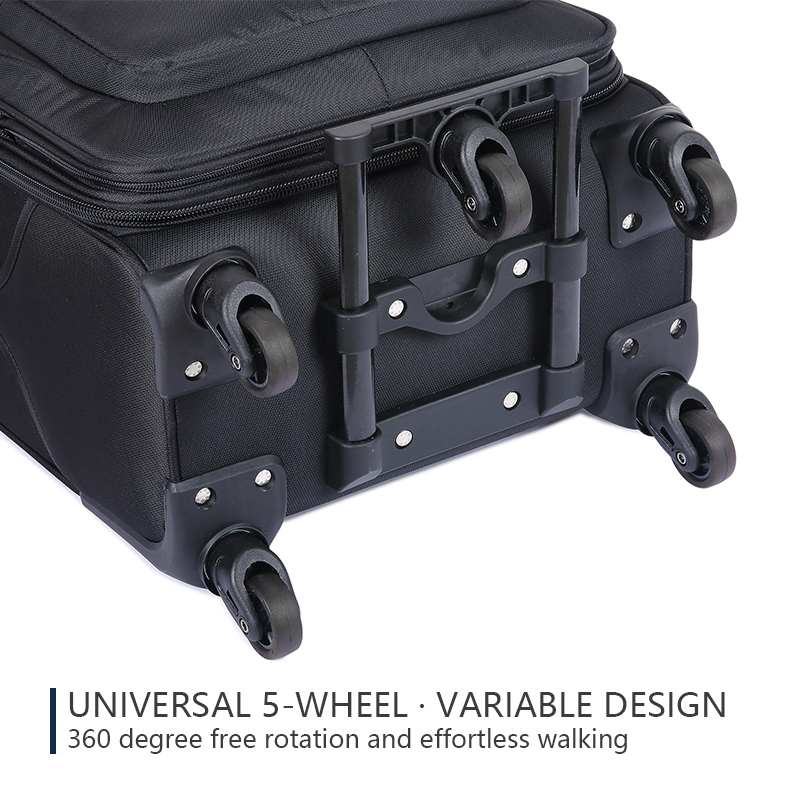
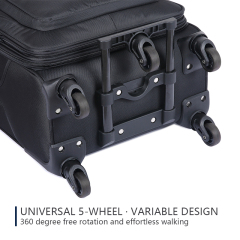
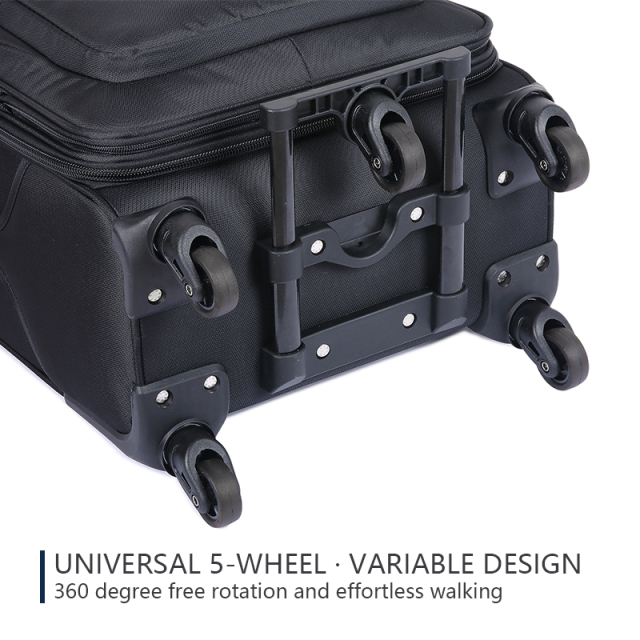
- Four 360° wheels turn in place. Spinner luggage spins on its own footprint, so it goes down an aircraft aisle, round a showroom display or between two check-in queues without being tipped. Loaded, that is the difference between steering a case and dragging one.
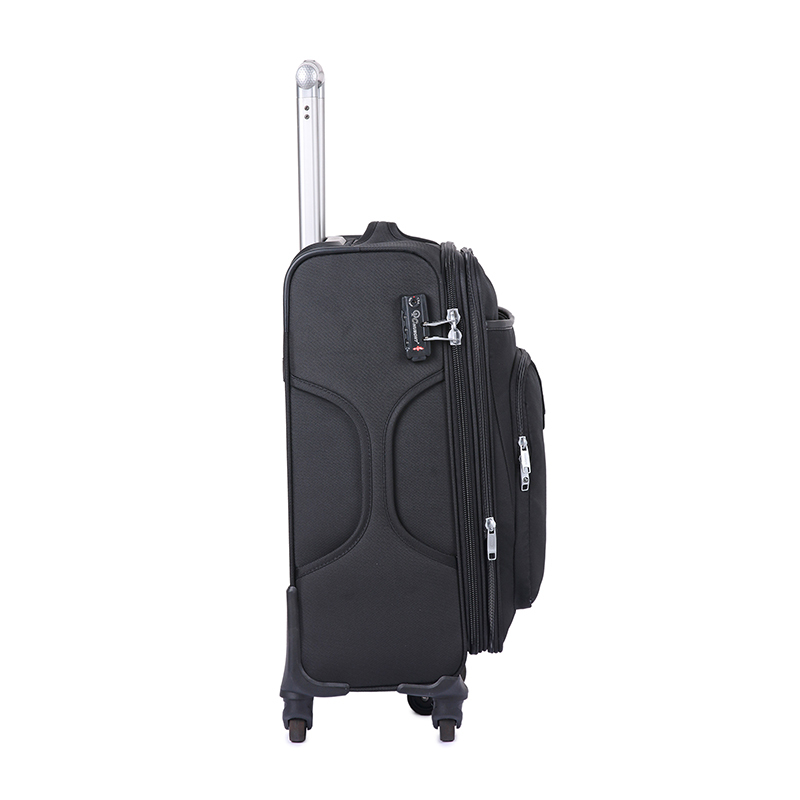
- Wheel housings sit at the corners. The mounts are set into the lower corners rather than bolted flat to the base, so a kerb or a belt edge meets the housing before it reaches the axle. Roll a loaded sample off a 2–3 cm lip before you sign it off.
- The surface changes everything. A spinner that glides on terminal tile can drag on carpet and chatter on paving. Test the sample on all three, because your customers will.
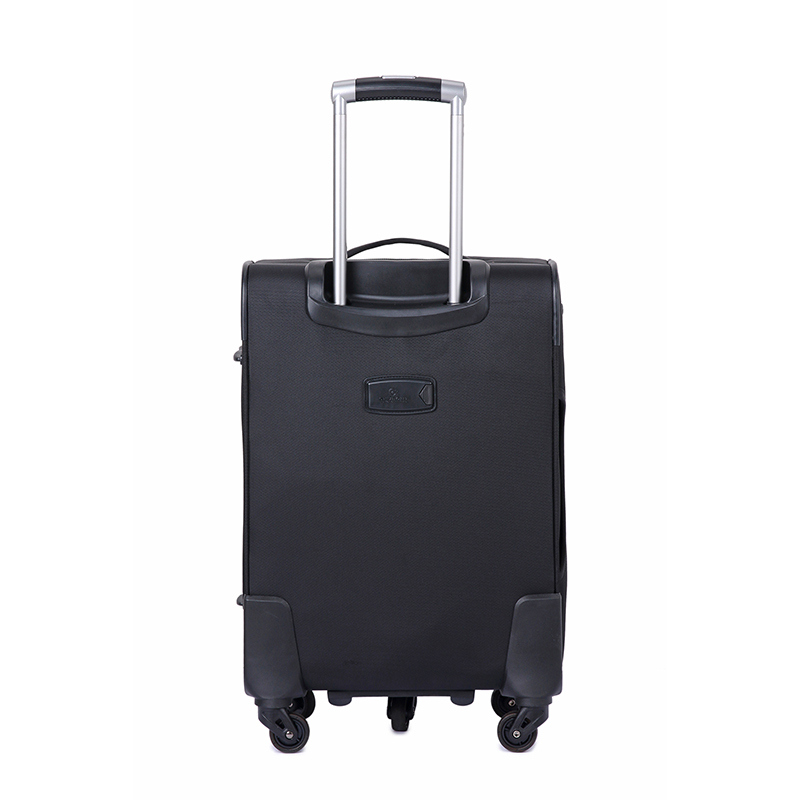
- Telescopic handle, two stages. Check the lock on each stage, the sideways play with the case loaded, and the grip height against the trolleys it will sit next to on your shelf.
- Top and side grab handles. The top handle lifts the case into an overhead bin; the side handle takes it off a belt when the case is lying flat. Both should be stitched through a reinforced panel rather than the lining alone.
- Pack heavy at the wheel end. Weight over the wheels keeps the case steady when it is pulled; a top-heavy case feels unstable at speed. Pass that on to your trade customers — it is the most useful packing tip for spinner wheels luggage.
Zipper & Impact-Resistant Structure
The closure. A TSA lock suitcase is only as good as the zip it closes, and this zip runs around three sides with two sliders meeting at the lock. That spreads load along the whole opening instead of pulling at one point, and it is what lets the case open flat and be packed from both sides. Ask to see the bartacks at the zip ends and the binding tape over the seam — those are the two places a zip case fails first.
Impact, handled honestly. No case of this type is crush-proof, and we do not describe ours that way. What the construction does is spread impact: reinforced corner panels take the first contact when the case is thrown onto a belt, an internal stiffening panel stops the shell folding inward onto the contents, and extra padding at the wheel end protects the part that lands first when the case is dropped upright. In practice that is the difference between a laptop surviving a normal handling cycle and not.
Matching the build to the trip. If your customers check the case every week, ask us to quote the heavier trim and the reinforced corner treatment. If most of your volume is carry on luggage, the standard build keeps weight down, which is what business travellers count when they pack to an allowance. Either way, ask for the independent test report covering the construction you order — reports are issued per model and per project, so the one that matters is the one that matches your specification.
One thing to check on the sample. Look at how the two sliders meet at the lock and whether the zip sits flat when the case is overpacked. A zip that stands proud at the corners will be the first thing to fail in service, and you can see it in thirty seconds with a loaded sample. Buyers building a custom spinner luggage programme usually ask to see this on their own colourway before signing off.
Sizes & Trip Lengths
Four sizes cover the ladder, and the choice comes down to whether the case has to go into the cabin or onto the belt.
A 16-inch case is the compact cabin format: a laptop, a change of clothes and a wash bag for one or two nights, sized to fit the sizer at most carriers. The 20-inch is the volume cabin size and the one most distributors stock first — three to four days for one traveller, or a week if you pack light. Carry on luggage limits are set per airline and some carriers are stricter than others, so check the rule for the routes your customers actually fly before you print “cabin size” on a listing.
The 24-inch has to be checked. It carries a week for one person or a long weekend for two, and it is the size that most often turns a cabin buyer into a two-case purchase. The 28-inch is the long-haul and family size: two weeks of clothing for one, seven to ten days for two, and the piece that absorbs the extra pair of shoes.
Most shelves work with one cabin size, one mid and one large, and many buyers take the cabin and mid as a pair. As a luggage manufacturer we confirm the exact external dimensions and the size mix for your order at quotation — they are what your customers will measure against a sizer, and what your freight planning depends on.
Sets & Companion Pieces
- The cabin-and-mid pair. A 20-inch and a 24-inch boxed together is the most common set we ship: one traveller gets a cabin case for short trips and a checked case for longer ones, and your business sells one unit instead of two.
- The three-piece ladder. 20, 24 and 28 together covers a household from a weekend to a fortnight, and it is the format a family buyer or a long-stay customer goes for.
- Matching is the point. Pieces in a set share body material, hardware colour, lining and trim. If you plan to sell the pieces separately later, keep the same construction across the run so a customer can add a size two seasons from now.
- Colour across a batch. Set colours are matched to your shade card; ask about the tolerance between production runs at quotation if you reorder a colour seasonally, because that is what decides whether a second batch sits next to the first on a shelf.
- Where a set earns its place. A boxed pair or trio carries a higher ticket than a single case and gives a smaller buyer a complete story on one shelf — custom luggage programmes often lead with a set for exactly that reason. Tell us which pieces you want matched and we will quote them as a set or as singles.
- Companion pieces from the same plants. A waterproof rolling duffel with multiple compartments, a foldable travel duffel, a 16-inch compact carry-on, a 28-inch ultra-lightweight business case, a large PU case with a retro geometric print and 20/24/28 nylon spinner luggage sets all come from the same workshops, so a programme can be filled from one source instead of three.
Business Travel Scenarios
One to three days, solo, cabin only. A consultant or sales lead flies out Monday and back Wednesday with a single carry on luggage case and no checked bag. It goes into the overhead bin at one end and comes out at the other, and never touches a belt.
A week in one city. The 24-inch travels checked and stays in the hotel room while a tote or backpack goes to meetings. This is where a compartmented lining earns its keep: laptop and cables in one half, clothing in the other.
Two weeks, two people, one case. Families and long-haul business trips take the 28-inch and pack it as a shared case. Reinforced corners and a stiffened panel matter more here than anywhere else, because this is the piece that gets checked on every leg.
Corporate issue. A travel manager orders one model in one colour for a team, then replaces single units as they wear out. Consistent construction across repeat orders matters more than any single feature, which is why we keep each programme's specification on file.
Trade shows and sample runs. Sales teams travelling with catalogues, samples and stands pair the case with a rolling duffel: the case takes clothing, the duffel takes the display material, and both roll in one hand.
Specifications
| Property | Detail |
|---|
| Model | LB-101391 |
| Lock | TSA-accepted combination lock from a licensed lock manufacturer |
| Wheels | Four 360° spinner wheels |
| Handle | Telescopic trolley handle with top and side grab handles |
| Closure | Zip-around main compartment with lockable sliders |
| Body material | Confirmed per order — nylon, Oxford-weave polyester, PU, or ABS/PC shell options |
| Interior | Compartmented lining; custom lining design available |
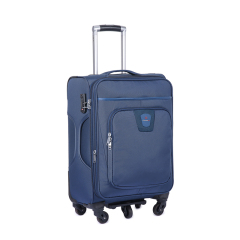
| Colour | Matched to your shade card |
| Logo | Applied to your artwork; method confirmed per order |
| Size mix | Cabin through 28-inch checked formats, confirmed per order |
Ordering & Delivery
- Send the model, the size mix you want and a quantity range per model and colour. Our procurement guide lists what helps at this stage: destination country, target price point and the documents your market requires. If you want background reading first, the blog covers bespoke personalisation, smart technology in luggage design and responsible factory practice.
- Fix the build: body material and finish, lock specification, wheel and handle requirement, lining, colour, and logo artwork with placement and decoration method. A custom luggage programme usually settles these before sampling; changes after that move the sample date.
- Choose the packing. We supply base packing as standard, custom packing to your own specification, and supporting materials such as labels, hangtags and inserts where you need them for your market. The packing specification is confirmed in writing before production.
- Agree the commercial terms. MOQ depends on product, material, size, colour, logo process, packing and customisation, so it is quoted against your actual brief for wholesale spinner luggage and private label luggage orders alike. Trade terms are discussed per order, commonly FOB, CIF or DDP.
- Approve the pre-production sample and the packing specification. As a luggage manufacturer we schedule production in our own plants, so the run stays inside our own checks from first piece to last.
- Before shipment, confirm the shipping marks, the packing list and any inspection you want to appoint — your own QC team or a third party is welcome on site.
Quality Control & Inspection
Every CHUBONT order passes five checkpoints inside our own workshops: incoming materials, pre-production samples, in-production patrols, finished-goods review, and a final pre-shipment check against the order. Batch records are kept, so buyers can see what was checked and when. You are welcome to send your own QC team, or appoint an independent inspector such as SGS or BV, to verify goods before they leave, and we support factory audits and on-site monitoring while production runs. Shipping marks, packing lists and carton labelling are confirmed against your instructions before loading.
FAQ
Can the wheels be replaced if one is damaged in service?
The wheel assemblies are a serviceable part on this construction rather than a sealed unit. Tell us at order stage if you want spare wheel sets for your own after-sales stock or for a distributor's service kit, and we will include them in the quotation. When you inspect a sample, check that the housing fixings are reachable and that a replacement can be fitted without opening the lining — that is the five-minute test that decides whether spinner wheels luggage is repairable in your market or simply disposable.
Is the case waterproof if it is caught in the rain?
Water resistance depends on the fabric and coating chosen for your order — a coated nylon or Oxford-weave polyester sheds rain well, an uncoated fabric does not. Confirm the finish before you print anything on a carton or a listing, and use water-resistant rather than waterproof unless we have confirmed waterproofing in writing for that specific material. Our range does include models built and sold as waterproof, such as the 20-inch and 24-inch waterproof spinner set, if that is the requirement for your market.
Can I put my own logo on the case and a printed lining inside?
Yes. The logo method — embossed plate, woven label, print or metal badge — is chosen to suit the material and the price point, and the lining can be printed or woven in your own design. Send artwork with the placement you want and we will confirm the method that fits your material and budget, along with how the mark is positioned so it stays readable when the case is standing. It is the part of a custom luggage order that most often decides whether the case reads as your brand on a private label luggage shelf or as a generic item.
Does the case expand?
Tell us at quotation if your market expects an expansion gusset and we will confirm whether it can be built into your chosen size and material. Expansion changes the zip, the lining and the packed dimensions, so it has to be decided before production rather than added to a wholesale spinner luggage order afterwards. If zipped expansion is not available for the construction you want, the alternative is usually a larger size in the same programme.
How does this case compare with the waterproof spinner set in your range?
The set is the pair-led option: a 20-inch and a 24-inch waterproof spinner, matched and boxed, for trade buyers who want one unit covering cabin and checked travel. This model is the single-case option built around the lock, so a buyer can order one size, one colour and one construction and add sizes to the programme later without changing the story in your range. If you are weighing the two, decide first whether you are selling a set or a single case, then compare the material and the lock. Custom spinner luggage buyers often take both — the set for trade distribution and this case for corporate issue.